

How to Make a Small Bedroom Look Bigger: 12 Easy Decorating Tricks That Actually Work
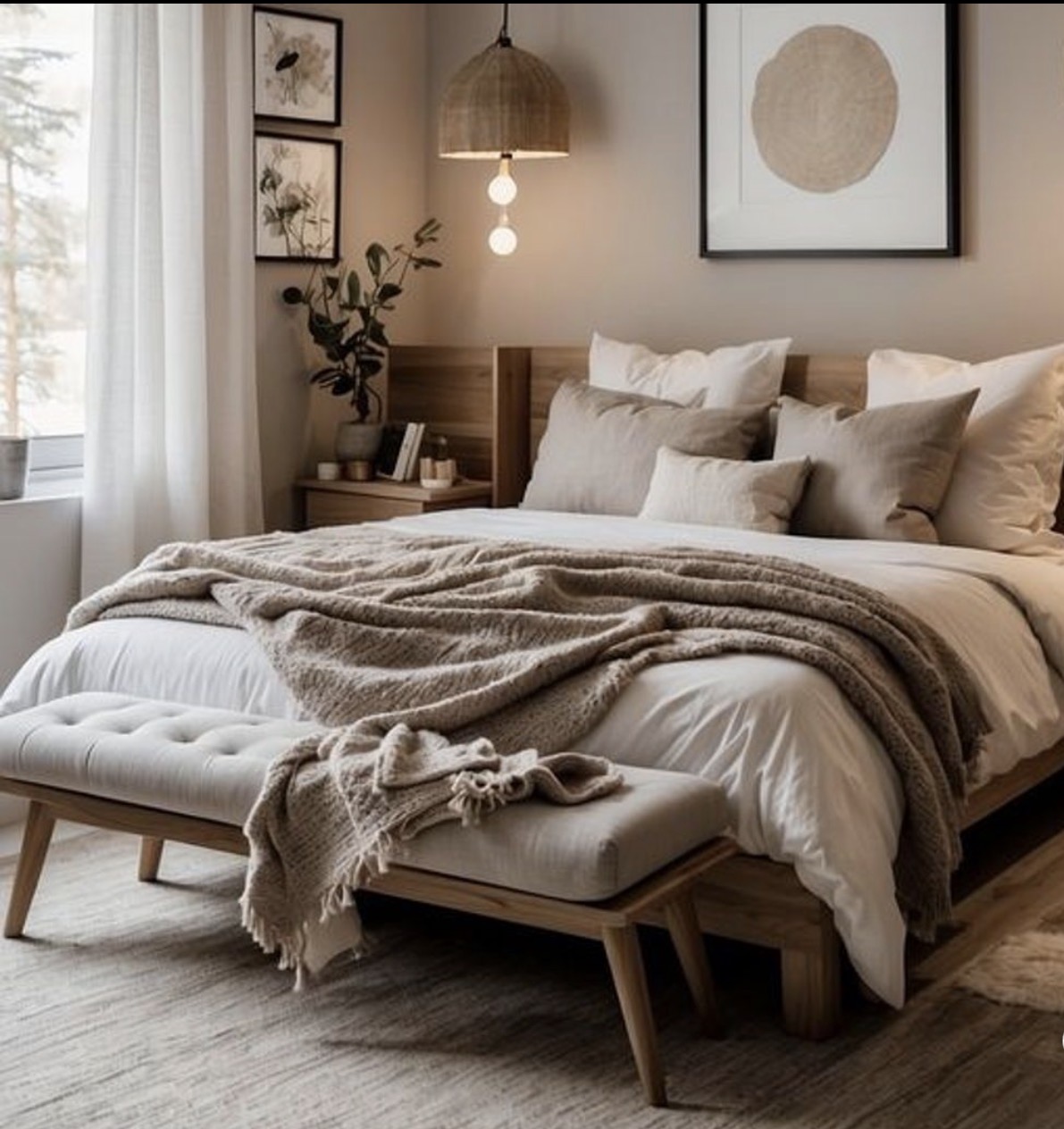
A small bedroom can be cozy, beautiful, and relaxing. But let’s be honest. It can also start feeling cramped very quickly.
A large bed, bulky nightstands, too much decor, and poor lighting can make even a decent-sized bedroom feel tiny.
The good news is that you do not need to knock down walls or move into a bigger house to change that feeling.
You can make a small bedroom look bigger with a few smart decorating choices.
The goal is to make the room feel lighter, brighter, more open, and easier to move around in.
Interior designers often recommend paying attention to furniture scale, visual clutter, color, mirrors, lighting, and the amount of visible floor space.
And the best part? Many of these ideas are affordable enough to try on a weekend.
Here are some of my favorite ways to make a small bedroom look bigger without sacrificing style.
1. Choose Light and Soft Wall Colors
One of the easiest places to start is with your walls.
Light colors can make walls feel like they are farther away. Soft white, warm white, cream, pale beige, light gray, and very soft taupe are all great choices for a small bedroom.
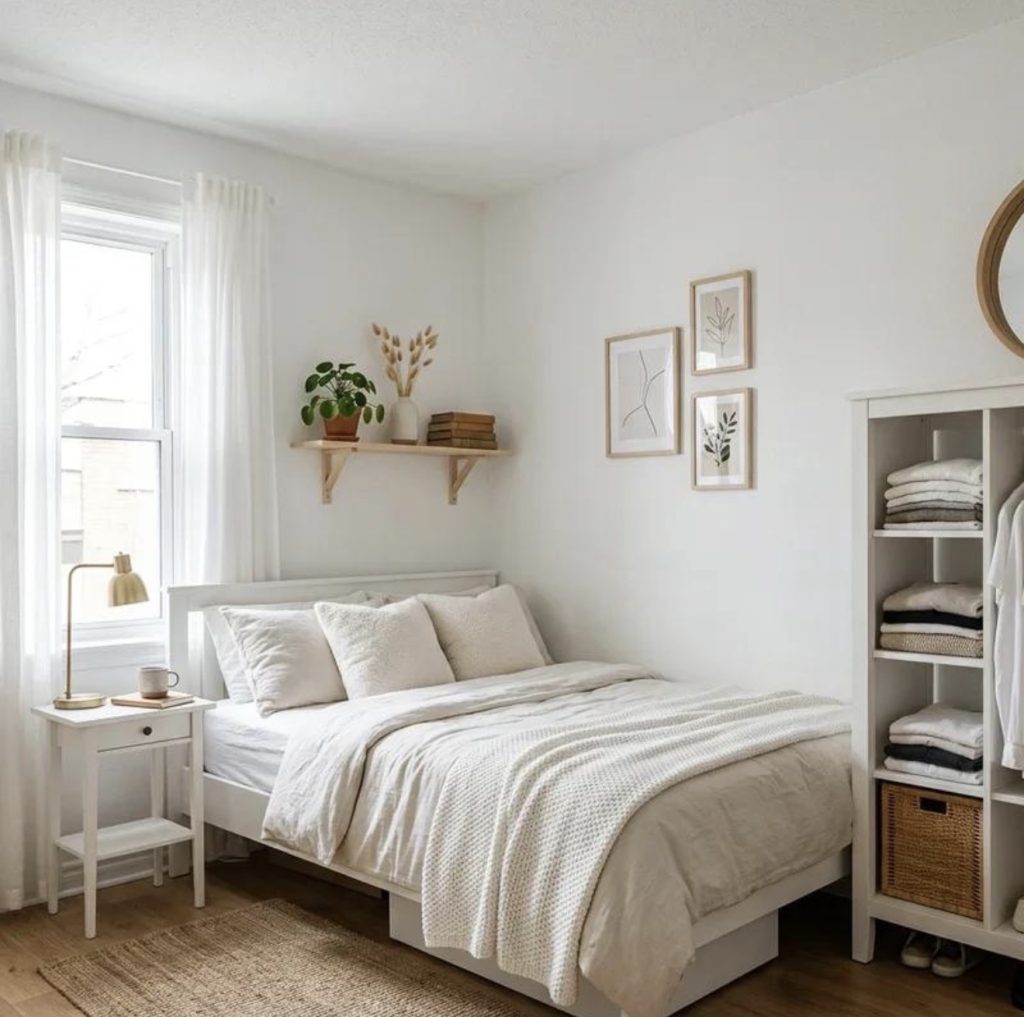
You do not have to make the room completely white.
If you prefer warmer colors, try a creamy beige bedroom with white trim. If you like a cooler look, a soft gray can work beautifully with white bedding and light wood furniture.
The key is to avoid creating too many strong color breaks.
For example, dark walls, bright white trim, and a very dark ceiling can visually divide the room into sections. A more consistent color palette helps the eye move around the room without stopping at every edge. Sherwin-Williams also recommends light, cohesive colors when creating the illusion of a larger room.
2. Use a Large Mirror to Create More Visual Space
If you only try one decorating trick from this list, make it a mirror.
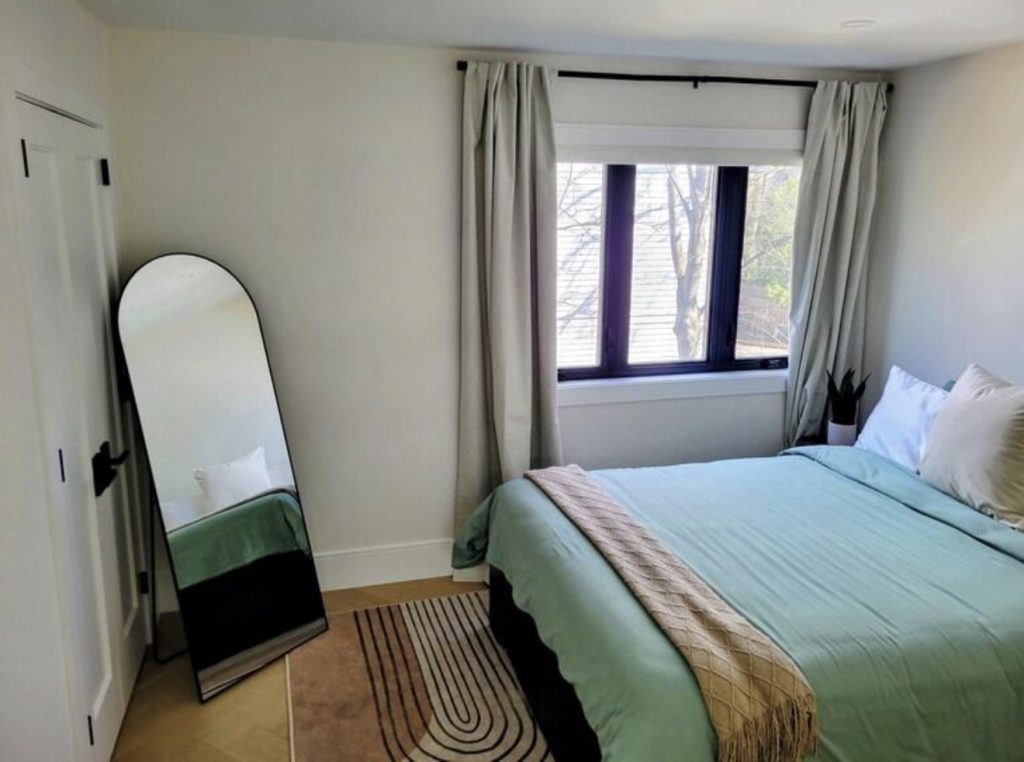
A well-placed mirror can reflect light and make the room appear deeper. A large floor mirror is especially useful because it gives you a practical dressing mirror while also adding visual space.
Try placing it across from a window if possible. This allows the mirror to reflect daylight back into the bedroom.
You can also use mirrored closet doors if your budget allows.
For a softer look, choose a simple framed mirror rather than covering an entire wall with mirrors. You want the room to feel elegant, not like a showroom.
A full-length mirror leaning against the wall can also look beautiful in a feminine bedroom.
3. Pick Furniture That Fits the Room
This is where many small bedrooms go wrong.
People often buy furniture based on what looks beautiful in a furniture store. Then they bring it home and realize the pieces are much too large for the bedroom.
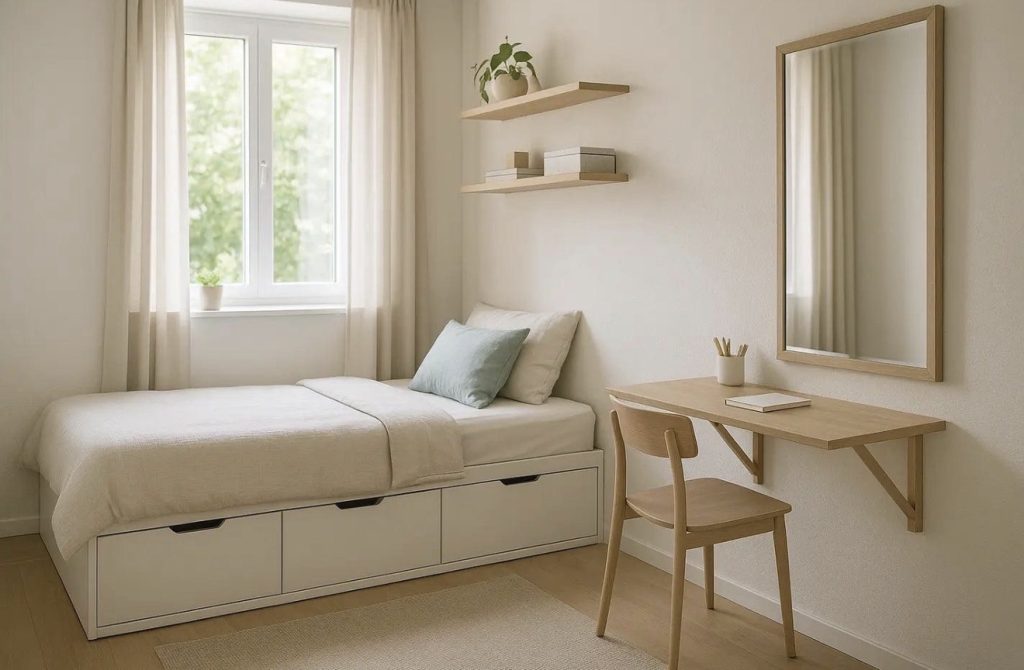
Your furniture should fit the scale of the room.
A huge upholstered bed, oversized dresser, wide nightstands, and large accent chair can quickly eat up the available space.
Instead, look for furniture with a slimmer profile.
A bed with exposed legs can be especially helpful because you can see more of the floor underneath it. Slim nightstands can replace bulky ones without removing the storage you actually need.
You do not necessarily need tiny furniture, either. The goal is appropriate furniture, not miniature furniture.
As designers have pointed out, an edited layout with fewer appropriately scaled pieces can make a small bedroom feel noticeably larger.
Check out these modern wooden bedroom furniture set ideas that suit every bedroom.
4. Keep More of the Floor Visible
Here is a simple trick that can make a surprisingly big difference.
Show more floor.
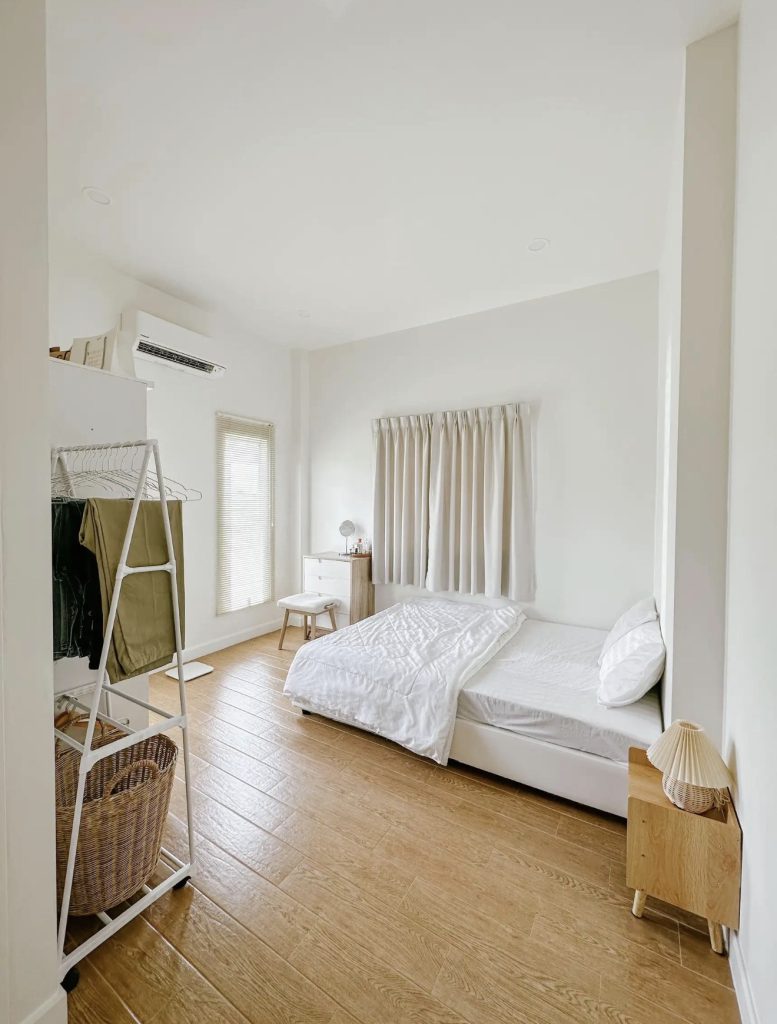
When almost every inch of the floor is covered by furniture, the bedroom feels crowded.
Choose a bed with legs instead of a heavy solid base. Consider a floating nightstand instead of a traditional nightstand. You can even mount a small shelf beside the bed.
The more floor you can see, the more open the room can feel.
This does not mean you have to remove your favorite rug. A properly sized rug can still make the room feel finished and comfortable.
Just avoid using several small rugs scattered around the room. They can create visual breaks.
5. Hang Curtains Higher
Your windows can help make the bedroom feel taller.
Instead of hanging your curtain rod directly above the window frame, consider mounting it higher. Floor-length curtains can then draw the eye upward.
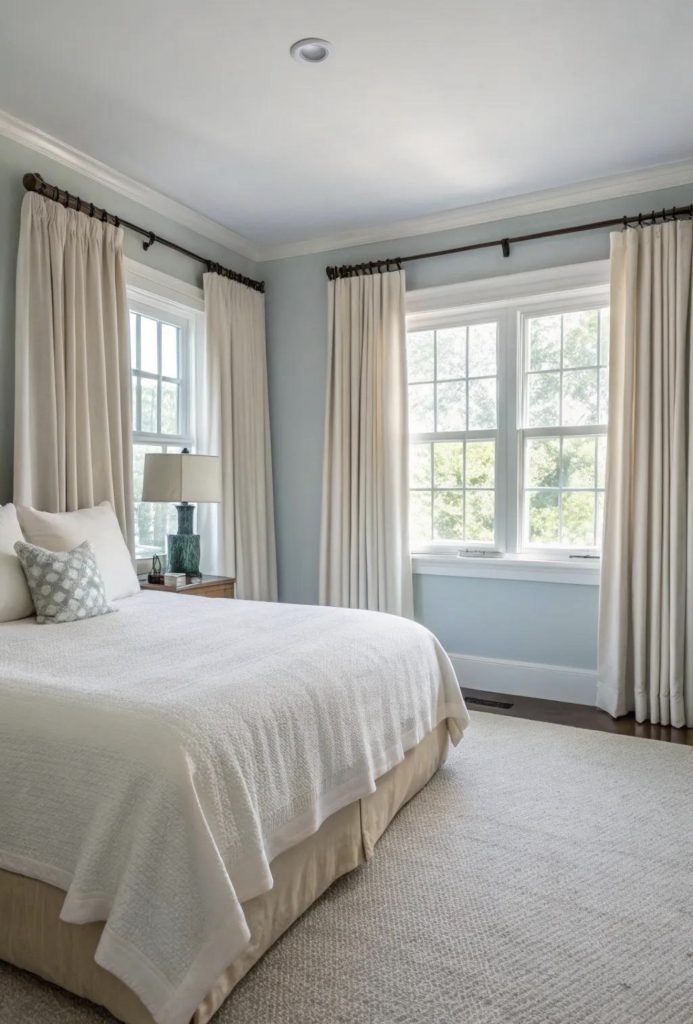
This creates the impression of taller walls.
For a small bedroom, lightweight curtains can also help keep the space feeling bright. Sheer or light-filtering curtains are especially nice when you want to maximize daylight.
Choose curtains that are close to your wall color if you want a calm, continuous look.
You can also hang the rod slightly wider than the window so the curtains do not cover much of the glass when they are open.
The idea is simple: let the light in and make the window feel larger.
Learn how to choose cozy bedroom curtain colors.
6. Take Advantage of Natural Light
A dark bedroom usually feels smaller than a bright one.
During the day, keep your windows as clear as possible. Open the curtains and let natural light travel through the room.
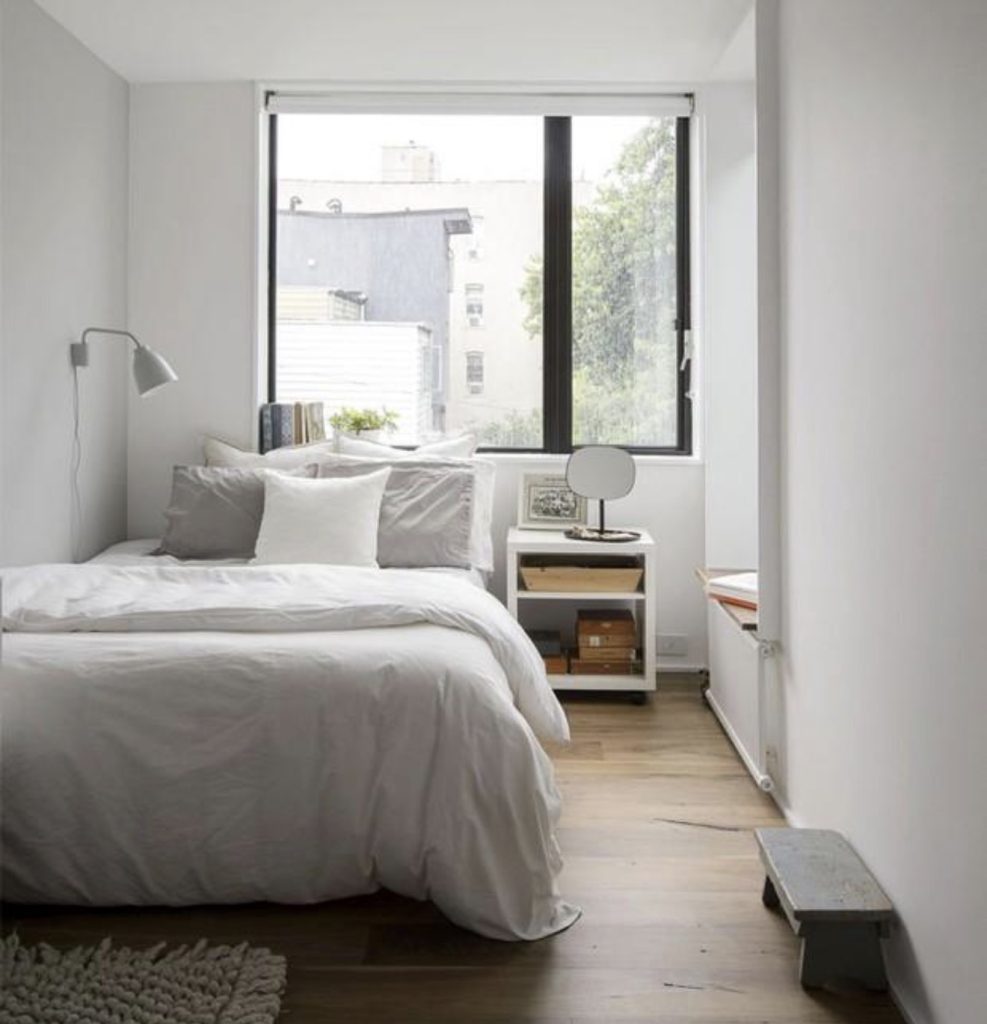
Avoid placing tall furniture directly in front of the window unless you have no other option.
You should also keep the window glass clean. It sounds basic, but clean windows allow more daylight into the space.
If your bedroom does not receive much natural light, do not worry. Good artificial lighting can make a huge difference too.
7. Use Several Light Sources Instead of One
A single ceiling light can leave the corners of a small bedroom dark.
Those dark corners can make the room feel closed in.
Instead, layer your lighting.
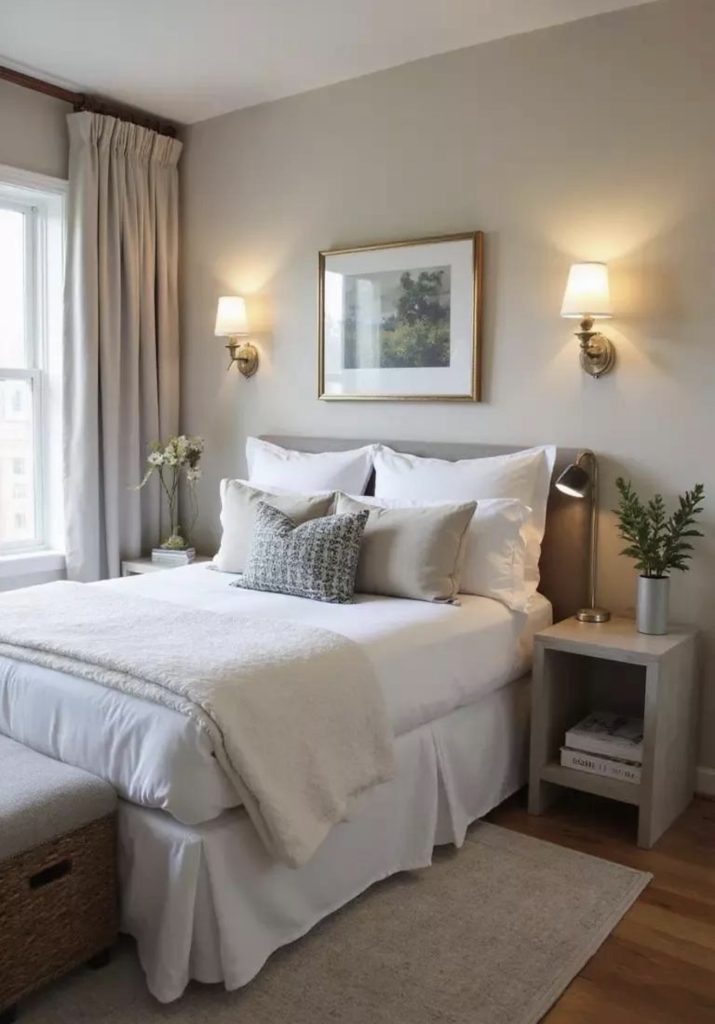
You could have a ceiling fixture for general lighting, wall sconces beside the bed, and a small lamp on a dresser or floating shelf.
Wall sconces are particularly useful because they provide lighting without taking up nightstand space.
If you have a dark corner, add a small lamp there. The goal is to spread light throughout the bedroom rather than having one bright spot in the middle.
Lighting experts also recommend using multiple light sources to reduce shadows and make rooms feel brighter and more open.
8. Use Vertical Storage
When floor space is limited, look up.
Your walls provide valuable storage space.
Install floating shelves above a desk or bed. Use a tall, narrow bookcase instead of a wide one. Choose storage cabinets that take advantage of vertical space.
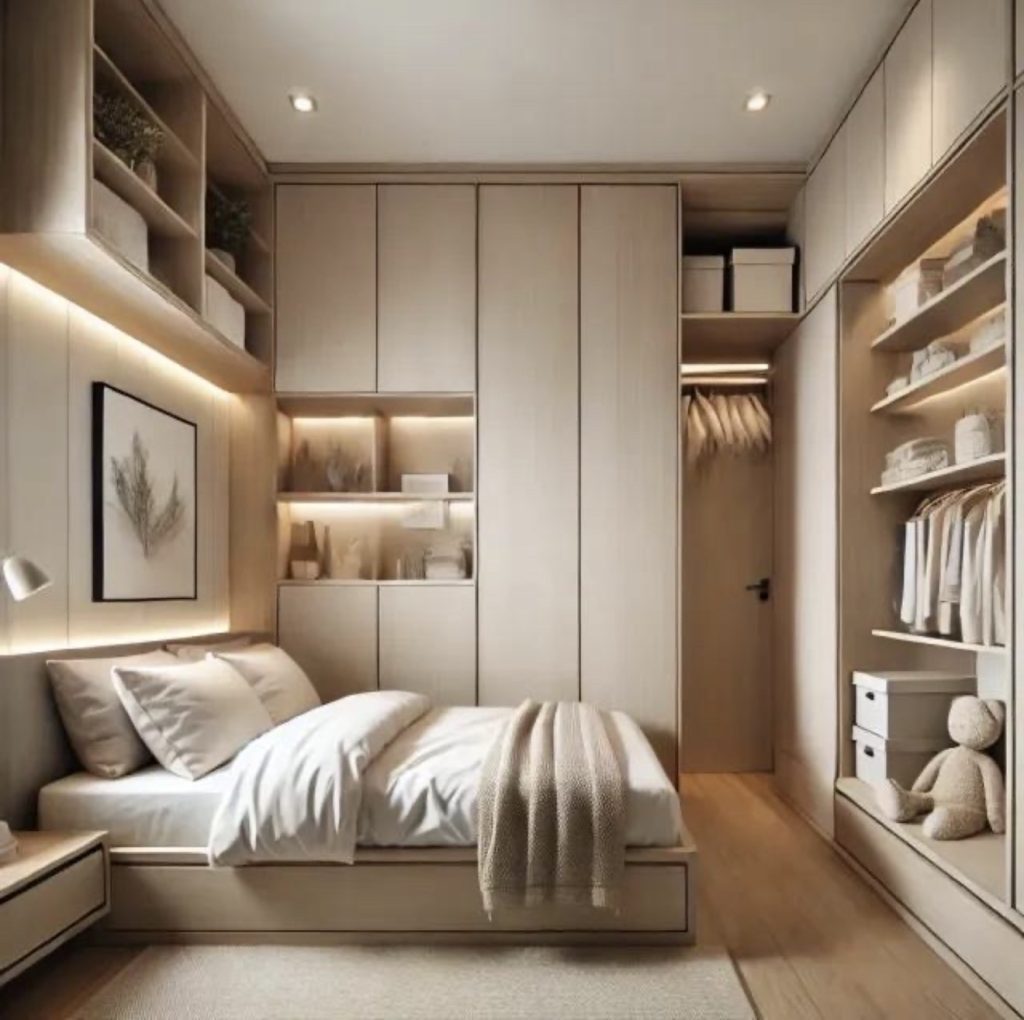
This gives you room to store books, baskets, handbags, accessories, and decor without taking up too much floor space.
You can also use the wall behind your bed for storage if the layout allows it.
Just be careful not to fill every inch of the wall. Too many shelves packed with objects can create a cluttered appearance.
Keep the things you display intentional.
9. Replace Bulky Nightstands With Floating Shelves
This is one of my favorite ideas for a very tiny bedroom.
A traditional nightstand can take up more room than you realize.
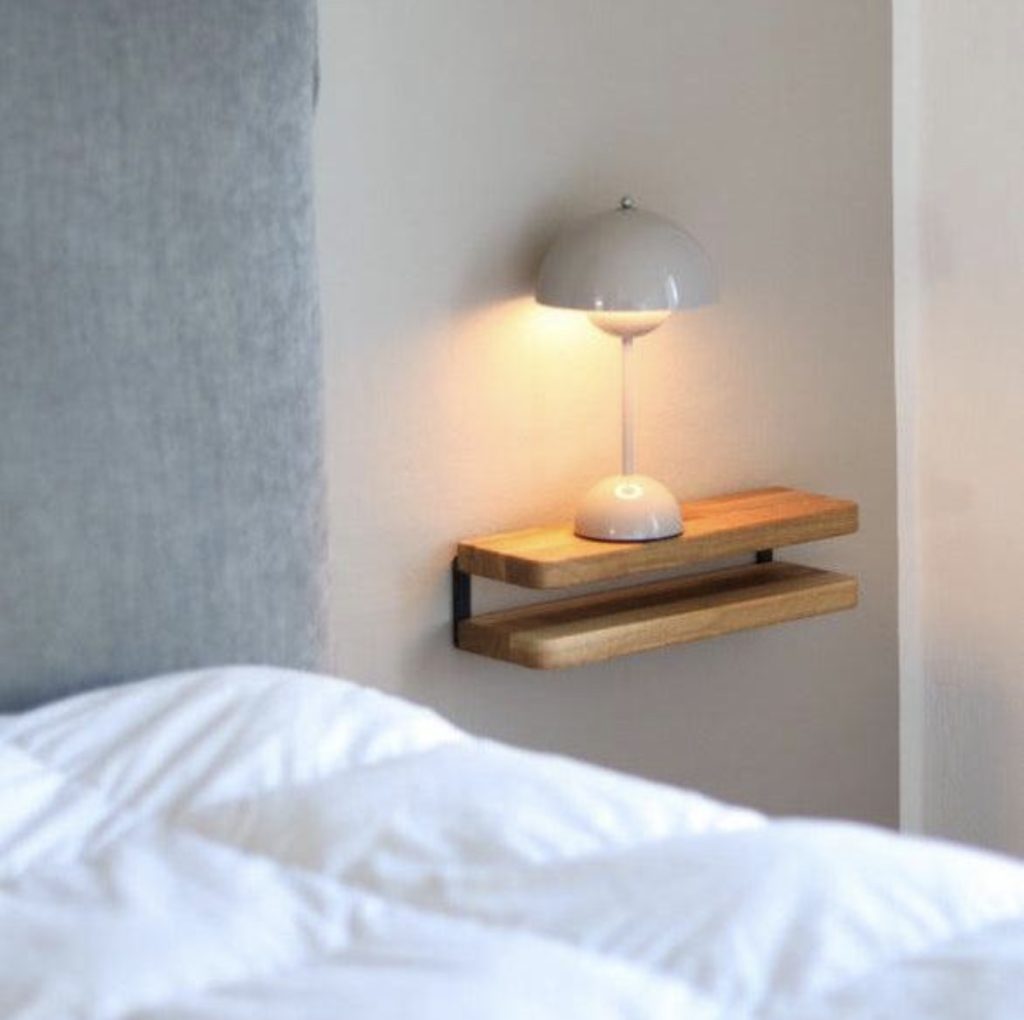
Instead, install a floating shelf beside the bed.
It can hold your phone, a small lamp, a book, and a glass of water. That may be everything you actually need.
Because the shelf is mounted on the wall, more of the floor remains visible underneath.
You can even install a narrow floating drawer if you need hidden storage.
It is simple, inexpensive, and stylish.
10. Keep Your Bedding Simple
Your bed is usually the largest item in the bedroom, so the bedding has a major impact on how the room feels.
In a small bedroom, try a simple bedding palette.
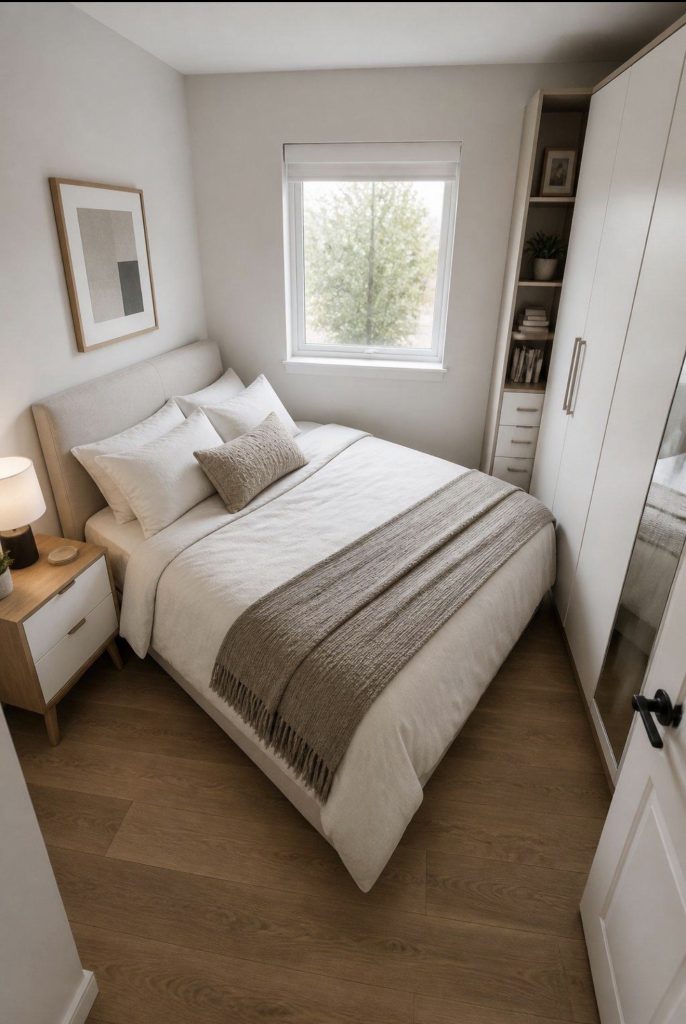
White, cream, beige, soft gray, or muted colors can keep the bed from becoming visually heavy.
You can still add personality with textured pillows, a soft throw blanket, or one patterned accent pillow.
The trick is not to cover the entire bed with dozens of pillows and blankets.
A simple, layered bed often looks more luxurious anyway.
Check out these pink bedroom bedding ideas women like.
11. Declutter Your Bedroom
Sometimes the best way to make a small bedroom look bigger is to remove things.
Look around the room.
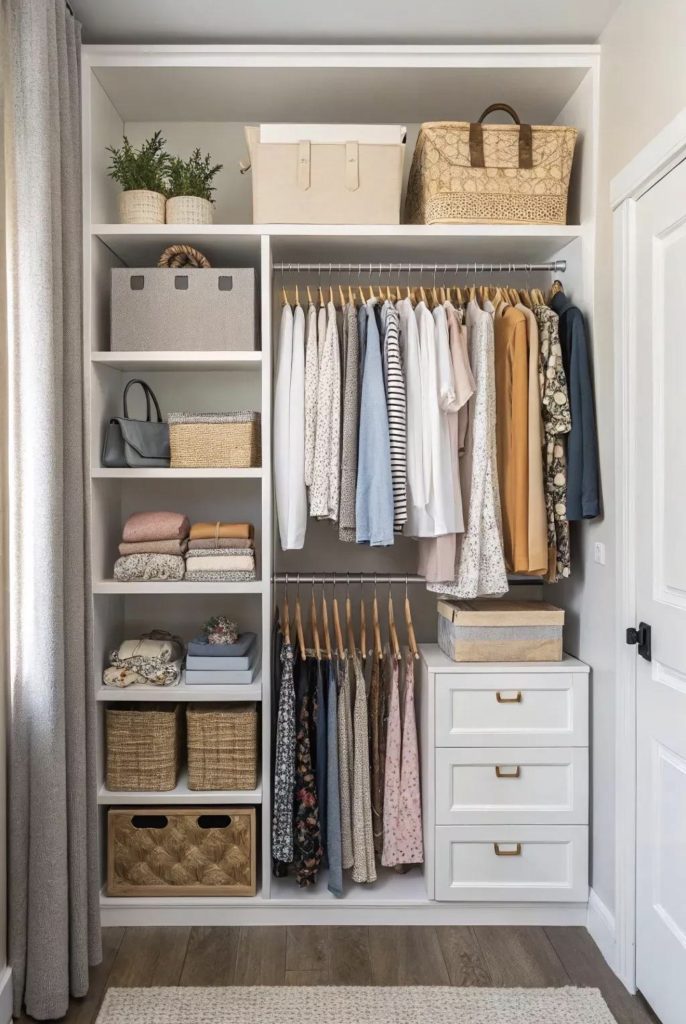
Do you really need five decorative objects on your dresser?
Do you wear everything hanging in your closet?
Are there bags sitting on the floor?
Is your nightstand covered with products, books, chargers, and random items?
Start there.
Clear surfaces immediately make a room feel calmer.
Use baskets, drawer organizers, under-bed storage, and closet organizers to keep everyday items out of sight.
Remember, the goal is not to make your bedroom completely empty. You want it to feel personal.
You simply want everything to have a place.
12. Create One Cohesive Color Palette
If every item in your bedroom is a different color, the room can feel visually busy.
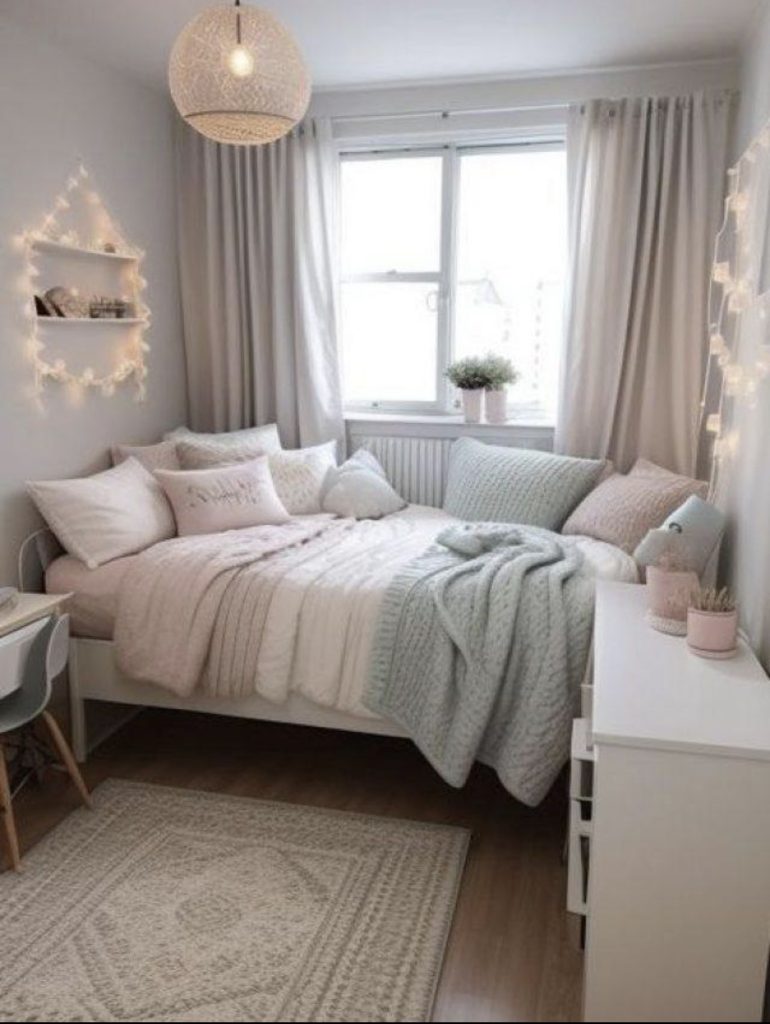
Instead, choose three or four colors and repeat them throughout the room.
For example:
Cream + beige + white + light wood
Or:
Soft gray + white + dusty blue + natural wood
Or:
Warm white + taupe + blush + brass
Repeat these colors in your bedding, curtains, rug, artwork, pillows, and accessories.
This does not mean everything has to match perfectly.
You simply want the colors to work together so the eye can move around the room without constantly hitting a visual interruption.
A Few Small Bedroom Mistakes to Avoid
Sometimes knowing what not to do is just as helpful.
Avoid filling every wall
You do not need artwork on every available wall. One large piece can often look better than several tiny pieces.
Avoid oversized furniture
That beautiful oversized dresser might look amazing online, but it could overwhelm your bedroom.
Avoid blocking your windows
Natural light is one of your biggest advantages in a small space.
Avoid too many tiny decorations
Lots of small decorative objects can make a room look busy. Choose a few pieces you really love.
Avoid dark cluttered corners
Use a lamp, wall sconce, or other light source to brighten darker areas.
The Best Way to Start Your Small Bedroom Makeover
You do not have to buy everything at once.
Start with what you already have.
Move your furniture around and see whether you can create a clearer walking path.
Remove anything you no longer use.
Open the curtains and bring in more natural light.
Then look at your walls. Would a lighter color make sense? Could you add a large mirror?
After that, think about your furniture.
Could a bulky nightstand be replaced with a floating shelf? Could you move your dresser somewhere else? Could you use the space underneath your bed for storage?
These small changes can completely change the way you experience the room.
And remember, a small bedroom does not have to look boring.
You can still have beautiful bedding, artwork, plants, soft textures, and feminine decor. The secret is choosing each item carefully and giving the room enough breathing space.
The best small bedrooms are not necessarily the ones with the fewest things. They are the ones where everything has a purpose and the eye has somewhere to rest.
Frequently Asked Questions
What color makes a small bedroom look bigger?
Light and soft colors such as white, cream, pale beige, light gray, and soft taupe can make a small bedroom feel more open. Keeping the walls, trim, and larger furnishings within a similar color family can also create a more continuous look.
Does a mirror make a small bedroom look bigger?
Yes. A strategically placed mirror can reflect light and create the visual impression of additional depth. A large mirror positioned where it can reflect a window or another bright part of the room can be especially effective.
How do you arrange furniture in a small bedroom?
Start by keeping a clear walking path around the bed and the room’s main entrance. Choose furniture that fits the scale of the room and avoid pieces that block windows or make movement difficult. Showing more visible floor can also make the bedroom feel more open.
How can I make a small bedroom look bigger without buying new furniture?
Declutter first. Then rearrange your existing furniture to create more open floor space. Remove unnecessary decorations, open your curtains, use mirrors, improve lighting, and organize items that are currently sitting on the floor or visible surfaces.
What type of curtains make a small bedroom look bigger?
Lightweight, floor-length curtains can help. Hanging the curtain rod higher and allowing the curtains to extend toward the floor can draw the eye upward and make the walls appear taller. Sheer or light-filtering curtains can also help maximize natural light.
Final Thought
You may not be able to add another 100 s