

Transitional Home Decor Ideas: How to Masterfully Mix Old and New
Have you ever walked into a home that feels elegant and modern but still has that warm, lived-in feeling?
The furniture looks beautiful, the colors feel soothing, and every room seems to have a little personality. Nothing feels too formal or too trendy. That is the beauty of transitional home decor.
This style is perfect for women who love the charm of traditional interiors but also appreciate the clean lines of modern design.
You don’t have to choose between your grandmother’s beautiful wooden dresser and a sleek, contemporary bed. You can enjoy both in the same room.
The secret is knowing how to bring different styles together without making your home feel crowded or mismatched.
Transitional decorating gives you plenty of room to express your taste. You can keep the pieces you already love, shop for a few modern updates, and create a home that feels comfortable, polished, and timeless.
Even better, you don’t need a huge budget or a complete home makeover to get the look.
In this guide, you’ll discover practical transitional home decor ideas that show you how to mix old and new, choose the right colors, layer textures, and create rooms that feel thoughtfully designed.
What Is Transitional Home Decor?
Transitional home decor combines traditional design with contemporary elements. It takes the best parts of both styles and blends them into one balanced look.
Traditional interiors often feature carved wood furniture, classic patterns, elegant lamps, and decorative details. Modern interiors tend to favor simpler shapes, cleaner lines, and less visual clutter.
Transitional design brings these elements together.
For example, you might pair a traditional tufted sofa with a simple black coffee table.
You could place a vintage wooden dresser in a bedroom with modern bedding. In the dining room, a classic wood table might look beautiful with upholstered chairs that have clean, contemporary lines.
The goal isn’t to make every piece match. It’s to make every piece feel like it belongs.
This style works especially well if you want a home that looks current without having to redecorate every few years. It also makes decorating easier when you’re working with furniture collected over time.
Now, let’s look at how to master the style in your own home.
Choose a Warm Neutral Color Palette That Connects Everything
One of the easiest ways to master transitional home decor is to start with your color palette. When you’re mixing furniture from different periods, color can help everything feel connected.
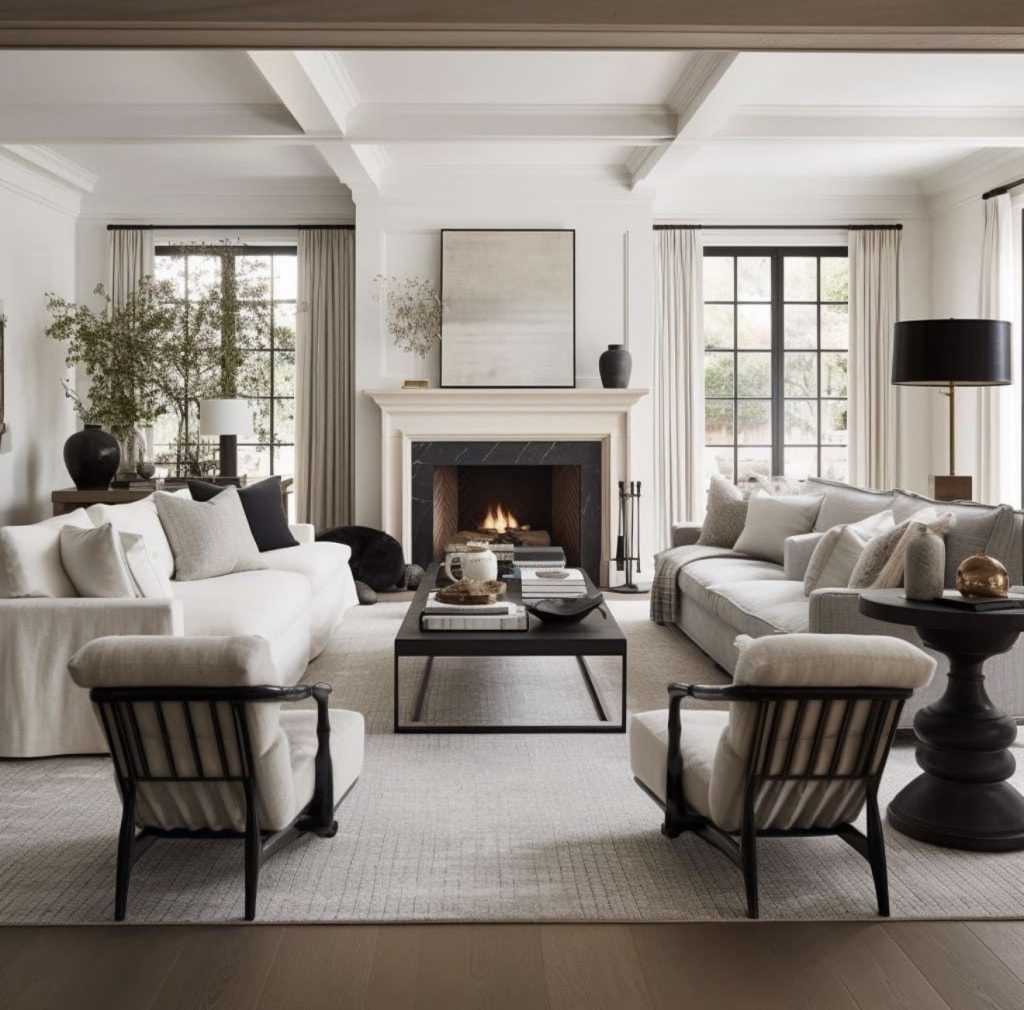
Think warm white, cream, beige, taupe, soft gray, and greige. These shades create a calm background that allows traditional and modern pieces to share the same space without competing for attention.
For example, imagine a living room with warm white walls, a beige sofa, and a dark walnut coffee table. The sofa has a simple, modern shape, while the coffee table has traditional wooden details. Add cream curtains and a muted vintage rug, and the room starts to feel balanced.
You don’t need to stick to neutrals everywhere, though. A little color makes a room feel more personal.
Navy blue, sage green, olive, dusty blue, and muted terracotta can all work beautifully with a neutral foundation. You might introduce these shades through throw pillows, artwork, a ceramic vase, or an accent chair.
The trick is to repeat your chosen colors around the room. If your vintage rug contains a little blue, for instance, add blue to a pillow or piece of artwork. That small connection helps different elements feel intentional.
How to make it work in your home:
- Choose one main neutral for your walls.
- Add a second neutral through large furniture pieces.
- Use wood tones to bring warmth into the room.
- Introduce one or two accent colors through smaller accessories.
- Test paint samples in natural and artificial light before committing.
If you’re working with an existing home, you may not need to repaint anything. Look at the colors you already have and choose new accessories that complement them.
Check out these modern living room decor ideas on a budget.
Mix Traditional Furniture With Modern Pieces
This is where transitional design becomes especially fun. Instead of buying a matching furniture set, you can combine pieces with different shapes, finishes, and histories.
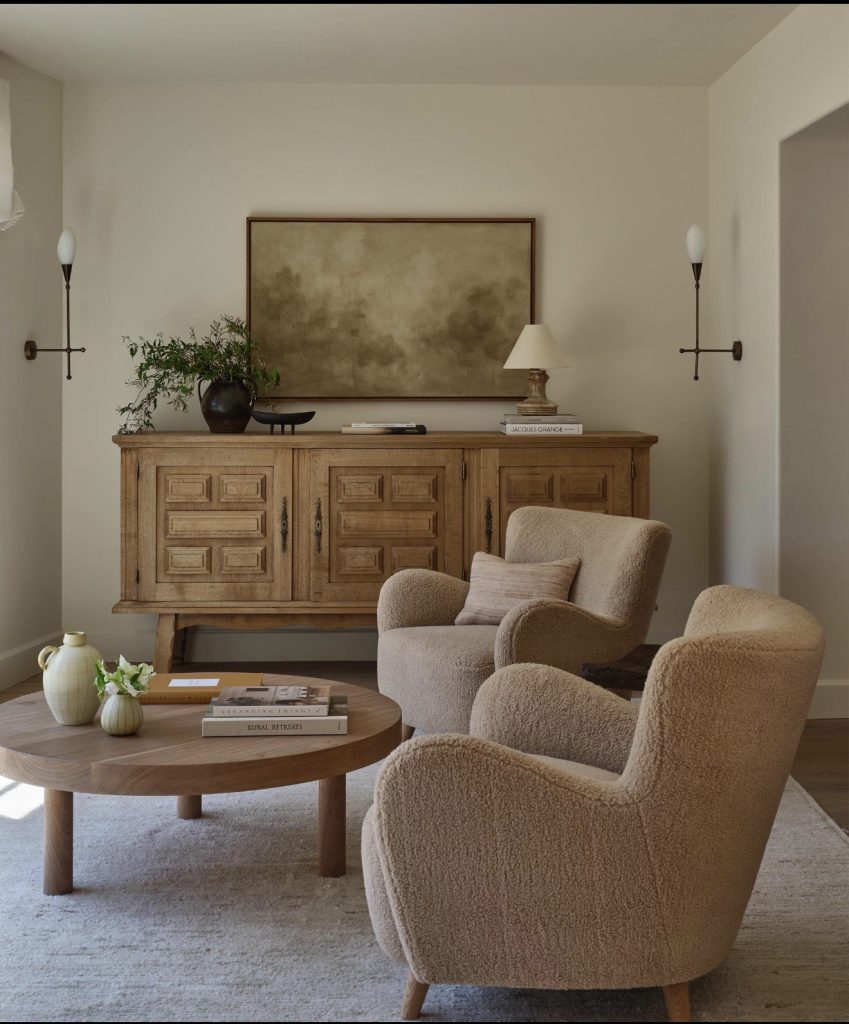
A traditional wooden coffee table can look beautiful next to a contemporary sofa. An antique sideboard can bring character to a room filled with modern furniture. Even a family heirloom can become a standout feature when you give it the right surroundings.
The key is balance.
If you have a large, detailed antique cabinet, pair it with simpler furniture. A modern sofa with clean lines can help the cabinet feel special without making the room look old-fashioned.
On the other hand, if most of your furniture is modern, a traditional accent chair or vintage wooden table can add the warmth the room needs.
Think about the shape of each piece, too. Transitional interiors often combine straight lines with gentle curves. A rectangular modern coffee table might work well with rounded accent chairs. A classic curved sofa could look lovely beside a simple contemporary side table.
You don’t need every piece to match. You need the pieces to complement one another.
Try these combinations:
- A traditional oak dining table with modern upholstered dining chairs.
- A contemporary sofa with a vintage wooden coffee table.
- An antique dresser with a streamlined upholstered bed.
- A classic wingback chair with a simple floor lamp.
- A modern console table beneath an ornate vintage mirror.
Layer Different Textures for a Cozy, Collected Look
A neutral room can look beautiful, but it can also feel a little flat if every surface has the same finish. Texture is what makes transitional home decor feel warm, inviting, and complete.
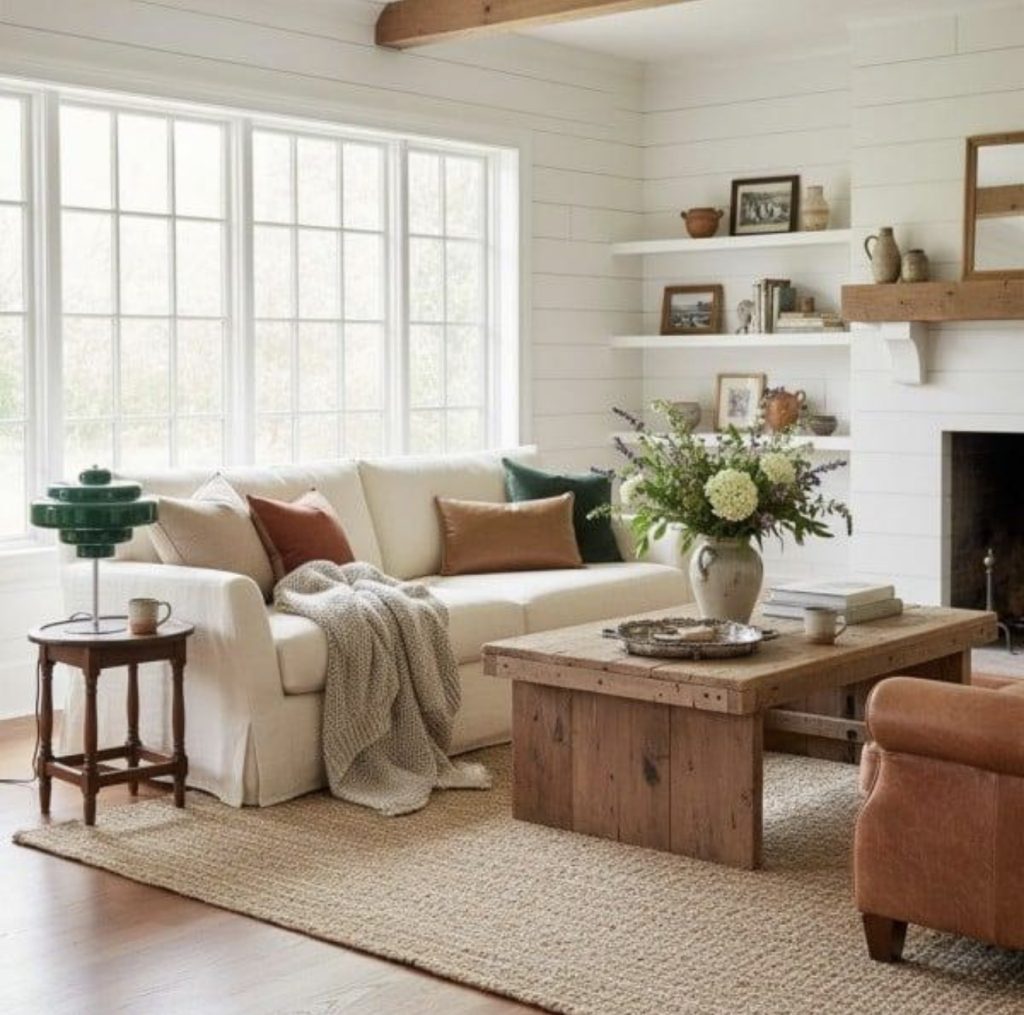
Instead of relying on lots of bright colors or busy patterns, combine materials that feel different when you look at them.
Think linen, velvet, wool, natural wood, woven baskets, ceramic pottery, glass, and metal. These materials bring depth into a room without making it feel visually overwhelming.
For example, a cream linen sofa might look plain on its own. Add two velvet pillows, a chunky knit throw, a textured area rug, and a wooden coffee table, and the whole space feels more interesting.
You can use the same approach in your bedroom.
Layer crisp cotton sheets with a linen duvet cover, a quilted blanket, and a soft throw at the foot of the bed. Place a vintage wooden nightstand beside a modern upholstered headboard. A ceramic table lamp can finish the look.
The combination feels both relaxed and polished.
Don’t forget about hard surfaces. A smooth marble tabletop next to a weathered wood cabinet creates a subtle contrast. Glass accessories can make a room feel lighter, while woven baskets bring in a more natural, casual touch.
Easy ways to layer textures:
- Place a soft area rug over hardwood flooring.
- Mix velvet pillows with linen or cotton upholstery.
- Add a woven basket beside a modern sofa.
- Use ceramic vases on a traditional wooden console.
- Combine smooth metal lighting with natural wood furniture.
Update Your Lighting With Modern Fixtures and Classic Details
Lighting can completely change how a room looks and feels. It can also be one of the easiest ways to introduce a modern touch without replacing your existing furniture.
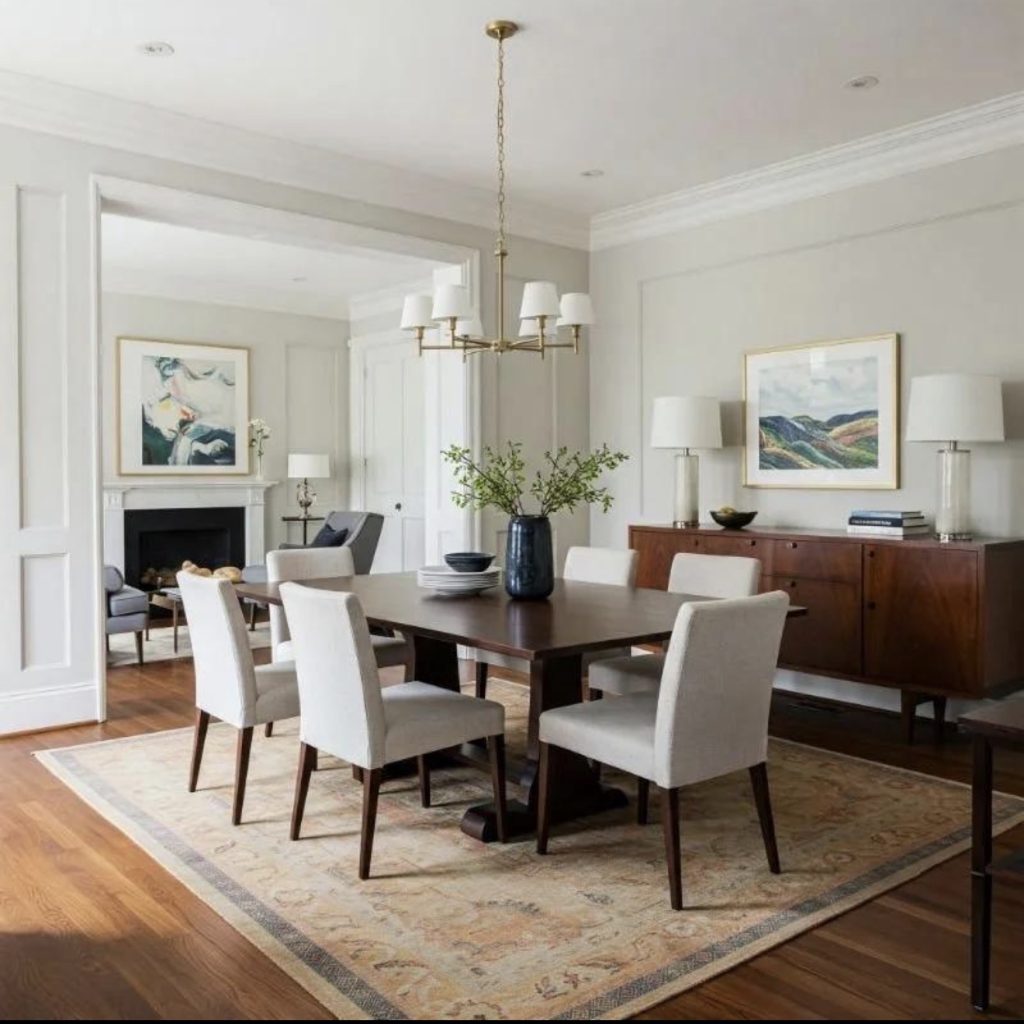
A room with traditional furniture can feel much more current with a contemporary chandelier, a sculptural floor lamp, or a pair of simple wall sconces.
Imagine a dining room with a classic wooden table, upholstered chairs, and a modern brass chandelier above the center. The table brings warmth and history, while the lighting adds a fresh, updated finish.
That contrast is exactly what makes transitional interiors so appealing.
You can also go in the opposite direction. If your living room has a modern sofa and sleek side tables, try adding a traditional lamp with a fabric shade. The softer shape can make the space feel more inviting.
When choosing fixtures, pay attention to scale. A tiny pendant above a large dining table may look out of place, while an oversized chandelier can overwhelm a small room.
Consider the finish as well. Brass, black metal, brushed nickel, and bronze can all work in transitional spaces. You don’t need to use just one metal throughout your home, but repeating a finish in a few places helps create a cohesive look.
For example, you might choose a brass chandelier, a brass picture frame, and a small brass detail on a table lamp.
Lighting ideas worth trying:
- Hang a modern chandelier above a traditional dining table.
- Place a contemporary floor lamp beside a classic armchair.
- Add table lamps with fabric shades to a modern bedroom.
- Use simple wall sconces beside a traditional fireplace.
- Layer overhead lighting with table and floor lamps.
Check out these modern ceiling living room light ideas that don’t cost much.
Decorate With Vintage Rugs, Modern Artwork, and Meaningful Accessories
Accessories are often what make a transitional home feel personal. They allow you to introduce character without making major changes to your furniture or walls.
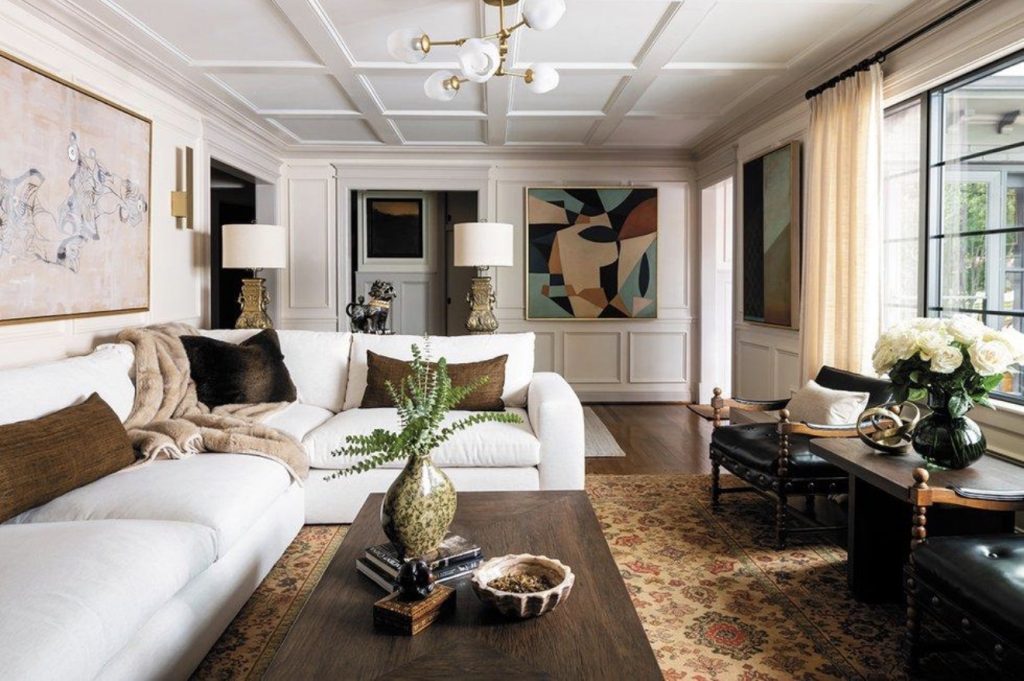
One of the best combinations is a vintage rug with modern artwork.
A vintage rug may have faded colors, traditional patterns, or an aged finish. Modern artwork often features simple shapes, abstract designs, or large blocks of color. Together, they create an interesting contrast that feels collected rather than overly coordinated.
You can use this idea in your living room, bedroom, dining room, or entryway.
For example, picture a neutral living room with a softly patterned vintage rug, a modern abstract painting, and a classic wooden side table. The rug adds warmth, the painting introduces a contemporary touch, and the side table gives the space a sense of history.
Mirrors are another great way to mix styles. Hang a simple round mirror above an antique console table, or place an ornate vintage mirror above a modern fireplace mantel.
The same principle works with decorative objects.
A collection of old books can look lovely beside a modern ceramic vase. A traditional framed photograph can sit on a sleek console. A handmade bowl can add personality to a contemporary coffee table.
The most important thing is to avoid filling every available surface.
Transitional design benefits from a little breathing room. You want your favorite objects to stand out rather than disappear into a crowd of accessories.
Try these decorating combinations:
- A faded vintage rug with a contemporary sofa.
- Abstract artwork above a traditional wood sideboard.
- An ornate mirror over a clean-lined console table.
- Old books stacked beside a modern ceramic vase.
- Family photographs displayed in simple black or wood frames.
Bring Old and New Together in the Kitchen and Dining Room
Transitional style isn’t just for living rooms and bedrooms. It works beautifully in kitchens and dining rooms, too.
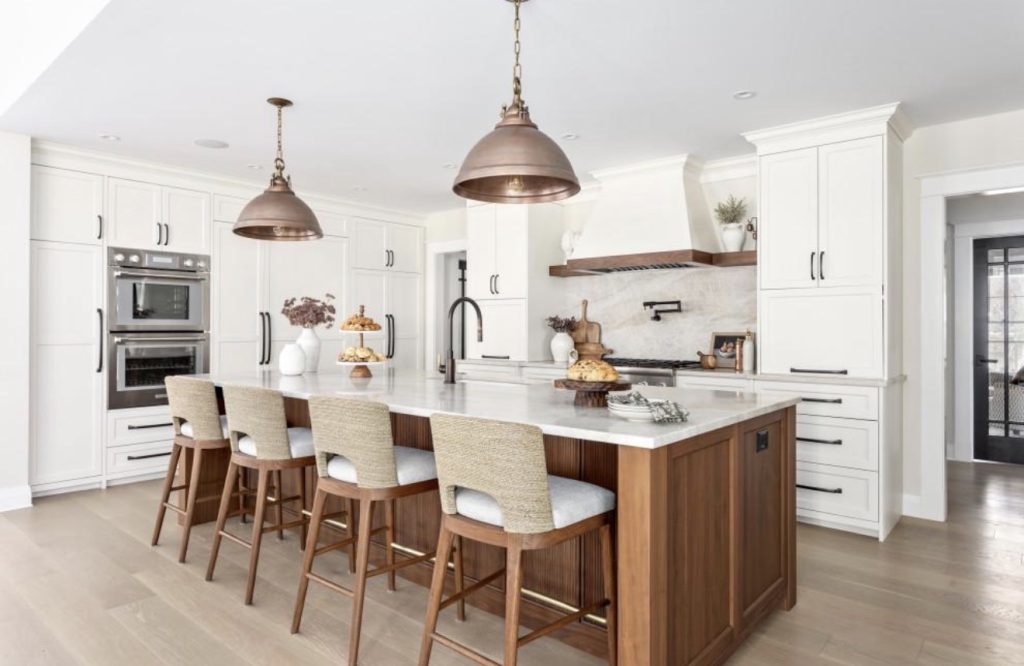
These spaces often contain a mixture of permanent features, such as cabinets and countertops, and movable items, such as chairs, lighting, and accessories. That makes them ideal places to experiment with the old-meets-new approach.
In the kitchen, classic cabinet styles can provide the traditional foundation. Shaker cabinets, simple paneled doors, and warm wood finishes are all good starting points.
Then bring in modern elements through hardware, lighting, bar stools, and countertop accessories.
For example, white Shaker cabinets paired with a warm wood island, contemporary pendant lights, and simple brass hardware can create a kitchen that feels timeless without looking dated.
If you already have a traditional kitchen, you don’t need to replace the cabinets. Consider changing the hardware, adding modern pendant lights, or introducing a few contemporary accessories.
Even small updates can shift the overall appearance.
In the dining room, start with the table. A solid wood table with a traditional shape can look stunning with modern upholstered chairs. Alternatively, use a sleek contemporary table with vintage wooden chairs.
A modern chandelier above the table can bring the two styles together.
You can also create an interesting tablescape with both old and new pieces. Try using classic ceramic dishes, modern glassware, linen napkins, and a simple centerpiece made from fresh branches or seasonal flowers.
The result feels thoughtful without being too formal.
Affordable ways to update these spaces include:
- Replacing cabinet knobs and drawer pulls.
- Adding contemporary pendant lights above an island.
- Mixing traditional dining chairs with modern seating.
- Displaying vintage pottery on open shelves.
- Using a modern centerpiece on an antique dining table.
Create a Transitional Bedroom That Feels Elegant but Relaxed
Your bedroom should feel like a place where you can relax at the end of a long day. Transitional decor is perfect for creating that atmosphere because it combines the softness of traditional interiors with the simplicity of modern design.
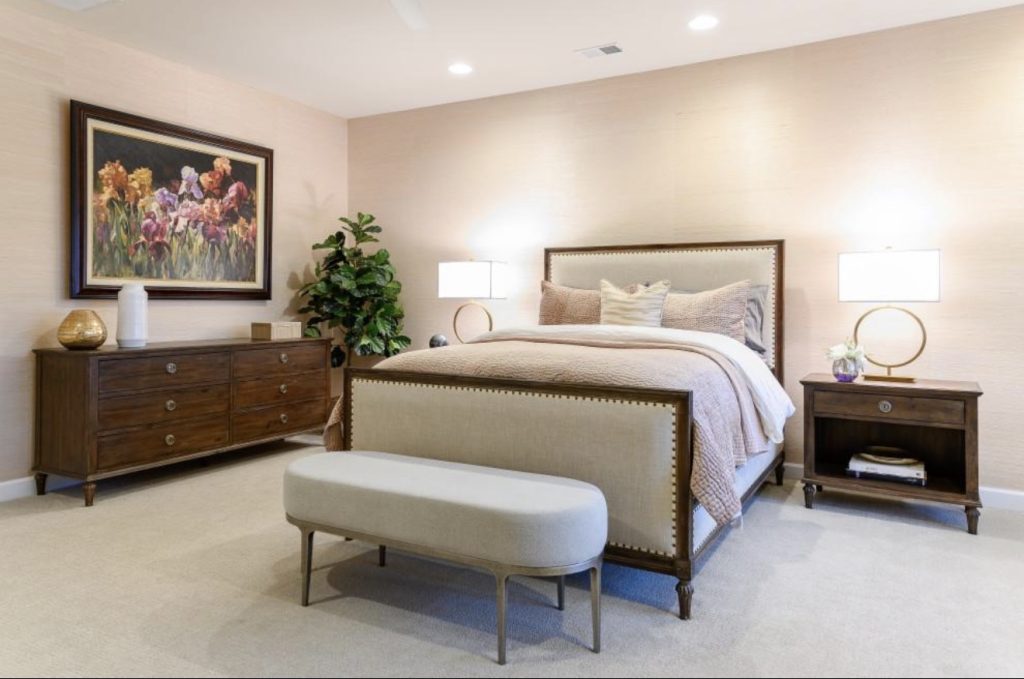
Start with the bed. An upholstered headboard in cream, beige, or soft gray creates a comfortable foundation. Choose a design with gentle curves or subtle tufting if you want a traditional touch, or opt for a simpler shape for a more contemporary look.
Next, bring in furniture from a different style.
A modern upholstered bed can look beautiful with antique wooden nightstands. A traditional wooden bed can feel more current with simple bedding, clean-lined lamps, and understated artwork.
You can also mix different bedside tables if they share something in common, such as a similar height, finish, or visual weight.
The goal is to create balance without making the room look like everything came from the same furniture collection.
Bedding plays a major role in the overall look. Instead of choosing lots of bold prints, layer a few complementary fabrics in neutral shades. Cotton sheets, a linen duvet cover, a quilted blanket, and textured pillows can make the bed feel luxurious without being fussy.
Add a vintage rug beside the bed or beneath it to introduce warmth and personality.
For color, consider sage green, muted blue, soft taupe, or warm brown. These shades work well with cream bedding and natural wood furniture.
Sim