

7 Stylish Bay Window Treatment Ideas for Privacy
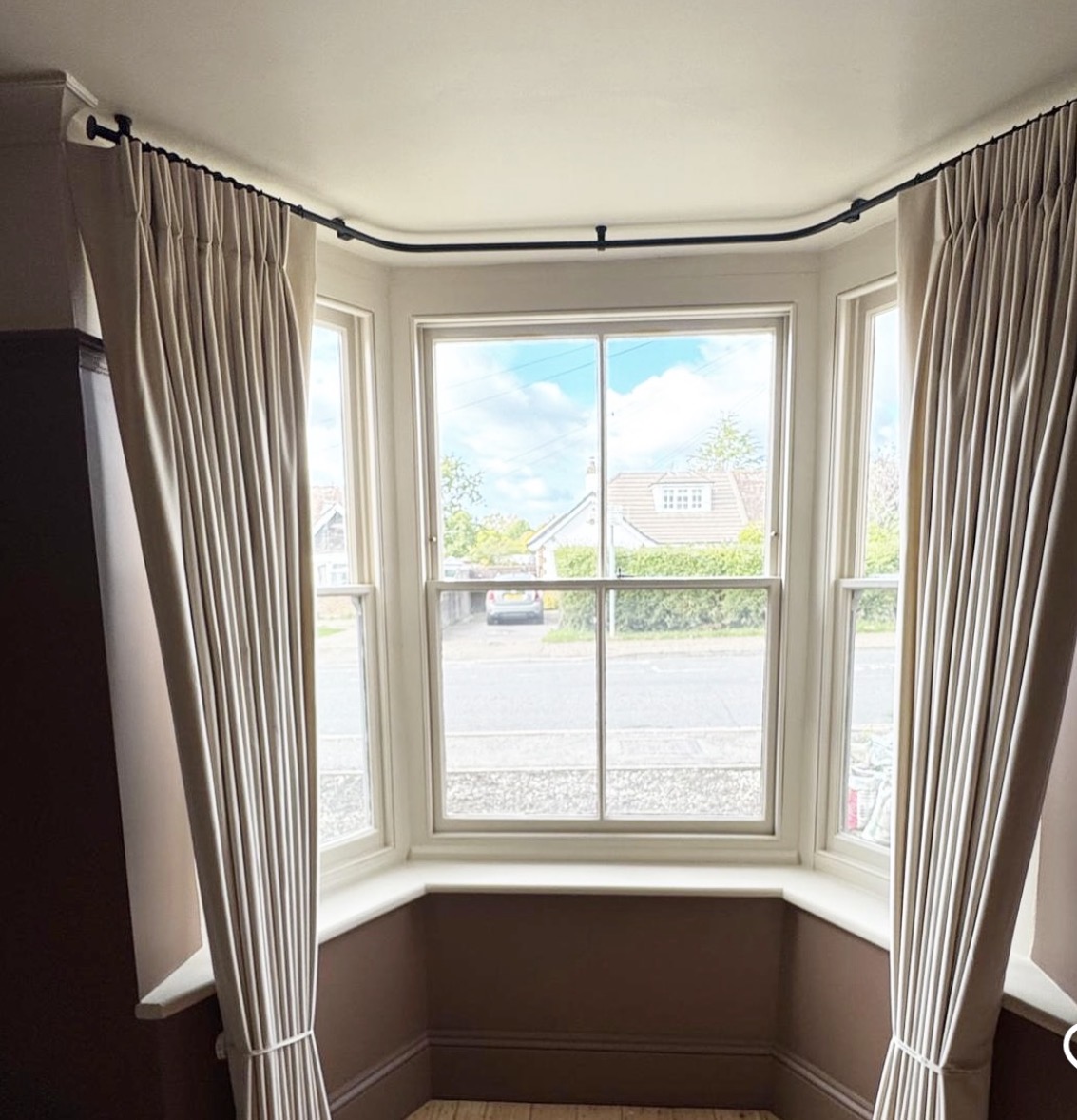
Bay windows can make a room feel brighter, bigger, and more welcoming.
They bring in natural light and give you a lovely spot to enjoy your morning coffee, read a book, or decorate with your favorite pillows.
But there is one little problem. Bay windows can make it easy for neighbors or people walking past your home to see inside, especially if your windows face the street or a nearby house.
The good news is that you don’t have to sacrifice your privacy to have beautiful windows.
The right curtains, shades, or blinds can give you the coverage you need while making your home look stylish and inviting.
Whether you are decorating a cozy living room, a peaceful bedroom, or a charming breakfast nook, there is a bay window treatment that can work for your space.
In this guide, you’ll discover seven stylish bay window treatment ideas for privacy.
Each one is easy to picture, and you can adapt the look to suit your home’s style, budget, and lighting needs.
1. Floor-Length Curtains for a Soft, Elegant Look
If you want your bay window to look elegant without making the room feel too formal, floor-length curtains are a beautiful choice.
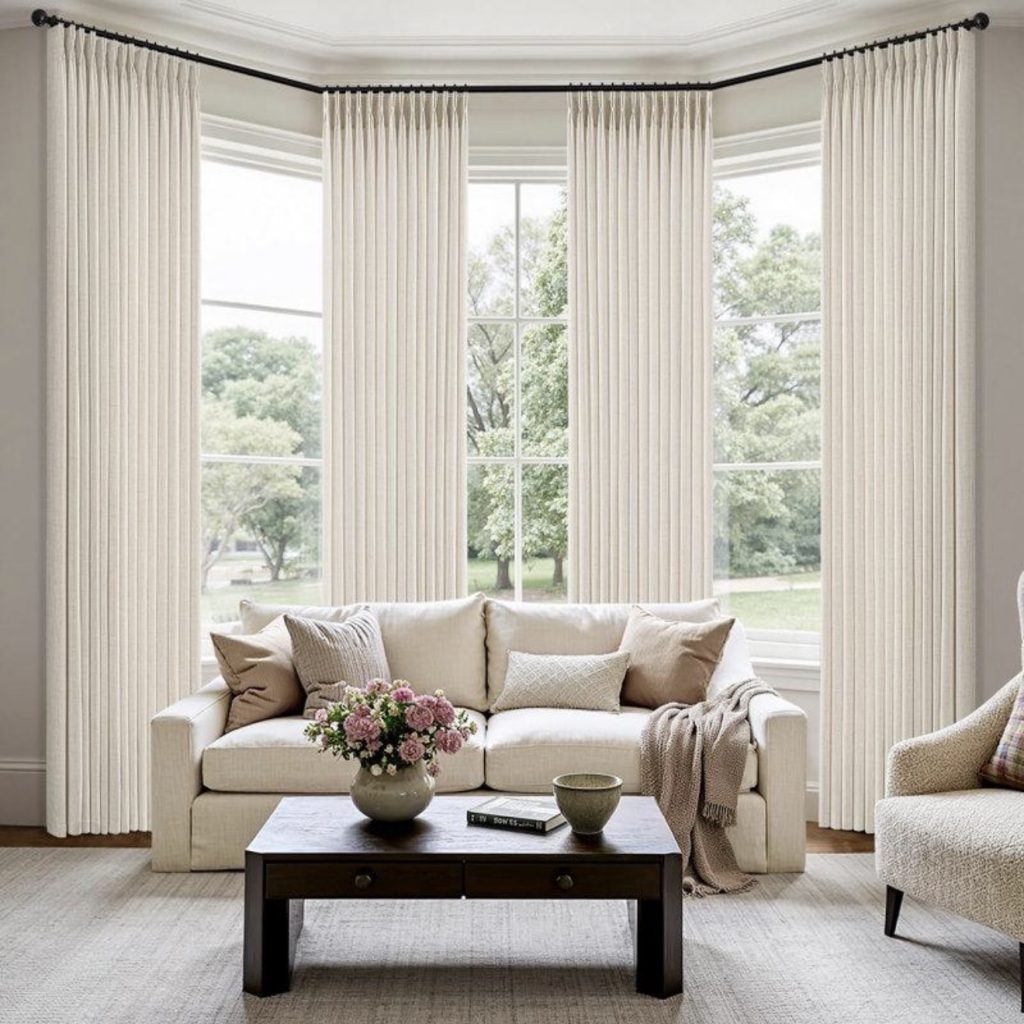
Long curtains soften the sharp lines of the window and make the entire area feel more finished. They work especially well in living rooms, bedrooms, and sitting rooms where you want a cozy, welcoming atmosphere.
For privacy, choose curtains made from medium-weight or blackout fabric. Lightweight, sheer curtains may look pretty during the day, but they usually won’t provide enough privacy at night when the lights inside your home are on.
How to style this look
Start with neutral colors such as ivory, warm white, beige, or soft gray. These shades work with many American home decor styles, including modern farmhouse, traditional, transitional, and contemporary interiors.
If you prefer a little more color, consider sage green, dusty blue, or muted blush. These colors can make the window feel like a decorative feature instead of something you are simply trying to cover.
Hang the curtains as high as practical to make the room feel taller. Let the panels reach the floor for a polished appearance.
For a bay window with three separate sections, you can use a carefully planned curtain track or rods fitted to the window’s angles. Make sure the panels can move without catching on the corners.
Privacy tip: Choose lined curtains and close them in the evening. If you want daylight without exposing your room to outside views, pair them with a light-filtering shade.
This idea is perfect for anyone who loves soft fabrics, warm colors, and a classic, comfortable home.
Learn how to style your living room bay window to look cozy and classy.
2. Roman Shades for a Clean and Tailored Finish
Roman shades are a great option if you love a neat, uncluttered look. Unlike long curtains, they sit close to the window and fold into attractive horizontal pleats when raised.
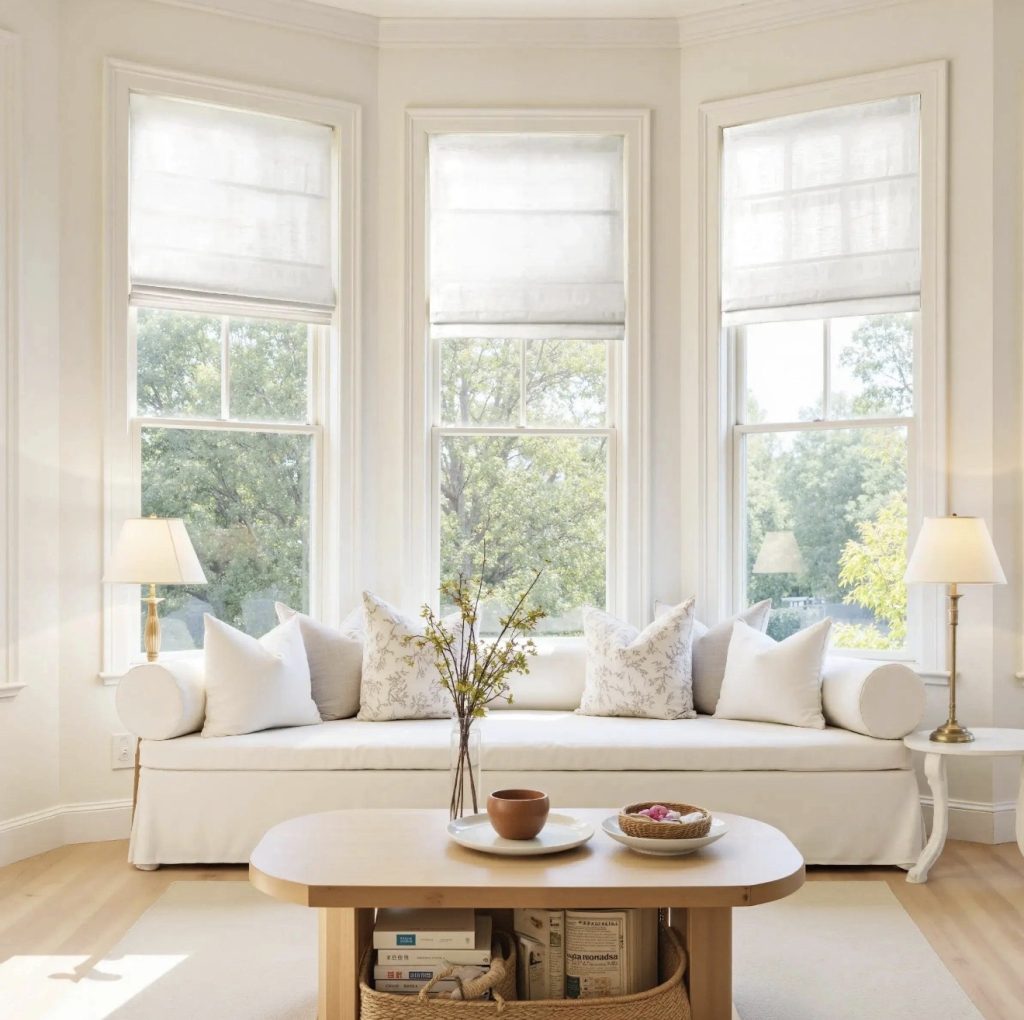
They are especially useful in smaller living rooms, dining areas, and bay window breakfast nooks where long curtains might get in the way of furniture.
You can install an individual Roman shade on each window section. This allows you to adjust the coverage based on where sunlight enters the room and which windows need more privacy.
How to style this look
For a relaxed, timeless appearance, choose linen-look fabric in cream, oatmeal, or light taupe. These shades work beautifully with wooden furniture, neutral upholstery, and natural textures.
For a more dramatic look, try navy blue or forest green Roman shades against white walls. They can make the bay window stand out without overwhelming the room.
Flat Roman shades offer a streamlined appearance, while relaxed or softly folded styles feel more casual.
When choosing fabric, look for a privacy lining or room-darkening lining, depending on the room’s needs. Standard decorative fabric may not block enough visibility on its own.
Privacy tip: Lower the shades to cover the areas where people could see inside. If you want the room to remain bright, consider light-filtering fabric that obscures clear views rather than relying on sheer material.
Keep in mind that light-filtering shades may still reveal silhouettes at night.
A room-darkening option provides more coverage when privacy is especially important.
Roman shades are ideal if you want a stylish treatment that looks custom-made without adding too much visual bulk.
3. Cellular Shades for Modern Privacy and Comfort
If privacy is your main concern, cellular shades are worth considering. Also called honeycomb shades, they have a folded structure that creates small air pockets. They offer a clean appearance and can help insulate your windows, too.
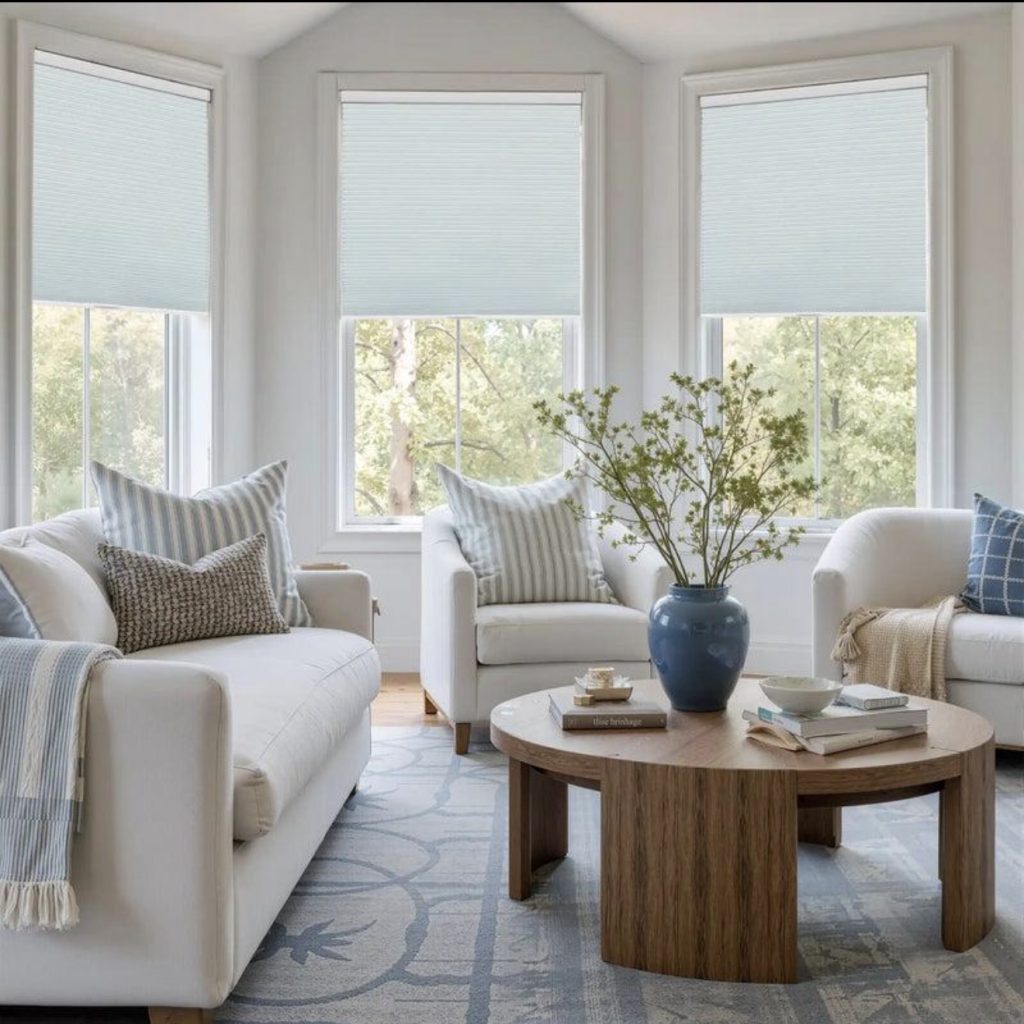
These shades are particularly useful for bay windows because each one can fit its own window section. Their compact design can also help reduce interference where the angled windows meet.
How to style this look
White cellular shades are a lovely choice for a bright, modern living room. They blend into white window frames and keep the space looking simple.
For a warmer look, choose cream, light beige, or soft gray. These colors pair nicely with wood floors, textured rugs, and comfortable upholstered furniture.
If your bay window has a built-in bench, cellular shades are a practical option because they don’t require long fabric panels hanging over the seat.
You can also choose top-down, bottom-up cellular shades. These let you lower the top portion to bring in daylight while keeping the bottom covered to limit views into your home.
Privacy tip: Check the opacity before buying. Light-filtering cellular shades soften incoming light but may reveal shadows at night. Blackout versions provide stronger privacy when closed.
For the best fit, measure each window section separately and check how much clearance the shade hardware needs at the angled corners.
This idea works especially well for women who want a practical, low-fuss window treatment that looks neat throughout the day.
Discover cozy Bay Window curtain ideas women love.
4. Plantation Shutters for Classic, Timeless Style
Plantation shutters are a beautiful way to give your bay window a polished, built-in appearance. Their wide horizontal louvers can be tilted to adjust light and privacy, while the solid frames create a clean architectural finish.
They look especially attractive in traditional homes, modern farmhouse interiors, coastal spaces, and transitional living rooms.
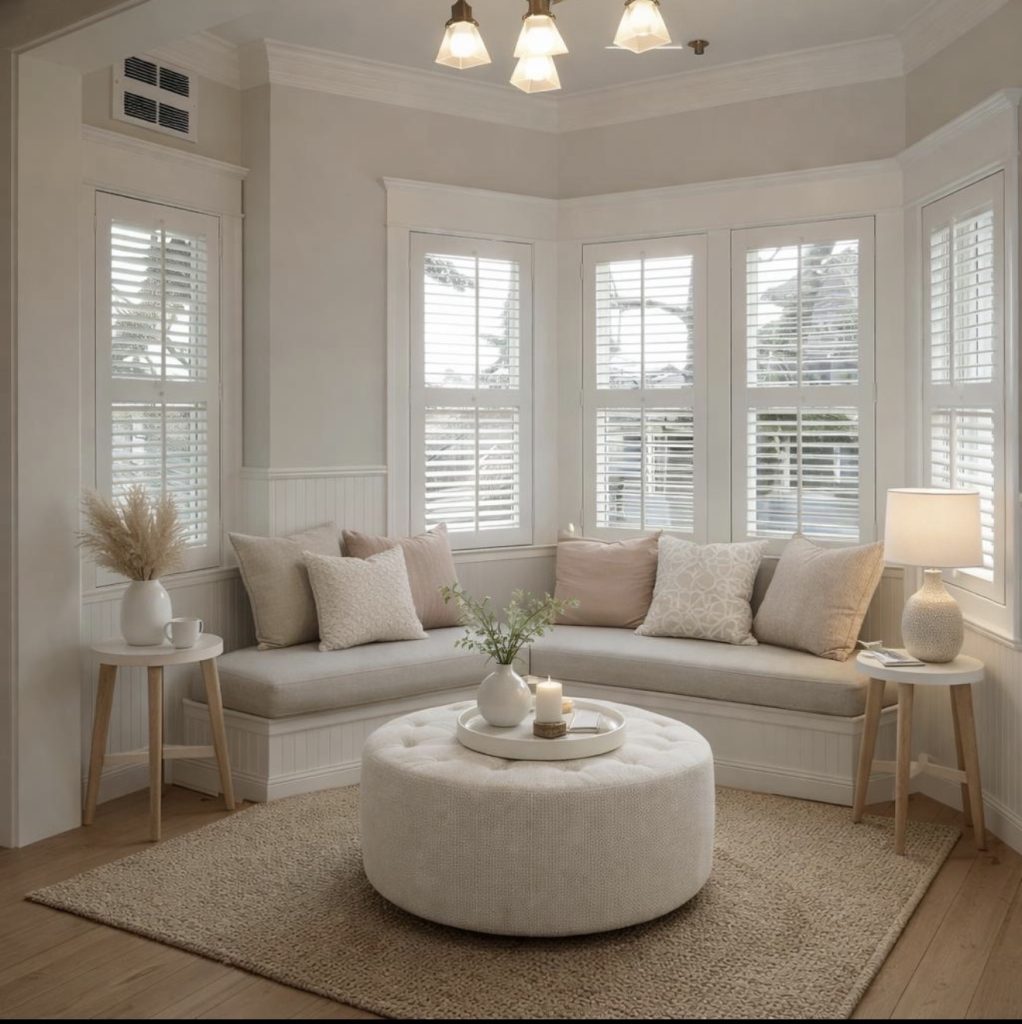
Unlike curtains, shutters don’t need fabric to hang around the window. This makes them a good option if your bay window has a deep sill, a window seat, or furniture close to the glass.
How to style this look
White shutters are a classic choice. They make the window feel bright and coordinate easily with white trim, neutral walls, and natural wood furniture.
For a softer appearance, choose warm white or cream. If you want a more dramatic finish, consider stained wood shutters that complement your flooring or furniture.
You can install shutters on each section of the bay window so the panels follow the window’s shape. This creates a cohesive look without forcing one large treatment across several angled panes.
Privacy tip: Close the louvers when you want more privacy, especially after dark. Tilt them to balance daylight and visibility during the day, but remember that partially open louvers can still allow people outside to see in from certain angles.
Shutters are often a larger upfront investment than basic shades, so compare materials and installation costs before committing.
Composite shutters may be worth considering in areas where durability and easy cleaning matter.
Choose this look if you want a timeless window treatment that feels like part of the home’s original architecture.
5. Layered Curtains and Shades for Maximum Flexibility
Why settle for one window treatment when you can combine two?
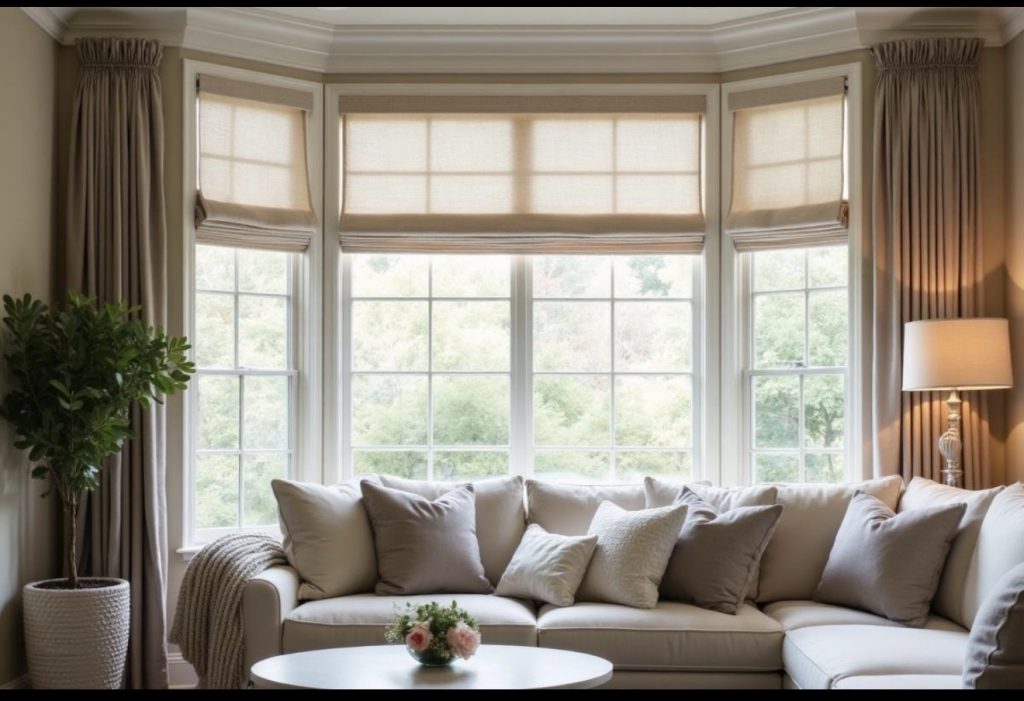
Layering shades with curtains gives you more control over privacy, light, and the overall appearance of your room.
This is one of my favorite ideas for a bay window because the shade handles everyday coverage while the curtains add softness and style.
The two treatments serve different purposes, so you don’t have to choose between a practical window and a beautiful one.
How to style this look
Start with a shade fitted to each window section. Roman shades, cellular shades, and roller shades can all work, depending on the space available around the angled corners.
Next, add curtains in a coordinating fabric. Warm white shades paired with oatmeal curtains create a calm, inviting look.
For a little more personality, try sage green curtains with cream shades or navy curtains with white shades.
If your living room has a window seat, keep the shade close to the glass and choose curtains that frame the outside edges of the bay.
This adds visual interest without covering the entire seating area.
For bedrooms, consider room-darkening shades paired with lined curtains. This combination is useful when you want privacy, reduced morning light, and a cozy atmosphere.
Privacy tip: Use a shade that provides sufficient coverage for the time of day you need it. Sheer curtains can soften sunlight, but they are not a reliable nighttime privacy solution when interior lights are on.
Layering also requires some planning. Make sure the curtain rod or track and shade hardware have enough space to operate without bumping into each other.
This idea is perfect if you want your bay window to look professionally styled while remaining flexible for everyday life.
6. Wooden or Faux Wood Blinds for Adjustable Privacy
If you like having control over how much people can see inside your home, wooden or faux wood blinds are another attractive option.
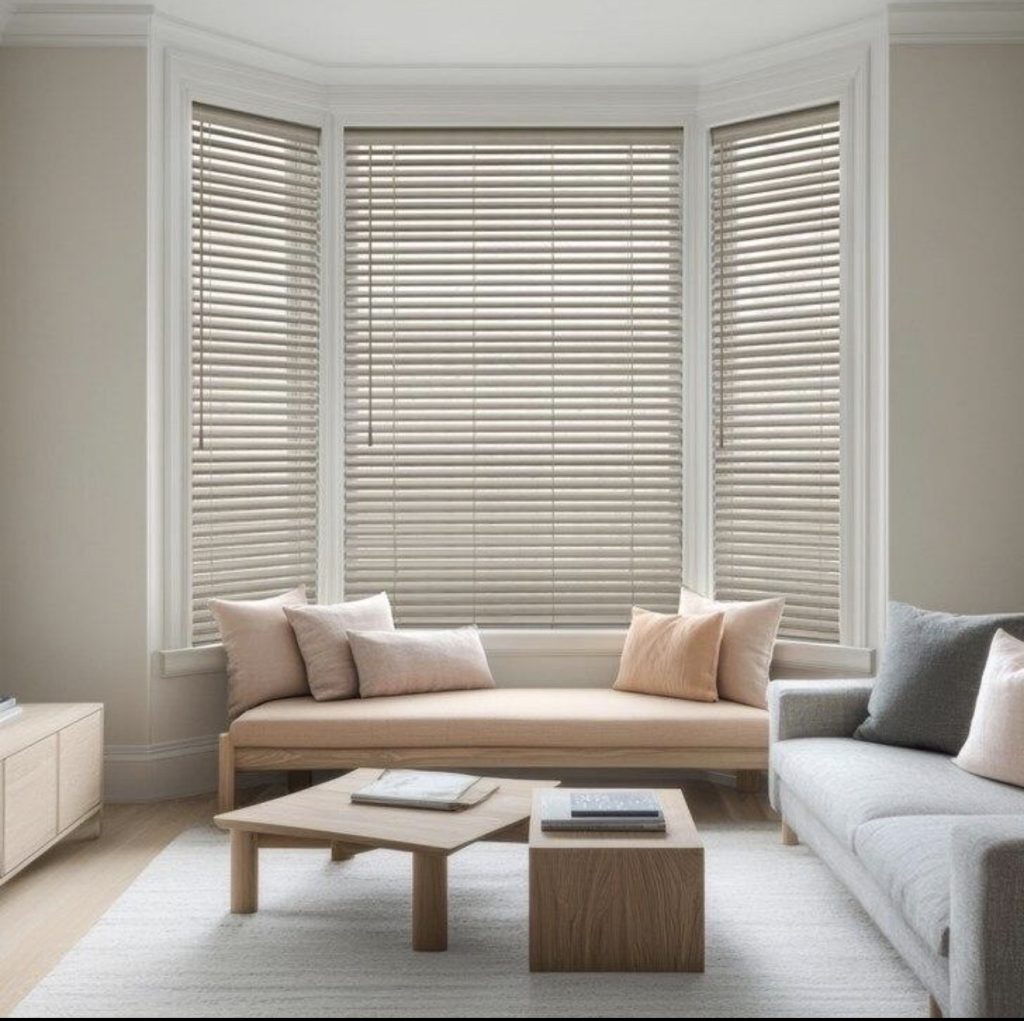
Their horizontal slats can be tilted to direct sunlight upward or downward while limiting direct views into the room. When you need more coverage, close the slats fully.
Real wood blinds bring warmth and natural texture. Faux wood blinds offer a similar appearance and are often a practical choice for households that want easy-to-clean window coverings.
How to style this look
Choose white or off-white blinds for a fresh, classic appearance. They work beautifully with white trim, neutral furniture, and farmhouse decor.
Natural wood tones are ideal for rooms with oak floors, wooden dining tables, woven baskets, or warm beige walls. They add contrast without making the window feel heavy.
For a bay window, install separate blinds in each section rather than trying to fit one oversized blind across the entire angled area. This lets you adjust each window independently.
If you have a breakfast nook, faux wood blinds can be especially practical because they offer a simple look without long fabric panels near the table.
Privacy tip: Fully close the slats at night. Tilted slats can leave sightlines into your room, and even closed blinds may have small gaps depending on their design and fit.
For a cleaner appearance, look for cordless models or blinds with concealed operating mechanisms. Follow the manufacturer’s safety instructions, especially in homes with children.
This is a great choice for anyone who wants a traditional window treatment with adjustable light control and a relatively simple design.
7. Frosted Privacy Window Film for a Bright, Minimalist Look
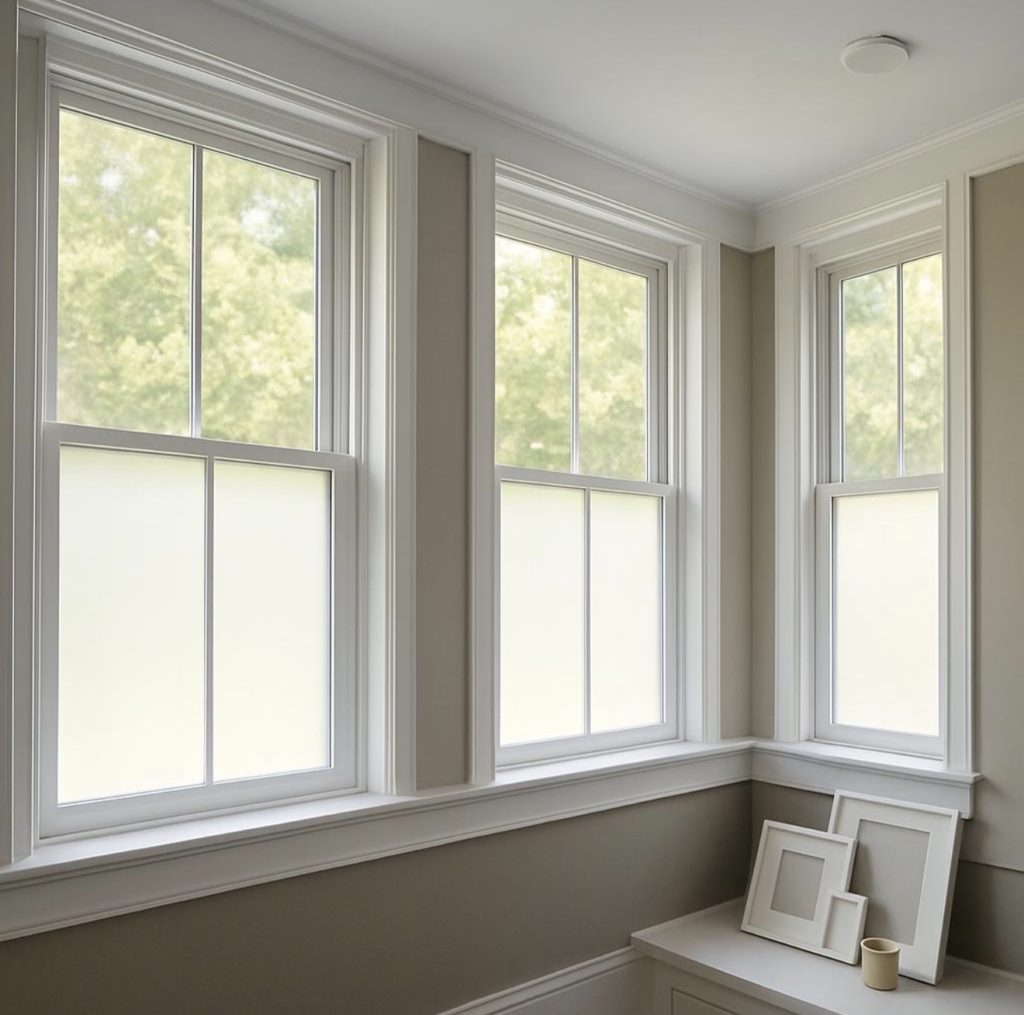
Want privacy without adding fabric, bulky blinds, or curtain rods? Frosted window film is worth a look.
This thin film attaches to the glass and obscures the view through the treated area. It allows daylight to enter while making it difficult to see details on the other side.
It works particularly well in bay windows that face a sidewalk, a driveway, or a nearby home. It can also be useful in a breakfast nook or reading corner where you want privacy without covering the whole window.
How to style this look
For a clean, modern finish, choose plain frosted film on the lower portion of each window. Leave the upper glass clear if you want to preserve an open view of the sky and surrounding trees.
If you prefer a decorative touch, look for subtle geometric patterns, etched-glass effects, or delicate botanical designs. These options can make your bay window feel more personalized without taking up space.
Frosted film also works well with simple white trim and minimal decor. Add a small plant, a neutral cushion, or a wooden bench nearby to keep the area warm and welcoming.
Privacy tip: Frosted film can provide privacy both day and night on the treated glass, but it does not cover the untreated parts of the window.
It also won’t block every view of movement or detail in the same way an opaque covering does.
Before applying film, check the product instructions and confirm that it is compatible with your particular window glass.
Some films can be unsuitable for certain insulated or coated windows.
This idea is ideal if you love a bright, uncluttered room and want a privacy solution that doesn’t require daily opening and closing.
Learn how to choose living room curtains that will complement your existing design and layout.
How to Choose the Best Bay Window Treatment for Your Home
Before choosing your favorite design, think about how you use the room and when you need privacy most.
- For living rooms: Layered curtains and shades offer flexibility and a cozy finish.
- For bedrooms: Blackout-lined curtains or opaque cellular shades provide strong coverage.
- For breakfast nooks: Roman shades or faux wood blinds keep the window area neat.
- For modern homes: Cellular shades and frosted privacy film create a simple, uncluttered look.
- For traditional homes: Plantation shutters and floor-length curtains add timeless charm.
Remember to measure each window section carefully. Bay windows have angled corners, and not every standard-size treatment will fit neatly.
Check the mounting depth and space needed for each shade or blind before ordering.
Most importantly, test your privacy after dark. A treatment that hides your room during daylight may reveal shadows or silhouettes when the lights inside are on.
Frequently Asked Questions
What is the best window treatment for a bay window?
The best treatment depends on your privacy needs and decorating style. Cellular shades, Roman shades, plantation shutters, and lined curtains are all good options. For flexible privacy and a finished appearance, consider combining individual shades with curtains.
How can I make my bay window private without blocking light?
Try top-down, bottom-up shades, frosted privacy film on the lower glass, or light-filtering shades paired with curtains. These options can preserve daylight while limiting views into your room. For nighttime privacy, choose an additional covering that fully blocks visibility.
Are curtains or blinds better for bay windows?
Both can work well. Curtains add softness and suit traditional or cozy interiors, while blinds offer adjustable light control and a more structured appearance. Shades are also worth considering because individual units can fit neatly into each angled window section.
How do I get privacy at night without making my room too dark during the day?
Use two layers with different purposes. Light-filtering shades can soften daylight, while lined curtains provide coverage after dark. You can also choose top-down, bottom-up shades that allow light through the upper part of the window while covering the lower section.
Can people see through frosted window film at night?
Quality frosted privacy film obscures clear views through the treated glass during both day and night. However, untreated portions of the window remain exposed, and the film may not block every shadow or movement. Check the product’s privacy specifications before purchasing.
Final Thoughts
Your bay window should be a feature you enjoy, not a part of your home that makes you worry about people looking inside.
From elegant floor-length curtains to practical cellular shades and decorative frosted film, there are plenty of ways to make your space feel private without losing its charm.
If you love a soft, cozy look, start with lined curtains or layered shades. If you prefer a clean and modern finish, consider cellular shades or plantation shutters. And if you want privacy without bulky window coverings, frosted film may be the perfect solution.
My favorite all-around option is layering fitted shades with curtains. It gives you everyday privacy, flexible light control, and the soft, finished look that makes a room feel like home.
Choose a treatment that suits your lifestyle, measure your bay windows carefully, and enjoy a space that feels comfortable, stylish, and private.