

8 Timeless European Farmhouse Kitchen Design Ideas You Haven’t Seen Before
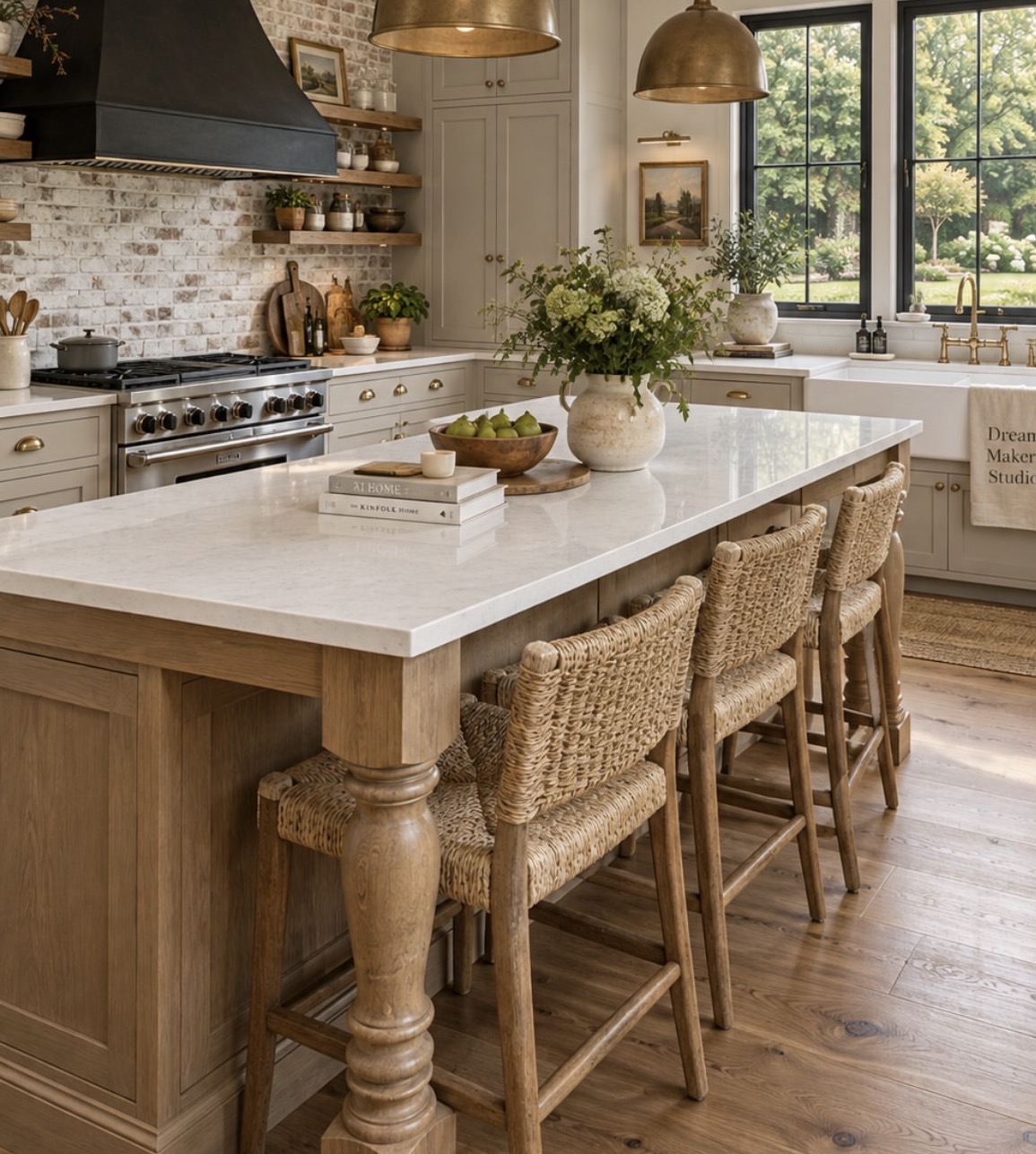
If you love kitchens that feel warm, welcoming, and full of character, European farmhouse style might be exactly what your home needs.
Think creamy cabinets, natural wood, aged brass hardware, stone countertops, and beautiful little details that make a kitchen feel like it has been part of the home for generations.
But European farmhouse kitchens are about more than rustic wood and vintage accessories.
They combine old-world charm with practical design, creating spaces that feel collected, comfortable, and effortlessly beautiful.
The best part? You don’t need a centuries-old French cottage or a sprawling Italian country house to get the look. You can bring this style into a modern American home, even if your kitchen is small.
And if you’re tired of seeing the same white cabinets, farmhouse sinks, and open shelves everywhere, there are plenty of fresh ways to approach this design.
From weathered stone islands to furniture-style cabinetry and charming antique-inspired details, these 8 European farmhouse kitchen ideas offer something a little different. Each one is easy to picture, and you can adapt it to fit your budget, your kitchen size, and your personal taste.
1. Create a Kitchen Around a Weathered Stone Island
Most kitchen islands are designed to look polished and brand-new. But in a European farmhouse kitchen, an island with the appearance of aged stone can become the most beautiful feature in the room.
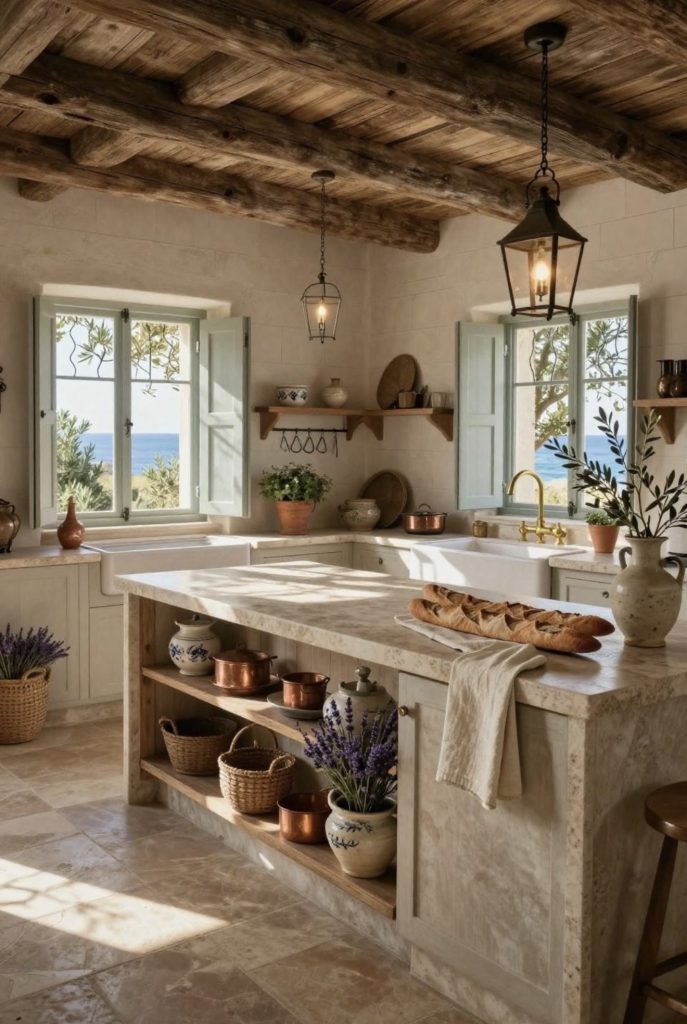
Imagine a chunky limestone island with soft beige tones, subtle natural markings, and a slightly textured finish. Pair it with creamy cabinets, antique brass faucets, and warm wood flooring. The result feels relaxed and elegant without looking too formal.
You don’t have to use expensive natural stone to achieve this look. Quartz with gentle stone-like veining or a quality stone-look surface can give you a similar effect. You could also use a plaster-style finish on the island base to create an old-world appearance.
The secret is choosing materials that look natural rather than overly glossy.
For the surrounding cabinets, stick to warm white, ivory, or muted taupe. Add a few wooden stools with simple legs, and keep the countertop decor minimal. A ceramic bowl filled with pears or a small arrangement of branches is often enough.
Why this idea works: The island becomes a natural focal point without relying on bold colors or trendy decorations. It also gives a modern kitchen the relaxed character of an old European country home.
If you’re planning a kitchen renovation, start with the island. Its material and shape can help guide the rest of your design choices.
Check out these Rusti European Farmhouse bedroom ideas for small spaces.
2. Mix Painted Cabinets With Natural Wood
An all-white kitchen can be beautiful, but sometimes it needs a little contrast to feel warm and personal. One way to get that balance is to combine painted cabinets with natural wood.
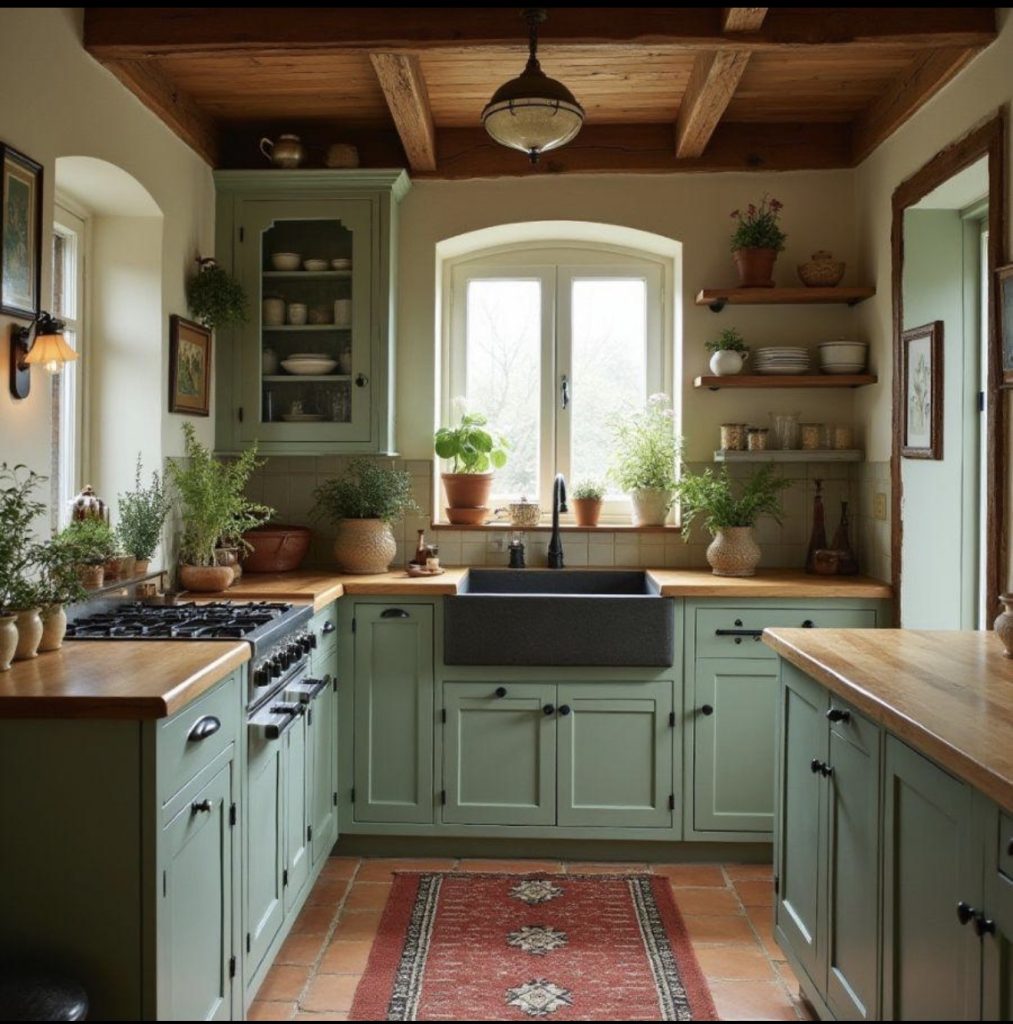
This look is common in traditional European interiors, where kitchens often develop gradually rather than being designed as one perfectly matching set.
For a fresh take, try muted sage-green lower cabinets with natural oak accents. Another lovely combination is creamy upper cabinets with walnut drawers or a warm wood pantry cabinet.
You can also reverse the arrangement. Use natural wood for the lower cabinets and paint the upper cabinets a soft mushroom shade.
The goal is to create contrast without making the kitchen feel busy.
Choose wood with a natural grain and a finish that doesn’t look too orange or glossy. Oak, walnut, and reclaimed-looking timber can all work well. For painted cabinets, consider olive green, dusty blue, warm cream, or earthy gray.
If your kitchen is small, you can still try this idea. Keep most of the cabinetry light and introduce wood through a pantry cabinet, a few open shelves, or a butcher-block countertop on a small work area.
Finish the design with simple hardware in aged brass or brushed bronze.
Why you’ll love it: The combination feels timeless because it brings together two materials that naturally complement each other. It also makes the kitchen feel more layered and less like a showroom.
You don’t need to replace every cabinet, either. Painting your existing cabinets and adding a few natural wood elements can be enough to change the entire mood of the room.
3. Frame the Stove With a Sculptural Plaster Range Hood
If there’s one place to add personality to a European farmhouse kitchen, it’s the wall above the stove.
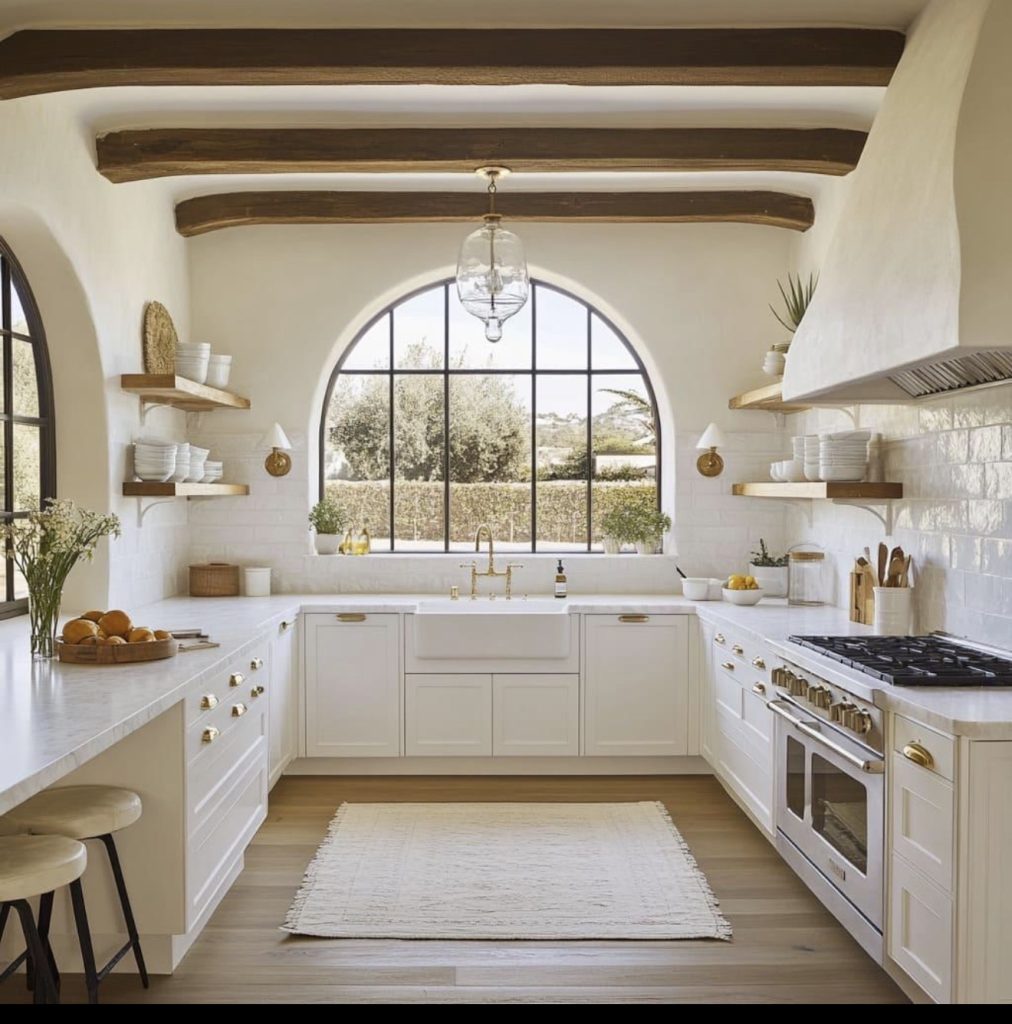
Instead of choosing a standard stainless steel range hood, consider a sculptural plaster hood with a curved bottom, gently tapered sides, or a simple chimney shape. It gives the cooking area an architectural look without requiring lots of decoration.
Picture a creamy plaster hood against warm white walls, with a handmade tile backsplash underneath. Add natural wood cabinets, a stone countertop, and a few brass details. The entire kitchen will feel softer and more inviting.
You can take this idea in different directions. A rounded hood works beautifully in a French country kitchen, while a simple rectangular hood suits an understated English farmhouse style.
For an extra touch of character, extend the hood slightly beyond the cooking surface and use a subtle plaster finish that resembles aged limestone.
Keep the surrounding details simple. You don’t need a dramatic backsplash, colorful cabinets, and ornate lighting competing for attention. Let the hood be the star.
If you’re working with an existing kitchen, a custom plaster finish or a decorative hood surround may be possible without completely changing your cabinets. Always have the design and ventilation requirements checked by a qualified professional.
Decorating tip: Use warm ivory rather than stark white. It will blend beautifully with natural wood, stone, and traditional European-inspired finishes.
Discover vintage Americana kitchen decor ideas oldies love.
4. Turn an Antique-Style Hutch Into Your Kitchen’s Showpiece
Here’s an idea for anyone who loves vintage furniture but doesn’t want their kitchen to look cluttered.
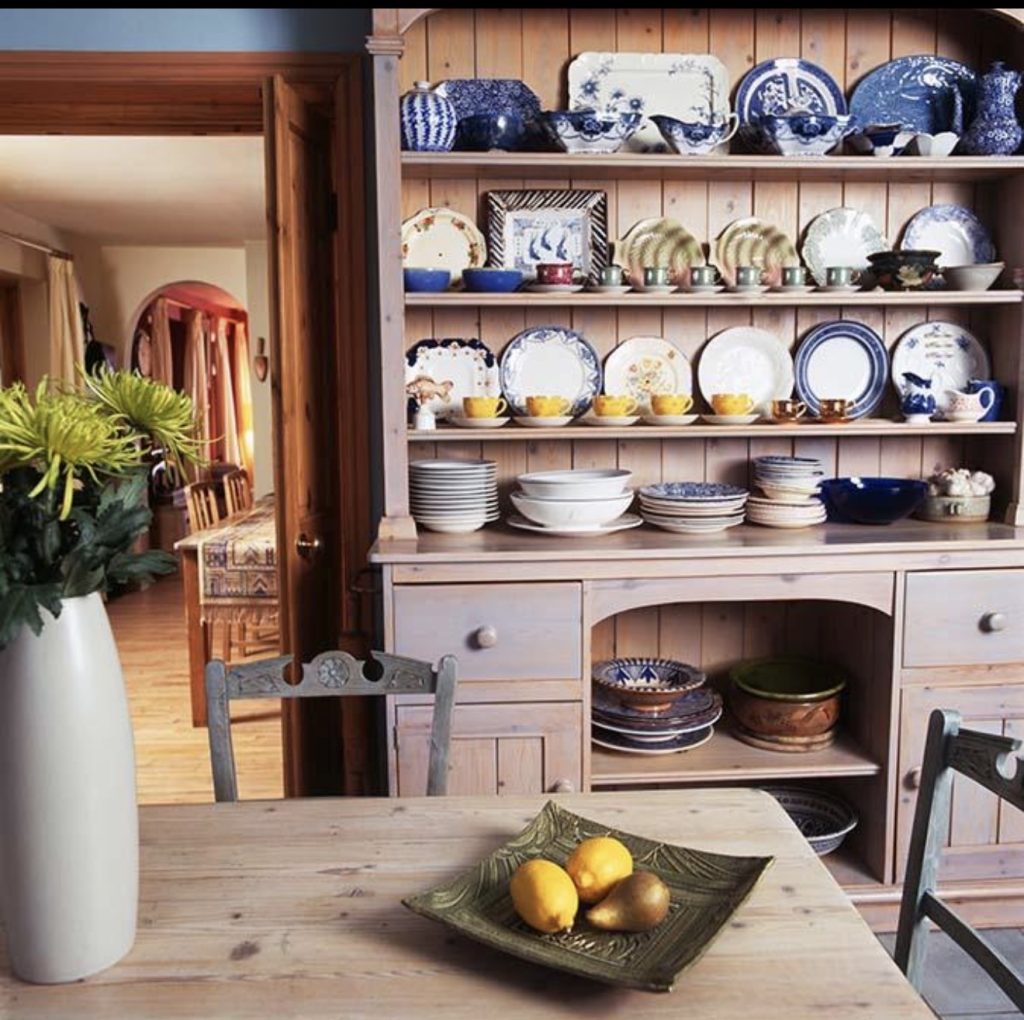
Instead of filling every wall with matching upper cabinets, introduce a furniture-style hutch. This could be a tall antique cabinet, a freestanding pine dresser, or a built-in cabinet designed to resemble a piece of old European furniture.
Look for features such as glass-front doors, small drawers, decorative molding, and a slightly distressed finish. These details help the kitchen feel collected over time.
You can paint the hutch a muted blue, sage green, or warm cream. Alternatively, leave the wood natural to create contrast against lighter cabinets.
Inside, display everyday pieces that are attractive enough to leave on show. White ironstone dishes, ceramic pitchers, glass jars, and simple serving bowls work especially well.
The key is to avoid arranging everything too perfectly. A few stacked plates, a pitcher beside a bowl, and some neatly folded linen can look more natural than a shelf filled with identical accessories.
If you don’t have space for a large hutch, try a narrow cabinet beside the refrigerator or a small vintage-style dresser against an empty wall.
For a built-in version, ask your cabinetmaker to incorporate furniture-like details, such as decorative feet, framed doors, or a contrasting wood finish.
Why this idea feels special: A hutch adds storage and gives your kitchen a personal story. It also breaks up a long run of cabinetry, making the room feel less uniform.
5. Use Limewashed Walls for Soft, Old-World Texture
Sometimes the most beautiful kitchen details are the ones you barely notice at first.
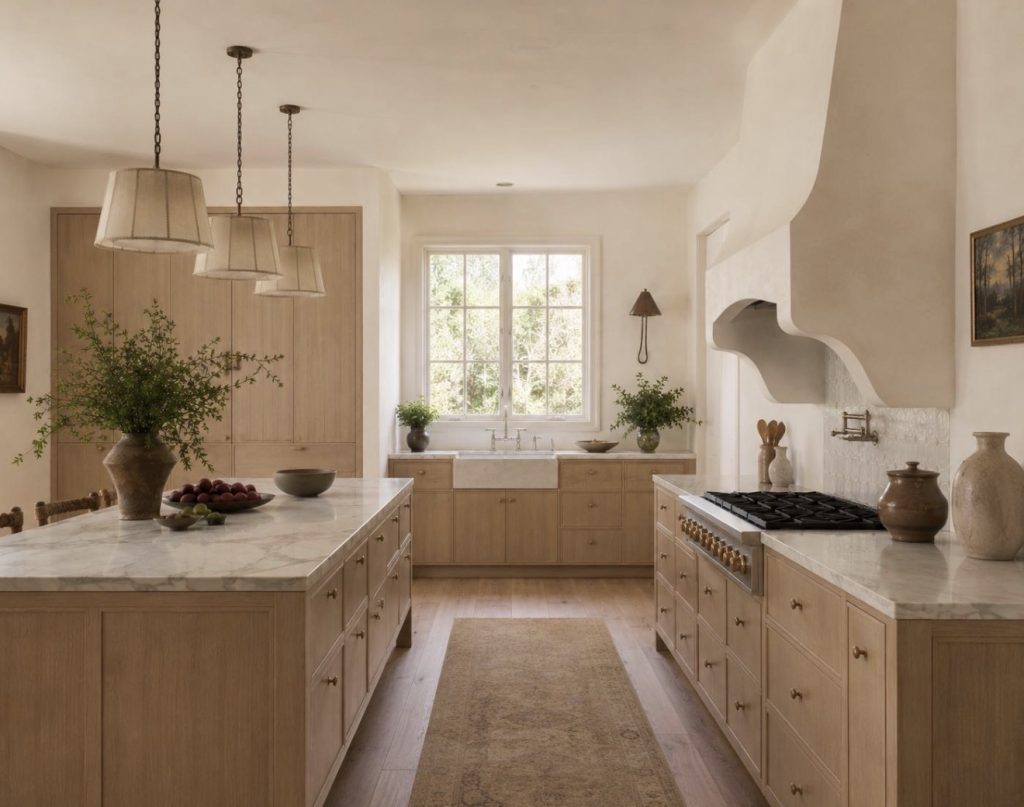
Limewashed walls are a great example. Instead of a perfectly smooth, uniform finish, they have subtle variations in color and texture. The effect feels relaxed and slightly aged, much like the walls of a traditional countryside home.
This finish works particularly well in European farmhouse kitchens because it softens the appearance of cabinets, stone, and wood.
Choose a warm white, pale sand, or creamy beige. These colors make the room feel welcoming without adding too much visual weight.
You can pair limewashed walls with simple oak cabinets, an old-fashioned dining table, and a few ceramic accessories. If your kitchen has exposed wooden beams, the textured walls will help them stand out beautifully.
For something more dramatic, try a muted olive or earthy taupe on one wall while keeping the rest of the kitchen light.
You don’t need to apply the finish throughout the entire room. A breakfast nook, pantry wall, or dining area can be enough to introduce the look.
Before starting, check whether your existing wall surface is suitable for the specific limewash product you choose. Some finishes require special preparation or a compatible base coat. If you want a similar effect with less work, textured mineral paint may be another option.
Remember that natural-looking texture is the goal. You don’t want the walls to look artificially distressed or overly patterned.
Why you’ll love it: Limewash adds depth without requiring artwork, busy wallpaper, or lots of accessories. It’s a lovely way to make a newer American home feel a little more established.
You will like these vintage inspired cottage core kitchen storage ideas to maximize space.
6. Add a Rustic Wooden Prep Table Instead of a Traditional Island
Not every kitchen needs a large, built-in island. In fact, a freestanding wooden worktable can give your kitchen a more authentic European farmhouse feel.
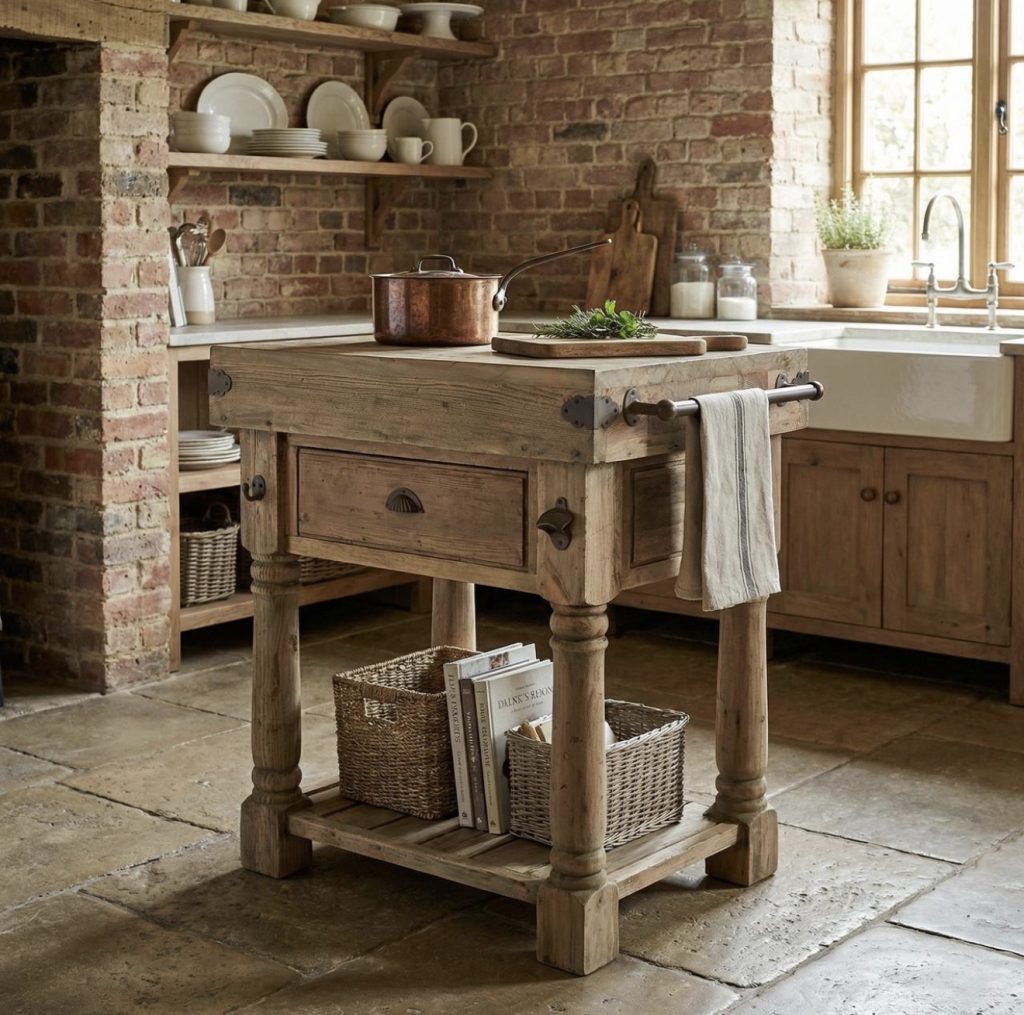
Think of an old butcher-block table with sturdy legs, a thick wood top, and a lower shelf for baskets or bowls. It looks like a piece of furniture rather than another row of kitchen cabinets.
This idea is especially useful if you have a narrow kitchen or want to preserve an open walkway.
Choose a table in natural oak, aged pine, or a darker walnut finish. You can leave it mostly bare or style it with a wooden bowl, a ceramic crock, and a linen towel.
For a practical everyday setup, use the lower shelf for mixing bowls, cutting boards, or baskets of kitchen linens. Just make sure the table is sturdy enough for food preparation and that the countertop finish is suitable for its intended use.
If you love the look but need extra storage, choose a table with a drawer or two. A narrow worktable can also be placed against a wall when you don’t have room for a central island.
For a larger kitchen, consider pairing the prep table with a separate dining table. This creates a relaxed, country-house atmosphere where cooking and gathering happen naturally.
One important detail: measure the walking space around the table before buying it. You want to move comfortably between the sink, stove, and refrigerator.
The result? A kitchen that feels less like a fitted showroom and more like a working country home.
7. Bring in Handmade Tile With Subtle Color Variations
A backsplash doesn’t have to be plain white subway tile to look timeless. Handmade-look tiles can introduce the kind of subtle variation that makes European farmhouse kitchens feel unique.
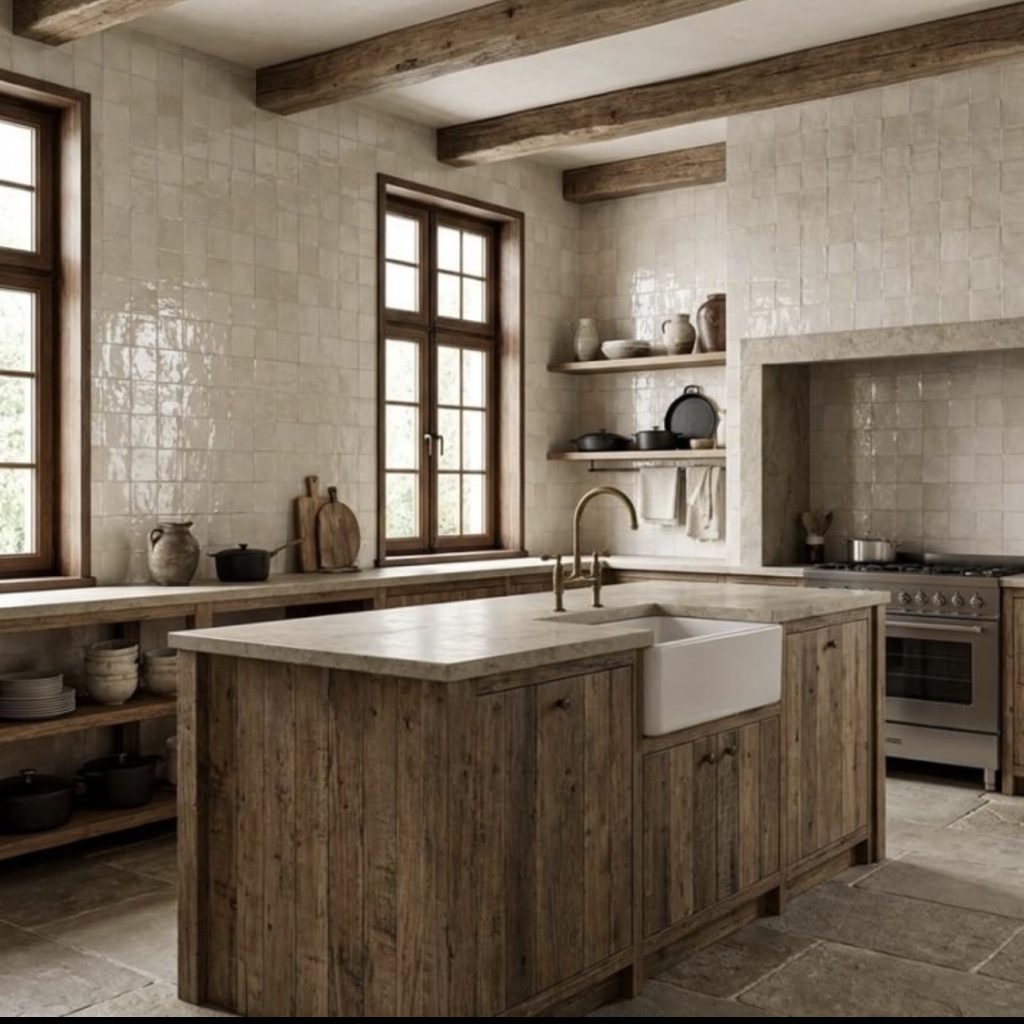
Look for square or rectangular tiles with slightly irregular edges, gentle color differences, and a soft sheen. These details add texture without making the kitchen look overly decorated.
Cream, pale olive, dusty blue, and warm gray are all lovely choices. If you want something especially understated, choose tiles close in color to your cabinets.
For a French-inspired kitchen, try ivory tiles with warm brass fixtures and natural wood shelving. For a more rustic Italian feel, consider earthy terracotta tones or muted green tiles paired with stone countertops.
You can also use a tile backsplash to create a focal point behind the stove while keeping the remaining walls simpler.
Pay attention to the grout, too. A grout color that closely matches the tile creates a softer appearance, while a contrasting grout emphasizes the pattern.
If you’re updating an existing kitchen on a budget, consider replacing only the backsplash rather than the countertops and cabinets.
Choose a finish that is appropriate for a kitchen work area and easy to maintain. Handmade tiles can have uneven surfaces, so ask about cleaning and sealing requirements before purchasing.
Why this works: The backsplash introduces color and craftsmanship without taking away from the natural materials that make European farmhouse kitchens so appealing.
8. Create a Cozy Breakfast Corner With a Built-In Bench
A European farmhouse kitchen should feel like a place where people want to linger, not just somewhere to prepare meals.
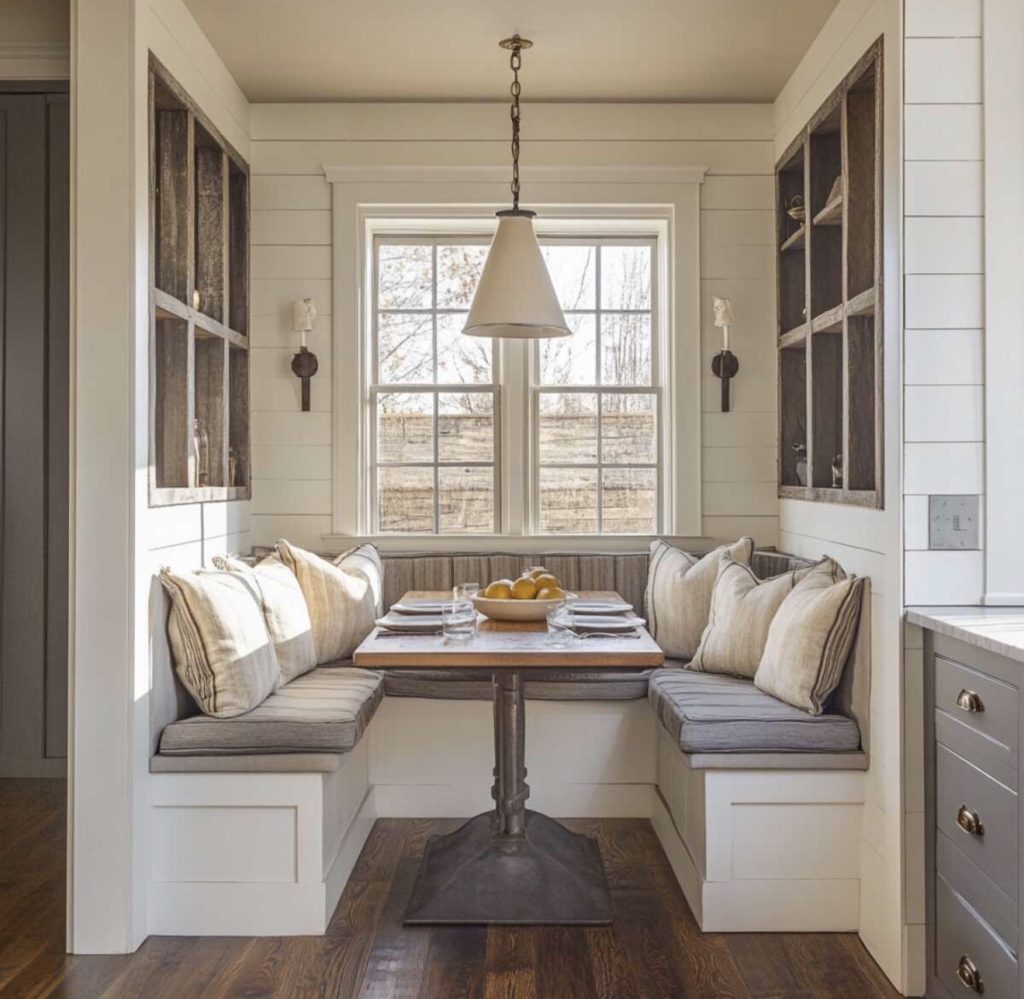
One way to create that feeling is to add a cozy breakfast corner with a built-in bench, a wooden table, and comfortable cushions.
If your kitchen has a window, consider placing the bench beneath it. Natural light makes the area feel brighter, and the window creates a lovely backdrop for your morning coffee.
Choose a bench with drawers or lift-up storage underneath if you need somewhere to keep table linens, cookbooks, or small kitchen items.
For the cushions, use washable linen-look fabric in cream, oatmeal, muted green, or a subtle stripe. These shades complement the natural wood and aged finishes found in European farmhouse interiors.
A round wooden table can make a compact breakfast nook feel more comfortable because it has no sharp corners. If you have more room, a rectangular farmhouse table with turned legs can add traditional charm.
Finish the corner with a small pendant light, a ceramic vase, or a simple framed landscape print.
Don’t worry if your kitchen is small. A compact bench along one wall can provide useful seating without requiring a separate dining room.
If you have an open-plan kitchen, the breakfast corner can also help define the dining area without adding a wall.
Why it works: This design makes the kitchen feel personal and lived-in. It gives you a place to enjoy breakfast, chat with family, read a cookbook, or sit down with a cup of tea while dinner cooks.
How to Make European Farmhouse Style Work in Your Kitchen
You don’t need to use all eight ideas in the same room. In fact, choosing just two or three can create a more balanced result.
Start by deciding which feature matters most to you. Maybe it’s the character of a wooden prep table, the softness of limewashed walls, or the charm of a vintage hutch.
Then build around that feature with complementary colors and materials.
Here are a few simple guidelines to help you get the look right.
- Choose warm neutrals. Cream, ivory, sand, and mushroom create a welcoming backdrop for natural materials.
- Mix materials thoughtfully. Pair wood with stone, painted cabinets with aged brass, or textured walls with handmade tile.
- Avoid making everything match. A little contrast between finishes helps the kitchen feel collected rather than mass-produced.
- Keep everyday items accessible. Wooden bowls, ceramic pitchers, cutting boards, and attractive dishes can serve as both useful tools and simple decorations.
- Balance beauty with function. Make sure your storage, lighting, and work surfaces support the way you cook.
Traditional European country kitchens often combine rustic materials with furniture-like cabinetry, aged hardware, and carefully chosen decorative pieces. Those details are what give the style its enduring appeal. Architectural Digest +1
Most importantly, don’t feel pressured to make your kitchen look old. You can combine modern appliances and convenient storage with traditional finishes and natural textures.
That balance is what makes the style work so well in today’s homes.
Frequently Asked Questions
What is a European farmhouse kitchen?
A European farmhouse kitchen combines traditional country-house charm with natural materials and practical design. Common features include wood cabinetry, stone countertops, warm neutral colors, vintage-inspired hardware, handmade tile, and furniture-style storage. The exact look varies by region, from rustic French country kitchens to understated English farmhouse interiors.
What colors work best in a European farmhouse kitchen?
Warm white, cream, beige, mushroom, sage green, muted olive, and dusty blue are excellent choices. These colors work well with natural wood, stone, and aged metal finishes. You can use a neutral palette throughout or introduce a deeper color on the island, pantry cabinet, or backsplash.
How can I make my kitchen look like a European farmhouse on a budget?
Start with small changes rather than a complete renovation. Paint existing cabinets, replace basic hardware with vintage-inspired pulls, add a wooden prep table, introduce textured wall finishes, or display ceramic dishes on a shelf. A few well-chosen materials can make a noticeable difference without the expense of replacing the entire kitchen.
What is the difference between European farmhouse and modern farmhouse kitchens?
European farmhouse kitchens often emphasize old-world materials, furniture-style cabinetry, natural stone, aged finishes, and collected vintage details. Modern farmhouse kitchens may lean more heavily on crisp white cabinets, black hardware, shiplap, and clean contemporary lines. The styles overlap, but European farmhouse interiors often have a more layered, relaxed, and regionally inspired appearance.
Can I create a European farmhouse kitchen in a small space?
Absolutely. Use light, warm colors to keep the room feeling open, and introduce nat