

How to Choose a Kitchen Faucet That Matches Your Sink
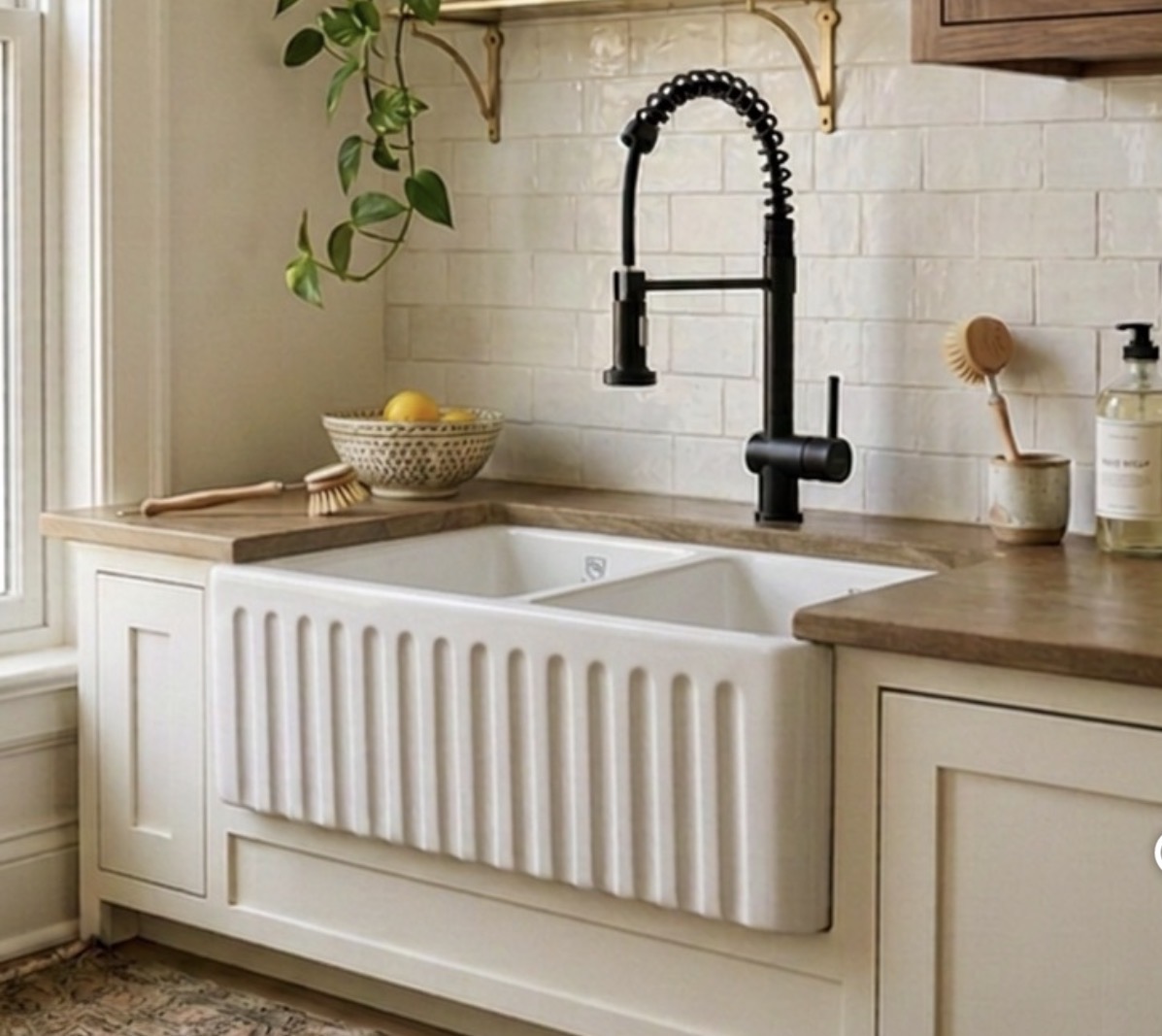
Your kitchen faucet might seem like a small detail, but it can make a big difference in how your kitchen looks and feels.
The right one can make an ordinary sink look stylish, bring your countertops together, and make everyday tasks easier.
The wrong one can leave your kitchen looking a little off, even if you have beautiful cabinets and countertops.
If you’re updating your kitchen, replacing an old faucet, or planning a complete remodel, choosing a faucet that matches your sink is a great place to start.
But matching isn’t just about picking a faucet in the same color as your sink. You also need to think about the sink’s size, shape, number of holes, depth, and overall style.
A faucet that looks beautiful in a showroom might not work well with your particular sink.
Luckily, you don’t have to be an interior designer to get it right.
With a few simple tips, you can find a kitchen faucet that looks like it belongs in your kitchen and works for your everyday needs.
In this guide, I shared with you 8 practical things to consider before making your choice.
Check Your Sink’s Size and Shape
Before you fall in love with a particular faucet, take a good look at your sink. Its size and shape will help you narrow down your options.
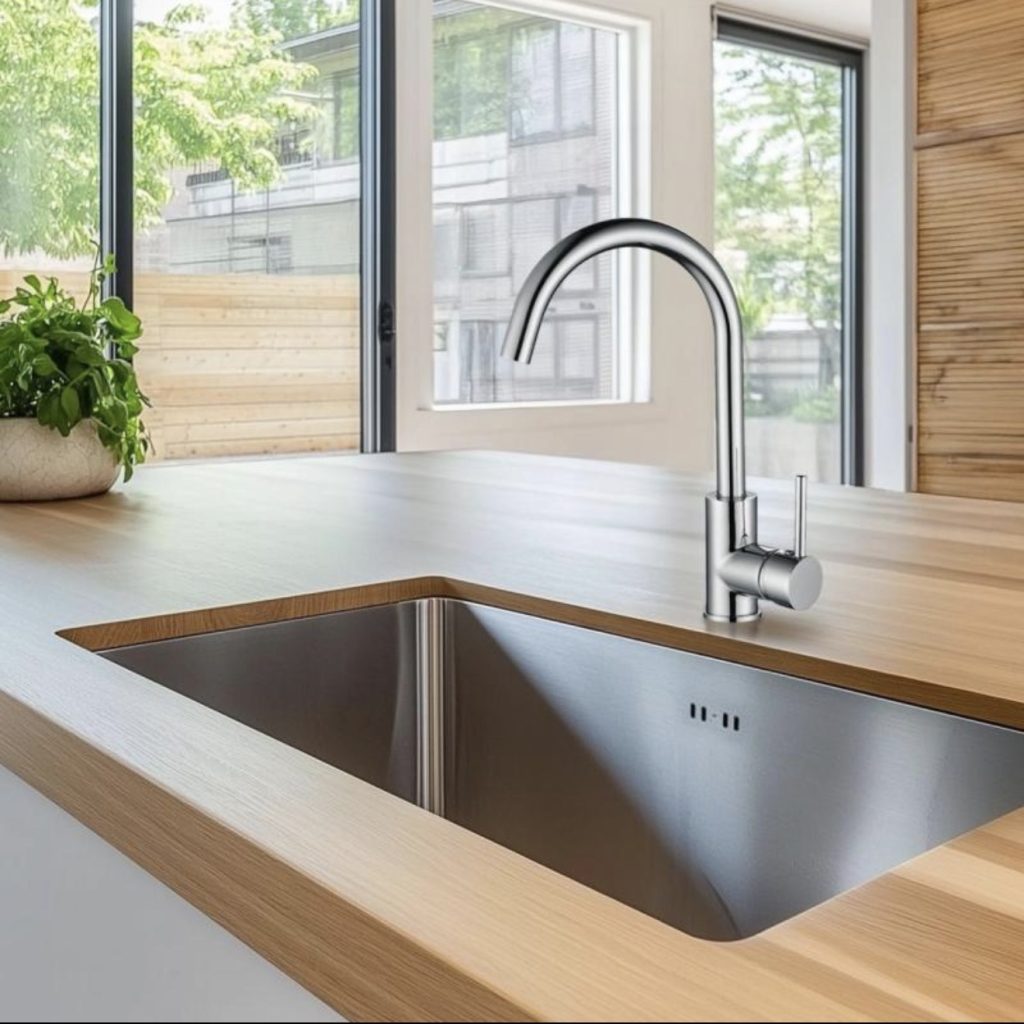
A large, deep kitchen sink usually looks best with a faucet that has enough height and reach to make washing dishes, filling pots, and rinsing vegetables comfortable.
A tiny faucet can look out of proportion with a wide sink. It might also make everyday kitchen tasks more difficult.
On the other hand, a small prep sink or bar sink generally needs a more compact faucet.
Installing an oversized faucet above it can make the whole area feel crowded.
The shape matters, too. A rectangular stainless steel sink often pairs beautifully with a clean, modern faucet. A rounded or curved sink can work well with a faucet that has softer lines.
However, these aren’t strict rules. A curved faucet can look lovely with a square sink, and a straight faucet can complement a rounded basin. What matters is how the shapes work together.
Here are a few things to check:
- Wide sinks: Look for a faucet with enough reach to cover the main washing area.
- Deep sinks: Consider a taller spout that makes filling large pots easier.
- Small sinks: Choose a compact design that doesn’t overwhelm the basin.
- Double-bowl sinks: Consider a faucet that swivels easily between both bowls.
Don’t forget to measure your sink before shopping. Pay attention to the width, depth, and distance from the faucet mounting point to the center of the basin.
These measurements will help you choose a faucet that looks balanced and works comfortably.
Check out these best kitchen sinks with faucets you won’t regret buying.
Match the Faucet Style to Your Kitchen’s Design
Your kitchen faucet should complement both your sink and the rest of your kitchen. Think about the cabinets, countertops, hardware, lighting, and overall decorating style.
If your kitchen has a modern look, a sleek faucet with clean lines can help maintain that appearance.
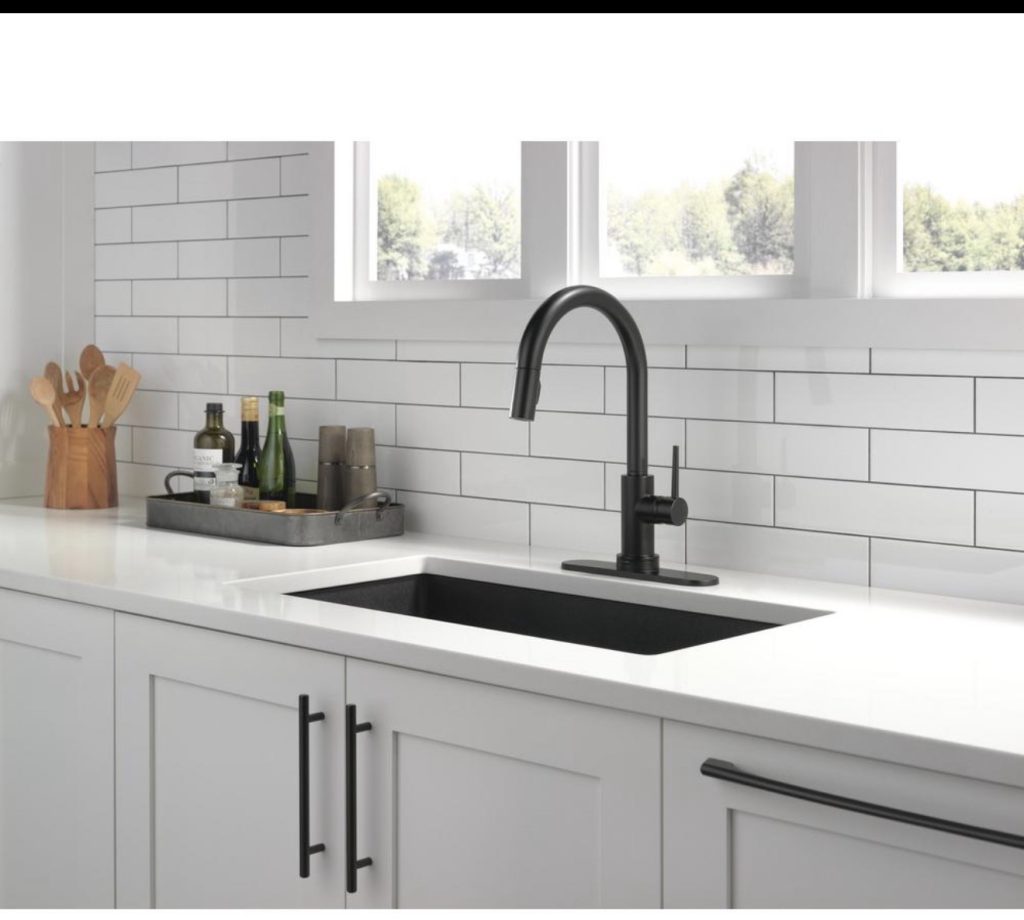
A matte black faucet paired with a stainless steel sink and white quartz countertops creates a crisp, contemporary look.
For a traditional kitchen, consider a polished chrome faucet or a classic bridge faucet. These designs work especially well with detailed cabinetry, farmhouse sinks, and timeless finishes.
If you love farmhouse decor, an apron-front sink can look beautiful with a high-arc faucet or a traditional bridge design. The combination feels warm and welcoming without sacrificing function.
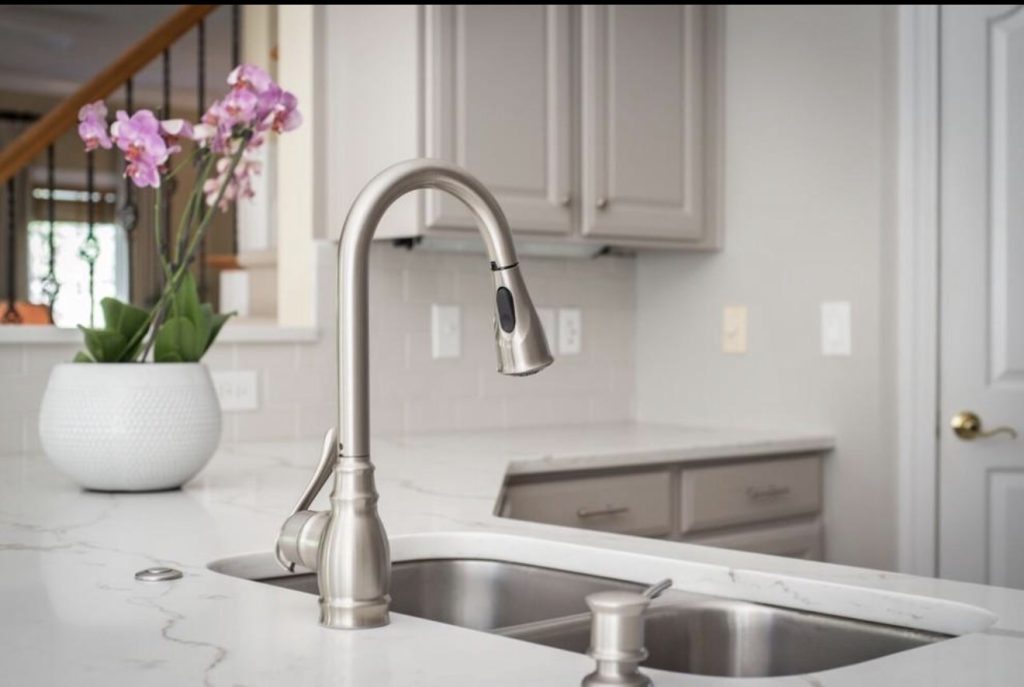
For transitional kitchens, which blend traditional and modern elements, brushed nickel is a lovely option. Its soft finish works with many cabinet colors and sink styles.
You can also use the faucet to introduce a little personality. For example, a brass faucet can bring warmth to a white kitchen, while a black faucet can add contrast to a light-colored sink.
The trick is to create a connection between the faucet and the room.
You don’t have to match every fixture exactly. Instead, look for repeated shapes, finishes, or design details that make the kitchen feel coordinated.
If your cabinets have simple lines, a very ornate faucet might look out of place.
Likewise, an ultra-modern faucet may feel too stark in a kitchen filled with vintage details.
When you’re unsure, take a photo of your kitchen and use it while comparing faucet options.
Seeing the faucet against your actual colors and materials can make the decision much easier.
Choose a Faucet Finish That Complements Your Sink
The faucet finish can completely change the appearance of your sink area. It can make the kitchen feel warm, modern, classic, or a little more luxurious.
The secret is choosing a finish that works with the sink material and the other metal details in your kitchen.
If you have a stainless steel sink, chrome, brushed nickel, and stainless steel faucets are all reliable choices.
They create a coordinated appearance without making the sink area feel too busy.
For a white porcelain or fireclay farmhouse sink, consider brushed brass, polished chrome, or matte black. Brass adds warmth, chrome gives the kitchen a timeless look, and black creates a striking contrast.
If you have a black composite granite sink, a matte black faucet can create a sleek, coordinated appearance.
A brushed gold or chrome faucet can also stand out beautifully against the dark surface.
Here are some popular combinations to consider:
- Stainless steel sink with brushed nickel faucet: A subtle, coordinated look that suits many kitchen styles.
- White sink with matte black faucet: A crisp contrast that works well in modern and farmhouse kitchens.
- White sink with brushed brass faucet: A warm combination that feels elegant without being overly formal.
- Black sink with chrome faucet: A polished contrast that can brighten a dark sink area.
Should your faucet match your cabinet handles? It can, but it doesn’t have to.
For example, you can pair a brushed brass faucet with black cabinet pulls if the combination feels intentional.
You might also repeat the brass in your pendant lights or cabinet hardware to tie the finishes together.
One thing worth remembering is that finishes with similar names can look different between brands.
Brushed nickel and satin nickel, for example, aren’t always identical. If you’re ordering online, compare product photos carefully or look at finish samples before committing.
Also, think about maintenance. Polished chrome can show water spots, while some matte black finishes show mineral deposits.
Brushed finishes often help disguise everyday fingerprints and small marks.
Choose a finish you love, but make sure you’re comfortable with the cleaning it requires.
Check out these Farmhouse kitchen sink decor ideas you will like.
Make Sure the Faucet Fits Your Sink’s Mounting Holes
This is one of the most important things to check before buying a new kitchen faucet.
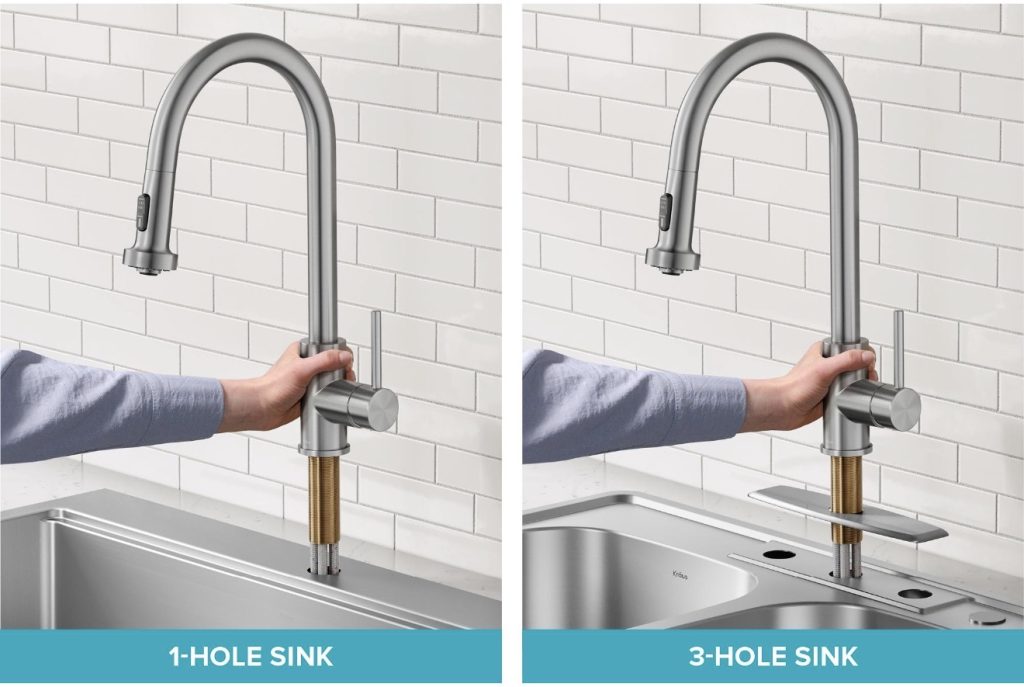
Your sink or countertop may already have holes for the faucet, handles, and accessories.
The number and spacing of those holes determine which faucets you can install without making additional changes.
Some sinks have one hole for a single-handle faucet. Others have three holes for a faucet and separate handles. Some have extra holes for a side sprayer or soap dispenser.
If you’re keeping your existing sink, count the holes before shopping. You can also look underneath the sink to understand the current mounting arrangement. Moen Solutions +1
Here’s how to approach the most common setups.
- One-hole sinks: These usually work well with single-handle faucets. Some models can also accommodate compatible two-handle designs.
- Three-hole sinks: These can accommodate certain faucets with separate handles or a single-handle faucet with a suitable deck plate.
- Four-hole sinks: These give you more flexibility for a faucet and accessories such as a soap dispenser or side sprayer.
Don’t assume that every faucet will fit simply because it looks like the right size.
Check the manufacturer’s installation instructions to confirm the number of holes required and whether a deck plate is included.
A deck plate, sometimes called an escutcheon plate, covers unused holes and creates a more finished appearance. However, not every faucet includes one, and not every plate works with every sink.
If the new faucet requires more holes than your sink has, you may need professional help or a different faucet model.
Drilling a finished sink or countertop can be risky, particularly with materials that can crack or chip.
And if your faucet will be mounted directly on the countertop rather than the sink, check the countertop’s hole arrangement instead.
Taking a few minutes to check compatibility now can save you the expense and frustration of buying a faucet that doesn’t fit.
Pay Attention to Spout Height and Reach
A faucet can look perfect in a product photo and still be uncomfortable to use in your kitchen.
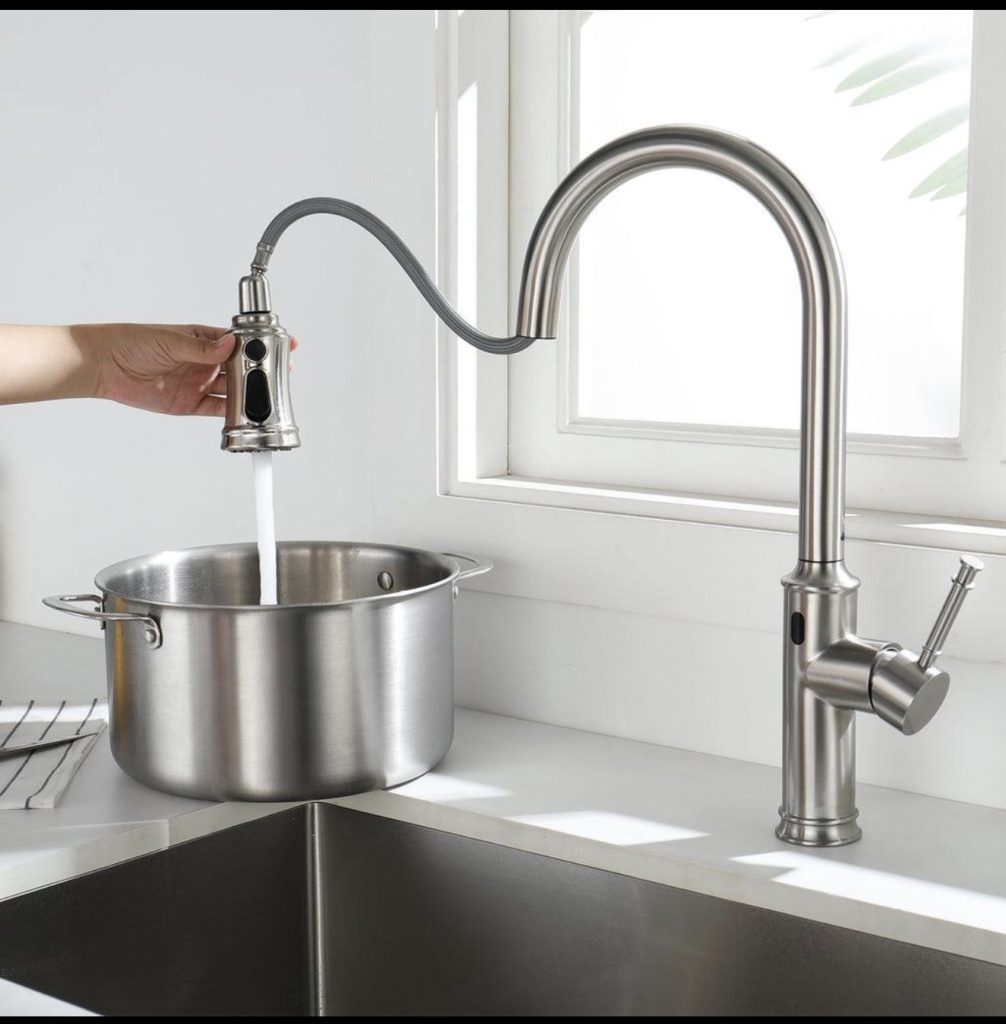
That’s why spout height and reach matter just as much as appearance.
Spout height refers to the vertical distance from the mounting surface to the area where water comes out. Spout reach describes how far the spout extends horizontally over the sink.
A high-arc faucet has a tall, curved spout. It provides extra room for filling stockpots, washing large pans, and rinsing bulky dishes. It’s a popular option for large farmhouse sinks and spacious kitchen workstations.
However, a tall faucet isn’t always the best choice. If you have a shallow sink, a high spout may cause water to splash onto your countertops.
It might also interfere with a low window or cabinet.
A low-profile faucet can be a better fit for a compact kitchen, especially when overhead clearance is limited.
Reach is equally important.
The water stream should land in a useful part of the basin rather than too close to the back edge or directly against the front wall.
If you have a double-bowl sink, choose a faucet with enough reach and swivel movement to serve both bowls comfortably.
Before purchasing, check these measurements:
- The faucet’s total height.
- The vertical clearance beneath nearby cabinets or windows.
- The distance from the mounting point to the center of the sink.
- The faucet’s horizontal reach.
- The available space for the handle to move.
Manufacturers usually provide these dimensions in their product specifications. Compare them with your sink rather than relying on appearance alone. Consumer Reports +1
If you regularly wash large pots, take one of your biggest pots and consider whether it will fit beneath the spout.
It’s a simple way to picture how the faucet will work in real life.
The best faucet is one that looks proportional to your sink and gives you enough room to work without splashing water everywhere.
Decide Between a Pull-Down, Pull-Out, or Standard Faucet
Once you’ve checked the measurements and mounting holes, think about how you use your kitchen every day.
Do you cook frequently? Do you wash large pots by hand? Or do you mainly need a faucet for quick rinsing and filling drinking glasses?
Your routine can help you choose the right faucet design.
Pull-down faucets have a spray head that pulls downward from the end of the spout.
They’re especially useful for deep sinks because you can direct the water toward different areas of the basin.
They also work well for rinsing vegetables and cleaning around the sink.
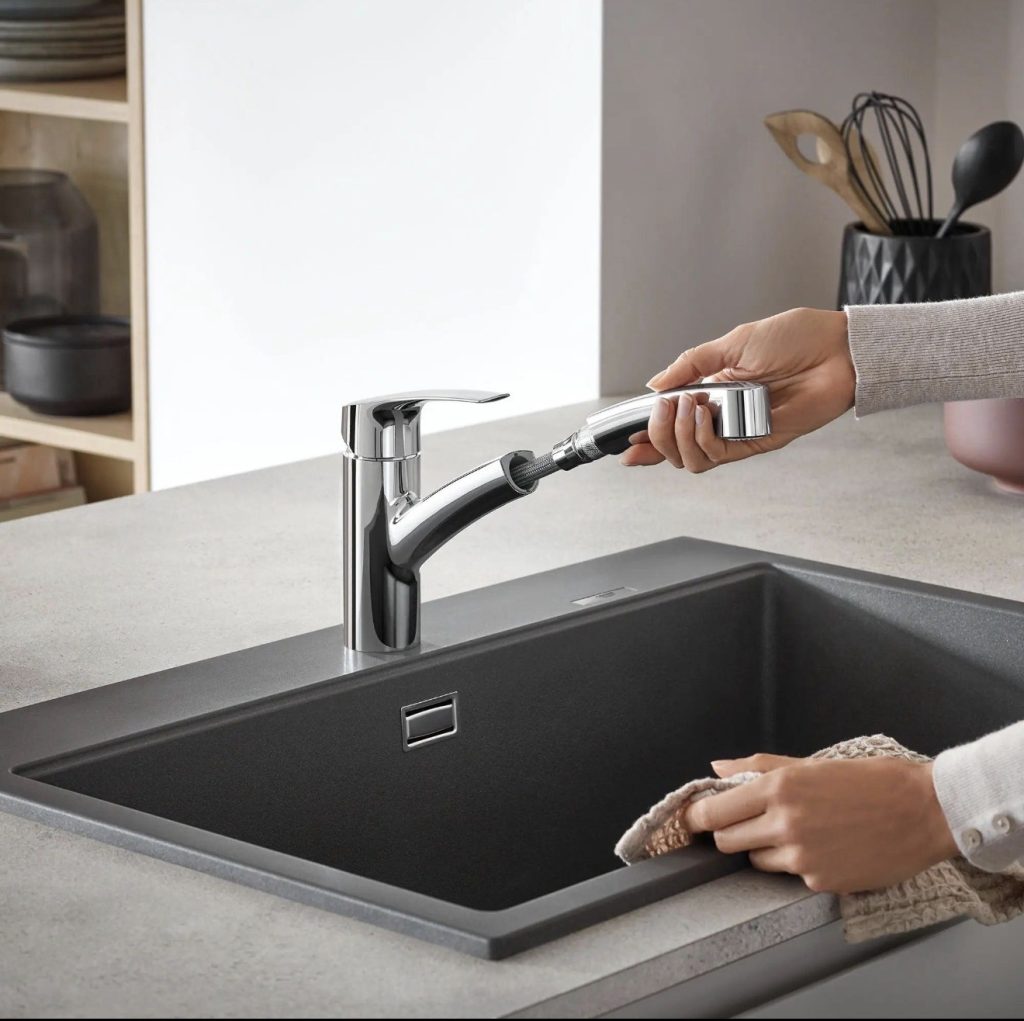
Pull-out faucets have a spray head that pulls outward toward you.
They often have a lower profile than pull-down models, making them a practical choice for compact kitchens or spaces with limited overhead clearance.
Standard faucets have a fixed spout and may include a separate side sprayer.
They’re a good option if you prefer a traditional look or want a straightforward design without a built-in pull-down spray head.
Think about the appearance, too. A tall pull-down faucet can look beautiful above a large stainless steel sink. A compact pull-out faucet may feel more balanced above a smaller sink.
If you like traditional or vintage-inspired kitchens, a bridge faucet with separate handles can be a lovely decorative feature. Just make sure the model is compatible with your sink’s mounting configuration.
You should also consider whether the spray head has a comfortable grip, whether the hose extends far enough, and whether it retracts smoothly after use.
Some faucets include different spray settings, such as a steady stream and a wider spray.
These features can make washing dishes easier, but you don’t necessarily need every available extra.
Choose the style that suits your sink and your habits. A simple faucet that works well every day is better than an expensive model with features you’ll rarely use.
Learn how to decorate your kitchen countertop with appliances and maximize space.
Consider the Sink Material and the Faucet’s Practical Needs
Your sink material can influence which faucet looks best, but it should also affect how you think about installation and maintenance.
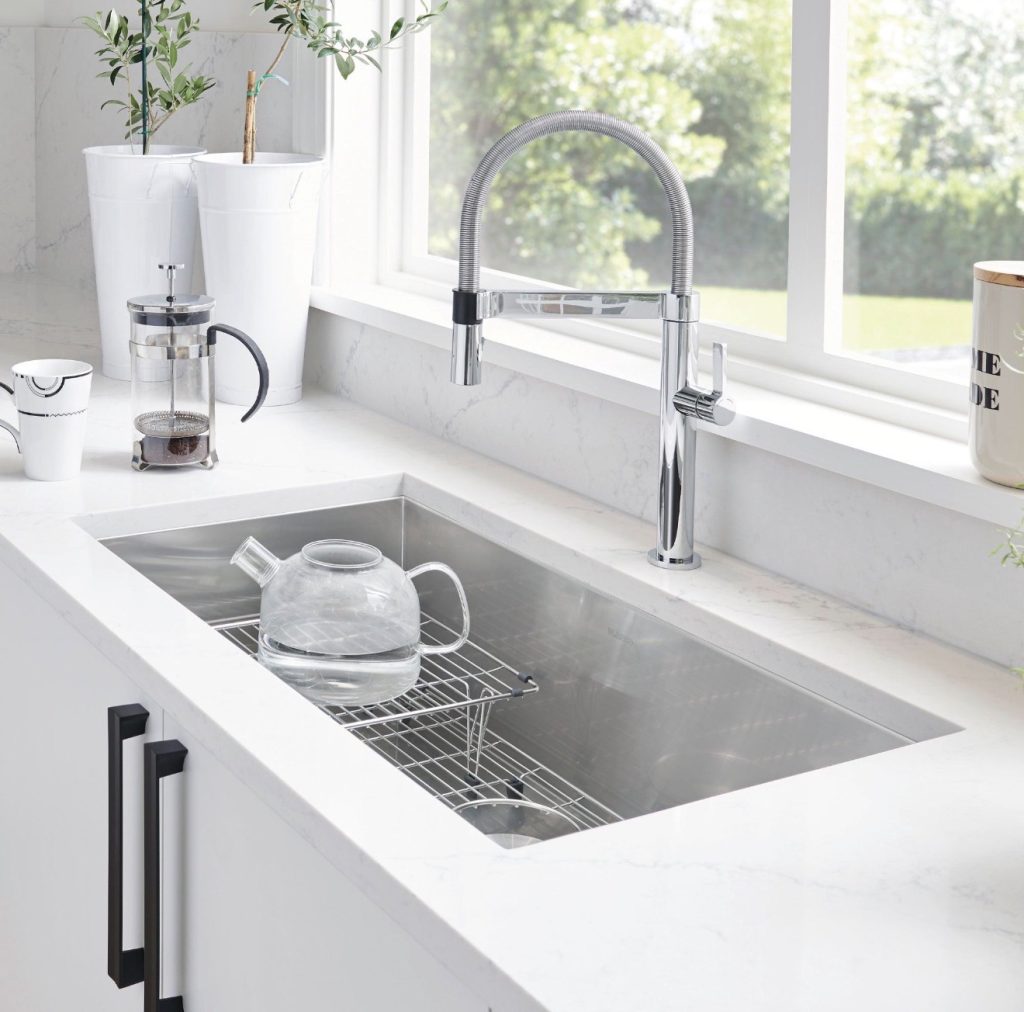
Stainless steel sinks are versatile. They work with almost any faucet finish, from chrome and brushed nickel to matte black and brass. Their simple appearance makes them easy to incorporate into modern, traditional, and transitional kitchens.
White fireclay and porcelain sinks often have a more distinctive look. They’re popular in farmhouse and traditional kitchens, where a curved faucet or classic bridge design can complement the sink’