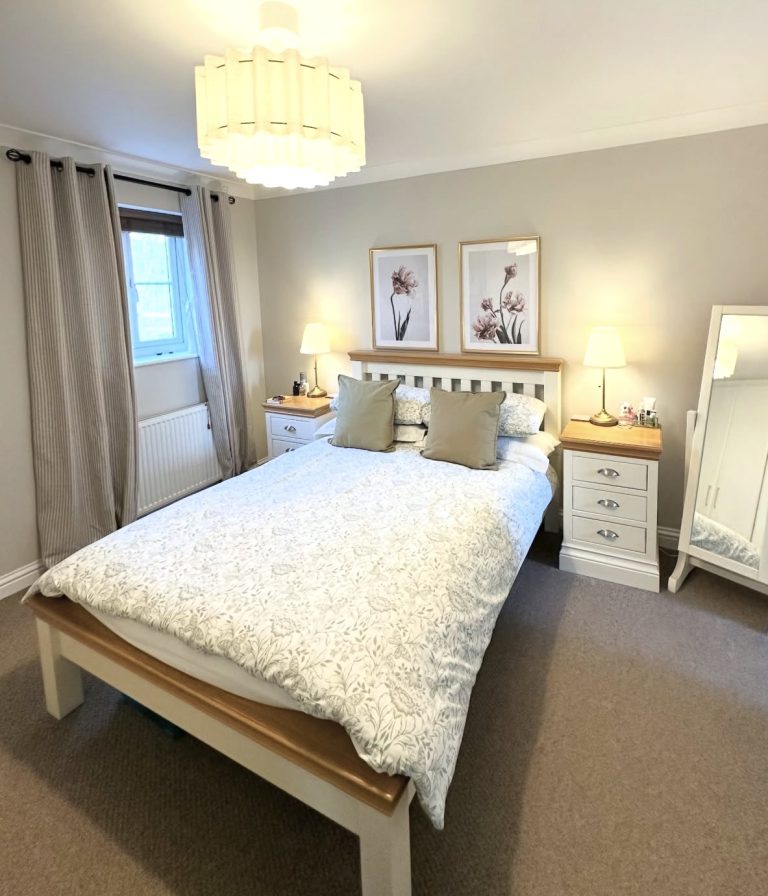
How to Choose the Right Area Rug Size for Your Bedroom
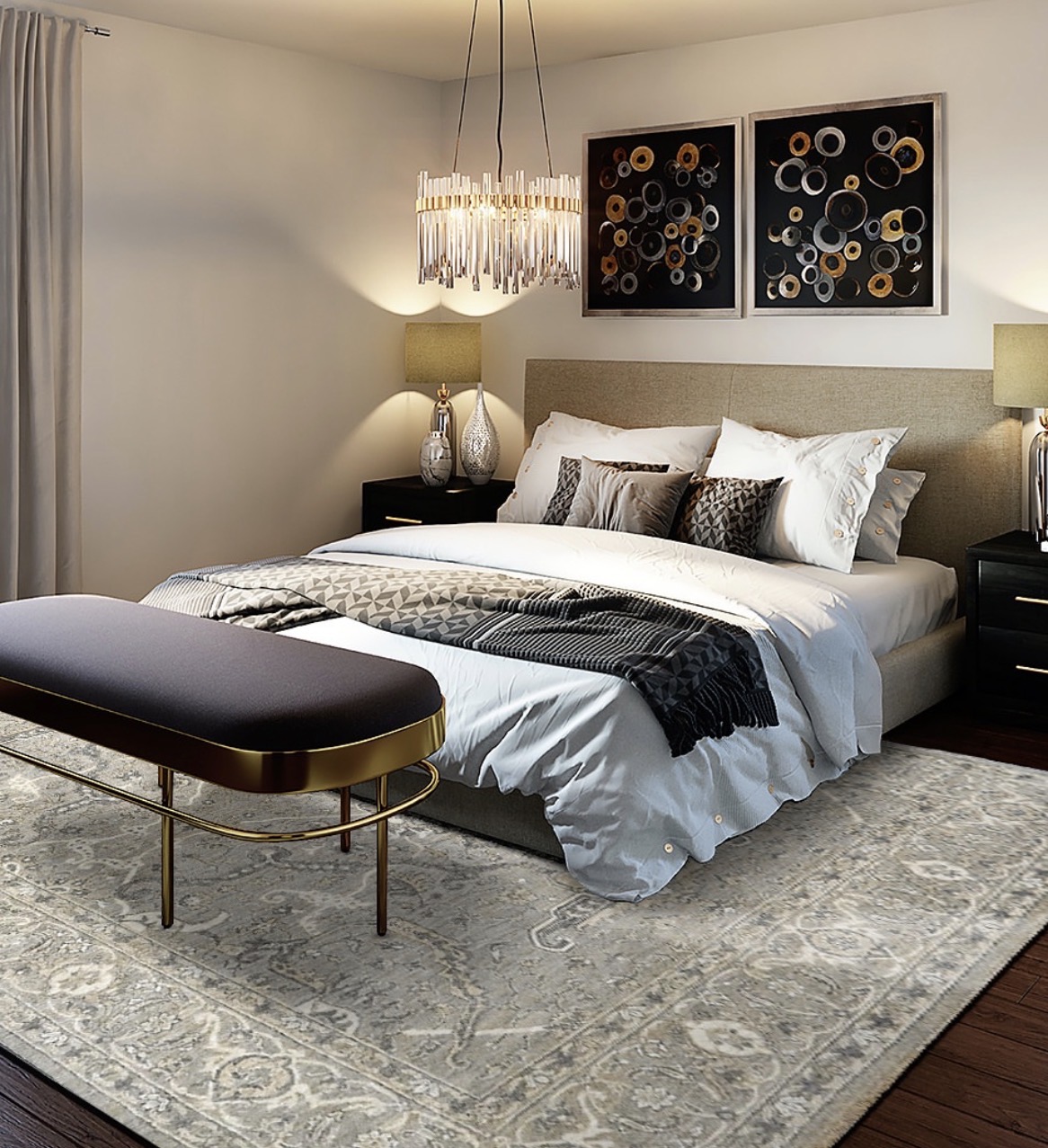
Have you ever bought a beautiful area rug, brought it home, and realized it looked much smaller than you expected?
Or perhaps you’ve seen a bedroom online where the rug seemed to pull the entire space together, but you can’t figure out why your own room doesn’t look the same.
The secret might be the rug size.
A bedroom rug does more than add color and softness. It can make your bed feel like the centerpiece of the room, create a cozy place to step in the morning, and help your furniture look more connected.
But when the rug is too small, the bedroom can feel unbalanced. When it’s too large, it may crowd the floor or interfere with doors and furniture.
The good news is that choosing the right size doesn’t have to be complicated. You don’t need expensive furniture or a huge bedroom to make it work.
Whether you’re decorating a small guest room, refreshing your primary bedroom, or creating a cozy bedroom for your daughter, these 7 tips will help you find an area rug that fits your space beautifully.
Consider Your Bed Size Before Buying a Rug
Your bed is usually the largest piece of furniture in your bedroom. That’s why it’s the best place to start when choosing an area rug.
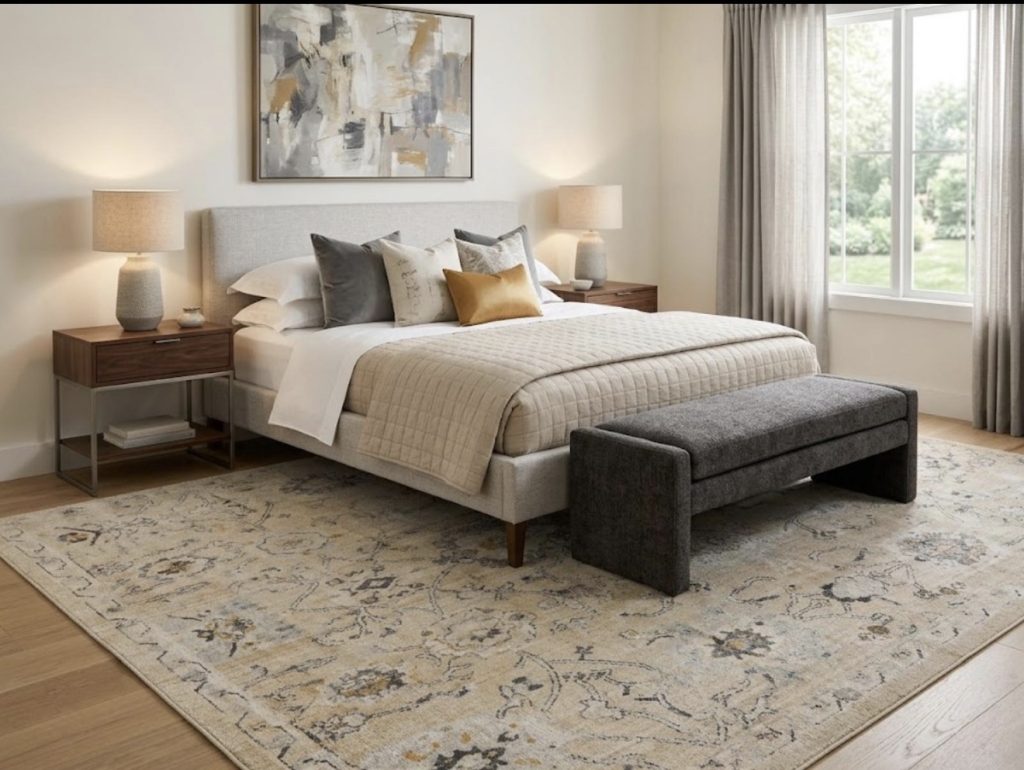
A rug should look proportional to your bed. Ideally, it should extend beyond the sides and foot of the bed so the room feels balanced and your feet land on a soft surface when you get up.
The exact size depends on your bed, the room’s dimensions, and how you want to position the rug. However, some standard sizes provide a useful starting point. Bed Bath & Beyond +1
Here are some common combinations to consider:
- Twin bed: A 5-by-8-foot rug can work well beneath a twin bed, depending on the room layout. Smaller rugs or runners are also practical options.
- Full bed: A 5-by-8-foot or 6-by-9-foot rug can create a comfortable border around the bed.
- Queen bed: An 8-by-10-foot rug is a popular choice because it provides generous coverage on both sides and at the foot.
- King bed: A 9-by-12-foot rug often works well in a spacious bedroom, especially when you want the rug to extend beyond the bed and surrounding furniture.
These are starting points, not strict rules. A queen bed in a compact room may need a different arrangement from a queen bed in a spacious primary bedroom.
Also, remember to measure the bed frame rather than relying only on the mattress size. A wide upholstered headboard or a bulky bed frame can change the amount of rug coverage you need.
If you’re unsure between two sizes, use painter’s tape to mark the dimensions on your floor. You’ll get a much clearer idea of how each option will look before spending money.
Check out these modern runner kitchen rugs for small kitchens.
Measure Your Bedroom and Leave Enough Visible Floor Space
Even if you know your bed size, you shouldn’t choose a rug without measuring the bedroom itself.
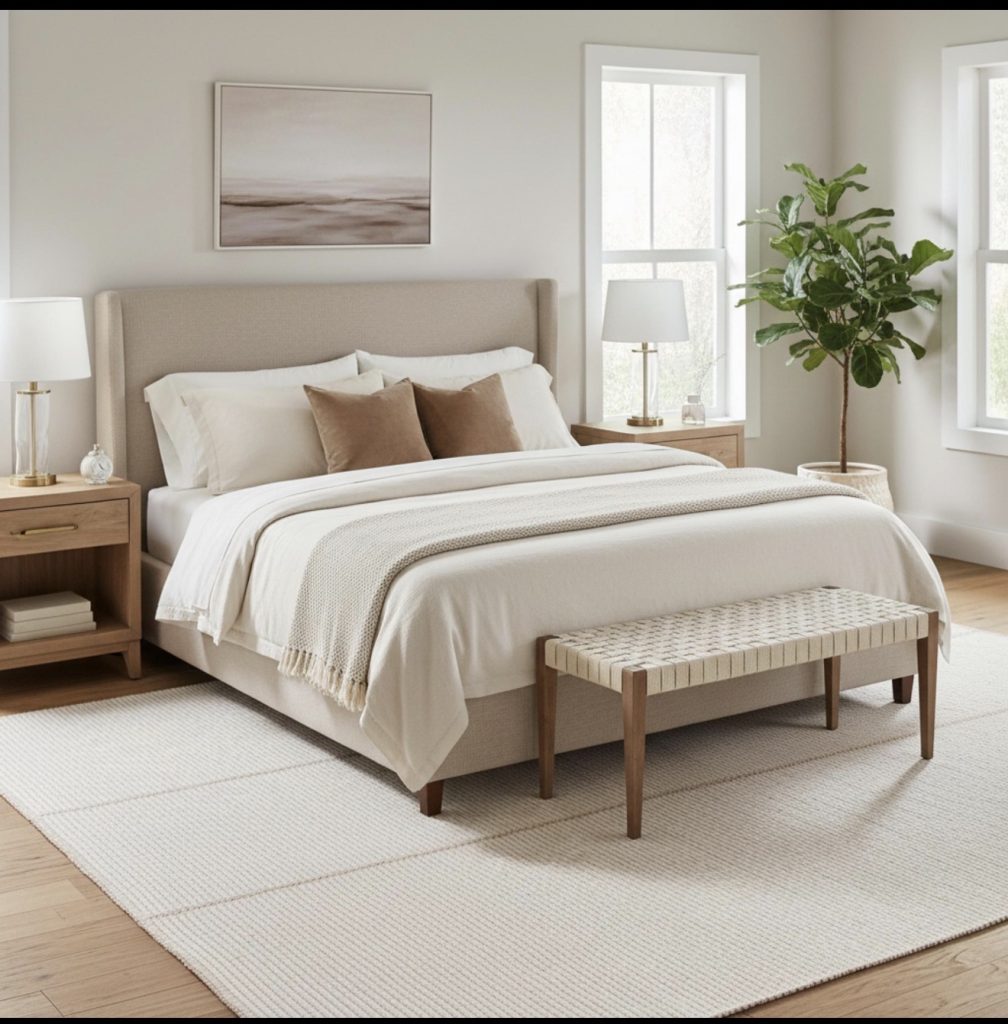
A rug that looks perfect in a large showroom may overwhelm a small bedroom. On the other hand, a tiny rug can look lost in a spacious room with a king bed and large nightstands.
Start by measuring the length and width of your bedroom. Then consider the bed’s position, the location of your nightstands, and the walking space around the furniture.
A useful guideline is to leave some visible flooring between the rug and the walls. Around 12 to 18 inches is a common starting point, although your room’s layout may call for more or less. Homes and Gardens +1
This visible border helps the rug feel intentional rather than making it look as though you’ve tried to cover every inch of the floor.
For example, imagine a small bedroom with light oak flooring, white walls, and a queen bed. An oversized rug that nearly touches every wall may make the room feel crowded. A slightly smaller rug with a clear border of wood flooring can create a more relaxed appearance.
In a larger bedroom, you have more freedom to choose a generous rug. You might even have enough space for a separate reading nook or seating area.
Don’t forget to check the practical details. Measure the distance between the rug and the bedroom door, closet doors, and drawers. A thick rug shouldn’t prevent a door from opening or make it difficult to pull out a storage drawer.
If you have a floor vent, make sure the rug doesn’t block it.
The goal is to choose a rug that fills the right amount of space while leaving your bedroom comfortable to move around in.
Choose the Right Rug Placement Under Your Bed
You can buy the correct rug size and still end up with a bedroom that doesn’t look quite right. Sometimes the problem isn’t the rug itself. It’s where you’ve placed it.
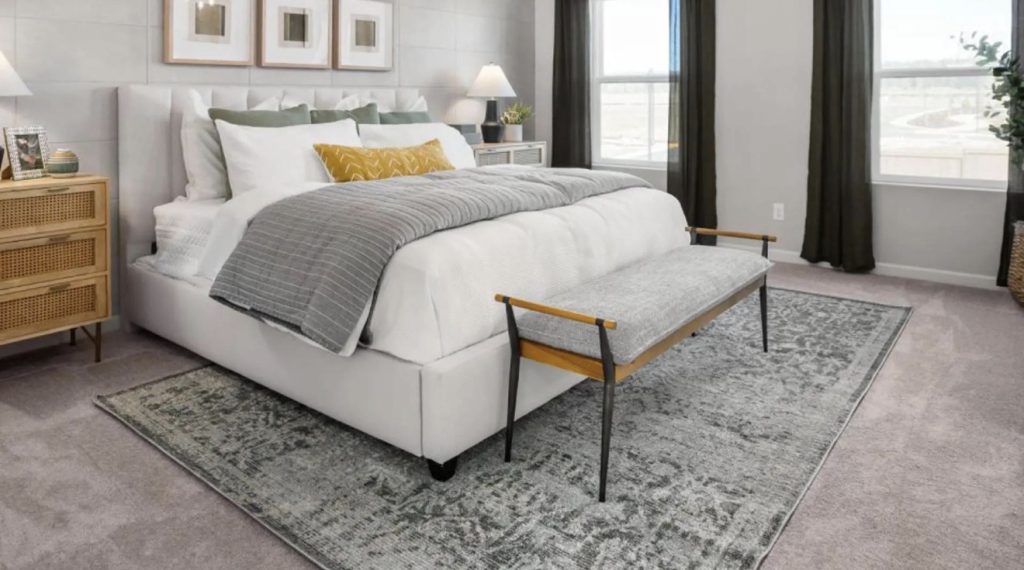
There are three popular ways to position an area rug under a bed. Each creates a slightly different look, so choose the one that suits your bedroom and budget.
Place the rug under the entire bed and nightstands.
This arrangement works beautifully in a spacious primary bedroom. The bed and nightstands sit on the rug, creating one large, connected furniture arrangement.
You’ll usually need a generous rug for this look. A 9-by-12-foot rug may work in some rooms, while a larger size may be necessary if you have a king bed and wide nightstands.
The result feels polished and luxurious, especially when the rug has enough room to extend beyond the furniture.
Position the rug under the lower two-thirds of the bed.
This is one of the most practical options for many bedrooms.
The rug starts somewhere below the nightstands and extends under the bed toward the footboard. You get a soft landing when you step out of bed, while the nightstands can remain on the bare floor.
This arrangement also lets you show off more of the rug’s pattern without covering as much flooring.
Place the rug beneath the lower portion of the bed.
If you have a smaller bedroom or want to spend less, you can position a rug beneath the foot of the bed. This allows you to introduce color and texture without needing a very large rug.
Just make sure the rug extends far enough beyond the bed to look intentional. A rug that barely peeks out from under the footboard may appear too small.
Before deciding, mark the different positions with painter’s tape. Try moving the outline forward or backward until the proportions feel right.
A little experimentation can make a noticeable difference.
Check out these wooden bedroom furniture set ideas that suits every modern bedroom.
Use Runner Rugs in Small Bedrooms
Not every bedroom has room for a large area rug. And that’s perfectly fine.
If your bedroom is small, two runner rugs can provide the softness you want without taking up too much floor space.
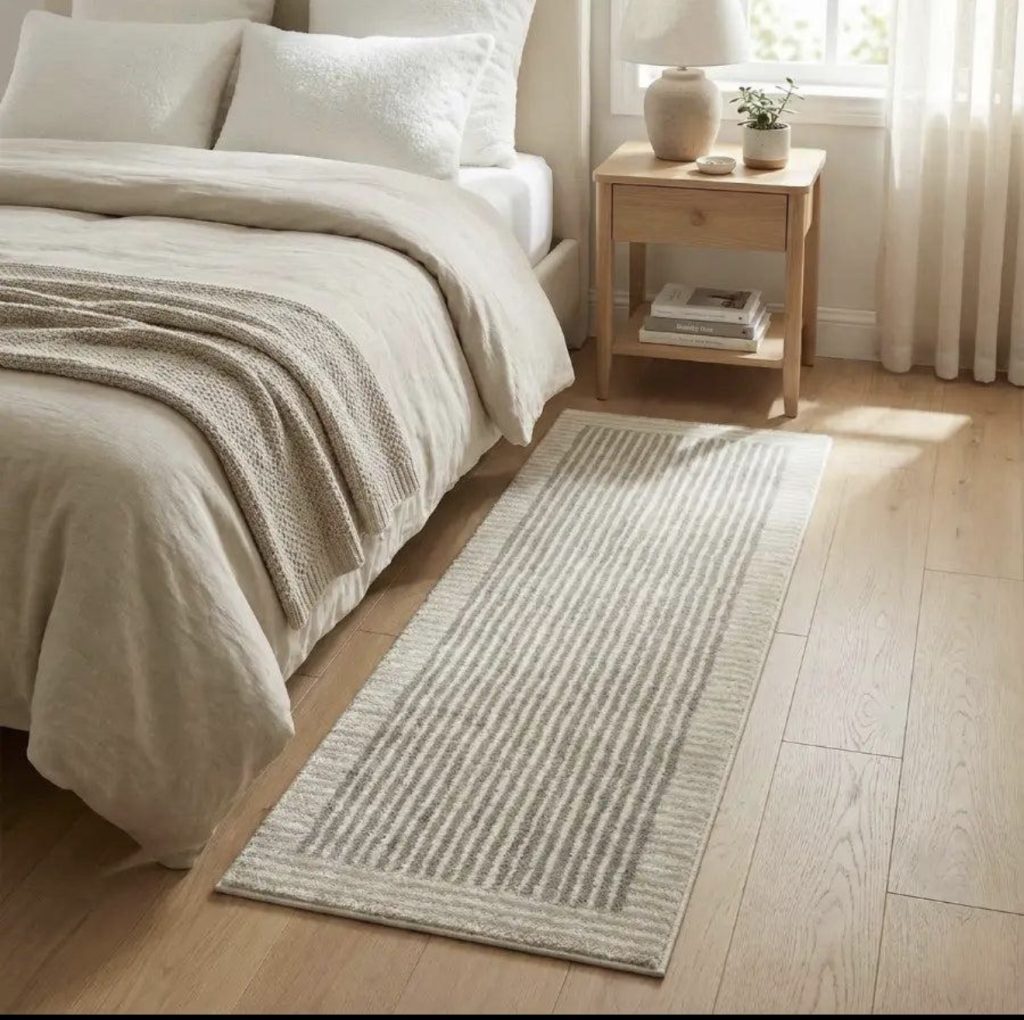
Place one runner along each side of the bed. This gives you a comfortable surface to step onto in the morning and creates a balanced look.
Matching runners are a lovely choice if you prefer a symmetrical bedroom. For a more relaxed style, you can use coordinating rugs with similar colors or patterns.
For example, imagine a small bedroom with a natural wood bed frame, white bedding, and warm beige walls. Two cream runners with subtle texture can make the space feel cozy without competing with the furniture.
You can also use one runner if one side of the bed is against a wall or has very little walking space.
Choose a runner long enough to cover the area where you usually get in and out of bed. A very short runner may look disconnected from the bed, especially if the rest of the room is spacious.
Another option is a small rectangular rug beside the bed. This can work well in a guest bedroom where you want to add comfort without making the floor feel crowded.
Whatever arrangement you choose, make sure the rugs don’t slip when you walk on them. A nonslip rug pad is especially useful on hardwood, laminate, and tile floors.
Small bedrooms can look just as thoughtfully decorated as large ones. The trick is choosing a rug arrangement that suits the available space rather than forcing a large rug into the room.
Think About Your Nightstands, Bench, and Other Bedroom Furniture
Your bed may be the main consideration, but it isn’t the only piece of furniture that affects rug size.
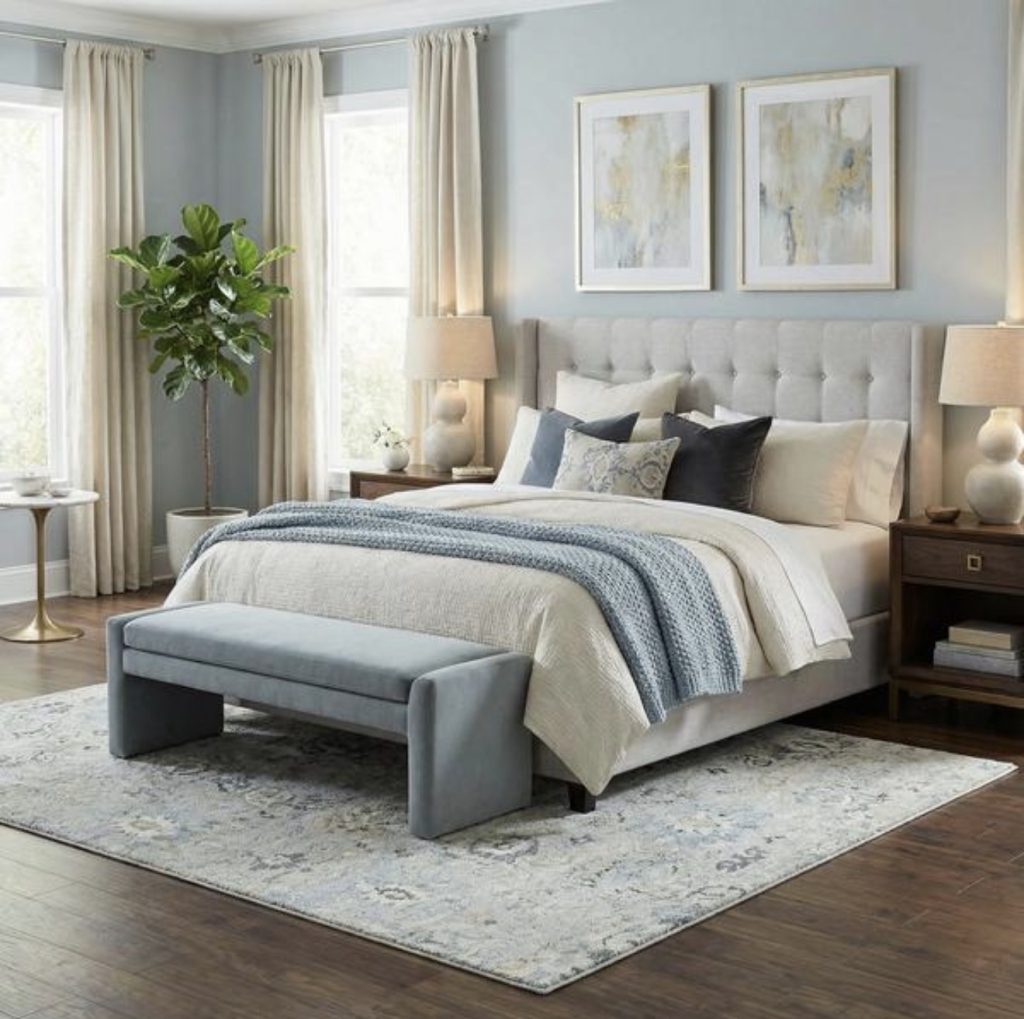
Nightstands, benches, dressers, and accent chairs all influence how much coverage you need. If you ignore them, you might choose a rug that looks awkward once everything is in place.
Start with your nightstands. Decide whether you want them to sit completely on the rug or remain on the bare floor.
If you want the entire bed arrangement to sit on the rug, measure the combined width of the bed frame and nightstands. Make sure the rug is wide enough to extend beyond the outer edges of both tables.
If you’d rather keep the nightstands off the rug, choose a placement that allows the rug to begin just in front of them while extending far enough to frame the bed.
Next, think about a bench at the foot of the bed.
A bedroom bench can make the room feel finished, but it also takes up space. If you want the bench to sit entirely on the rug, you’ll need enough rug length to accommodate both the bed and the bench.
If the rug ends beneath the bed, the bench may sit partly on the bare floor. That can look fine, too, as long as the arrangement feels balanced.
For larger bedrooms, consider whether you have a separate seating area. An accent chair and small side table can look more intentional when placed on their own rug.
You don’t necessarily need one enormous rug to cover every part of the room. A main rug beneath the bed and a smaller rug beneath a reading chair can help define different areas.
The key is to avoid making every piece of furniture feel disconnected. Rugs should help the room feel coordinated, not cluttered.
Match the Rug Shape and Pattern to the Bedroom Layout
Most bedroom area rugs are rectangular, and for good reason. Their shape works naturally with beds, nightstands, and rectangular bedroom layouts.
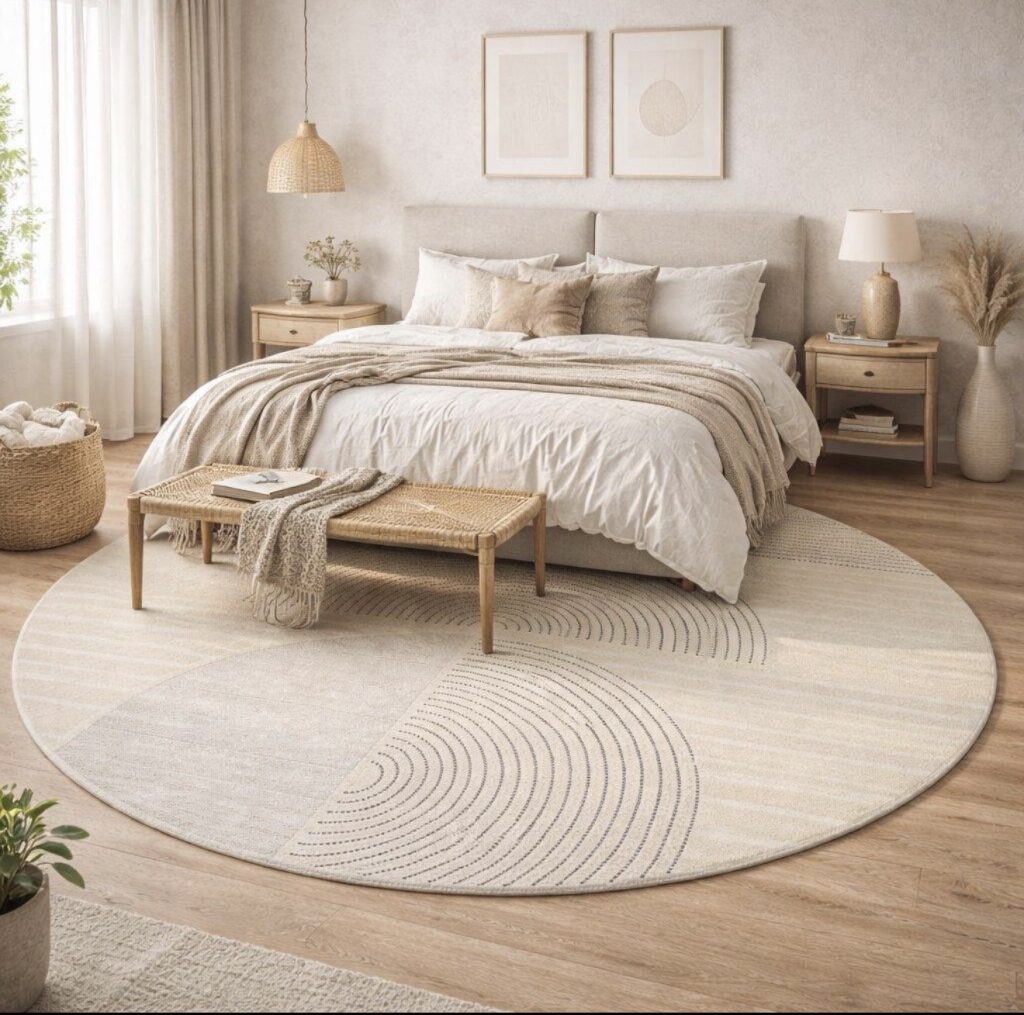
A rectangular rug is usually the easiest choice when you want to place it under a bed. It provides clear edges and makes it easier to create an even border around the furniture.
But that doesn’t mean you’re limited to rectangles.
A round rug can soften a bedroom filled with straight lines and square furniture. It can work particularly well beneath the lower portion of a bed or in a separate reading nook.
Just be mindful of the size. A small round rug that disappears beneath a large bed may not create the effect you want. Make sure enough of the rug remains visible to show its shape.
The rug’s pattern also affects how its size looks in the room.
A large rug with a bold floral design can become a focal point in a simple bedroom. A subtle geometric pattern can add interest without making the space feel busy.
If your bedding already has a strong pattern, a solid or lightly textured rug may be easier to coordinate. If your bedding is plain, a patterned rug can introduce personality.
Color matters, too. Light rugs can help a room feel airy, while deeper shades can create a warmer, more grounded look.
When choosing a pattern, think about how much of the rug will remain visible once the bed and furniture are in place. You don’t want to pay extra for a beautiful design only to hide most of it beneath the bed.
Choose a shape and pattern that complement the room’s proportions. The rug should feel like a natural part of the design, not an afterthought.
Learn how to arrange furniture in a small bedroom
Choose a Rug Material That Works for Your Lifestyle
Once you’ve settled on the size and placement, think about how the rug will feel under your feet.
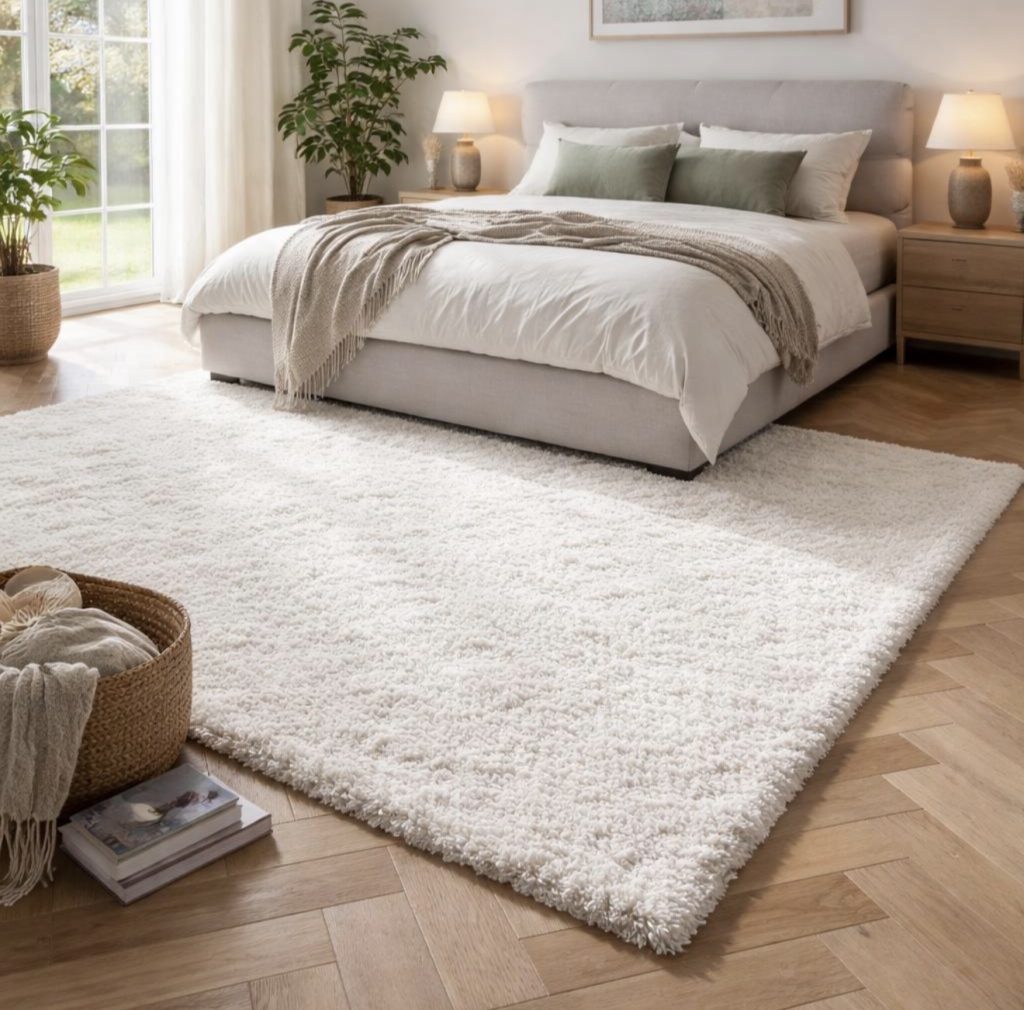
The material and pile height can affect how the rug looks, how comfortable it feels, and how easy it is to maintain. This matters because your bedroom rug isn’t just for decoration. It’s something you’ll use every day.
Wool rugs are a popular choice for bedrooms because they feel comfortable and have a timeless appearance. They can work beautifully in traditional, farmhouse, and modern spaces. However, quality wool rugs can be expensive, and some shedding is normal, especially when they’re new.
Cotton rugs can be a practical option for casual bedrooms. Depending on the design, they may be lightweight and easier to clean than heavier rugs. Check the care instructions before buying, particularly if you want a washable option.
Synthetic rugs, including polypropylene, are worth considering if you’re decorating on a budget. They come in many colors and patterns, so it’s easy to find something that suits your bedroom. Their durability and stain resistance vary by product.
Shag rugs and other plush styles provide a soft, cozy feel. They can look lovely beside a bed, especially in a bedroom designed for relaxation. However, thick pile can make it harder to move furniture and clean underneath the bed.
For a bedroom with a door that sits close to the floor, a low-pile rug may be the better option. It can also be easier to vacuum and less likely to interfere with closet doors.
If you have hardwood floors, a nonslip rug pad can help keep the rug in place and provide additional cushioning. Choose a pad suitable for your flooring type.
Remember that a thick rug and pad can raise the floor height. Check door clearance before purchasing, particularly if you’re planning to place a large rug beneath the bed.
The best material is one that suits your comfort preferences, cleaning routine, and budget. You don’t need the most expensive rug to create a beautiful bedroom.
Frequently Asked Questions
What size area rug should I get for a queen bed?
An 8-by-10-foot area rug is a popular choice for a queen bed. It typically provides a comfortable border on both sides and at the foot. A 6-by-9-foot rug may also work in a smaller bedroom, depending on the bed frame and placement.
What size rug is best for a king bed?
A 9-by-12-foot rug is a common choice for a king bed, especially in a spacious primary bedroom. If you want the rug to extend beneath the nightstands or accommodate a bench at the foot of the bed, you may need a larger size.
Should an area rug go under the bed or in front of it?
For many bedrooms, placing the rug under the lower two-thirds of the bed is a practical option. It creates a soft landing when you get out of bed and helps anchor the furniture. You can also place a larger rug beneath the entire bed and nightstands or use runners along the sides.
How much rug should show around a bed?
Aim for about 18 to 24 inches of visible rug along the sides and foot of the bed when space allows. In larger bedrooms, you can extend the rug farther for a more generous look. The ideal amount depends on your bed size, room dimensions, and furniture arrangement.
Can I use a 5-by-7-foot rug under a queen bed?
Yes, but the result depends on the layout. A 5-by-7-foot rug may work beneath the lower portion of a queen bed or as an accent rug near the foot. However, it may look too small if you want it to extend generously beyond both sides of the bed. Mark out the dimensions before buying to see how it will fit.
Final Thoughts
Choosing the right area rug size for your bedroom starts with understanding your bed, measuring your room, and deciding how you want the rug to sit beneath your furniture.
You don’t need to follow every decorating rule perfectly. A large rug can make a spacious bedroom feel more connected, while a pair of runners can add comfort to a smaller room without overwhelming it.
Before buying, measure your space, mark the rug dimensions with painter’s tape, and check that doors and drawers can open freely. Then choose a material, color, and pattern that suit your lifestyle.
Most importantly, choose a rug that makes your bedroom feel comfortable and welcoming. When the size and placement are right, even a simple rug can make the whole room feel more polished.