

6 Wallpaper Wainscoting Ideas for Small Living Rooms That Don’t Cost Much
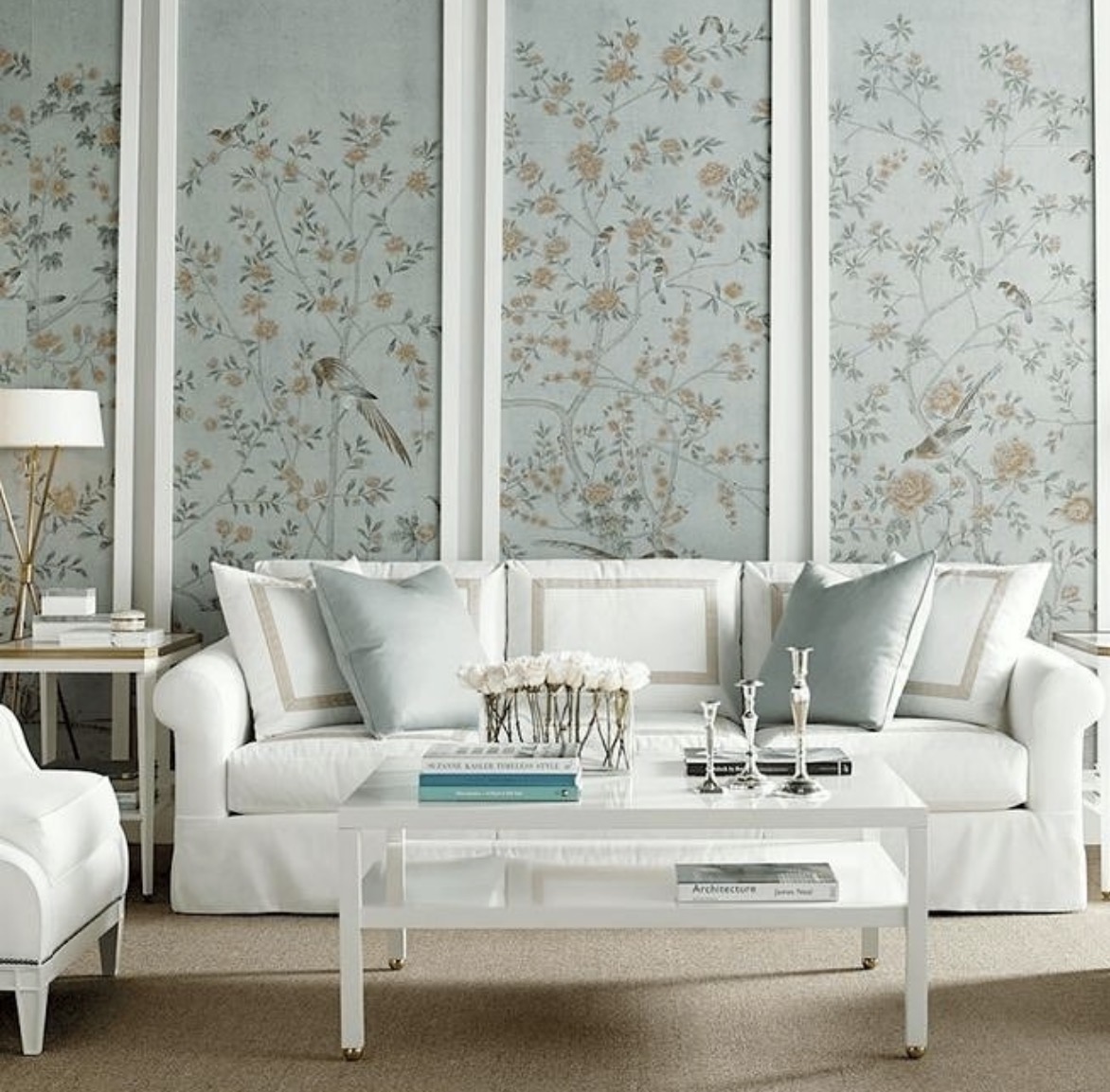
Want to give your small living room a fresh, cozy look without spending a fortune?
Wallpaper wainscoting is one of the easiest ways to do it. It combines the charm of traditional wall paneling with the beauty of wallpaper, giving your walls more character without requiring a full room makeover.
The best part is that you don’t need expensive wood panels, custom carpentry, or a professional decorator to get the look.
With affordable wallpaper, a few trim pieces, and some creativity, you can create a living room that feels stylish and welcoming.
Wallpaper wainscoting is also a great choice if you rent your home or don’t want to commit to a permanent design. Peel-and-stick wallpaper and lightweight decorative molding make it easier to experiment with different colors and patterns.
If your living room is small, choosing the right design matters.
You want something that adds personality without making the walls feel too busy or the room look crowded.
Here are six affordable wallpaper wainscoting ideas worth trying, especially if you love a cozy, polished home on a budget.
1. White Wainscoting With Floral Wallpaper Above
If you love a soft, feminine living room, this idea is a lovely place to start.
White wainscoting paired with delicate floral wallpaper creates a charming look that feels warm without overwhelming a small space.
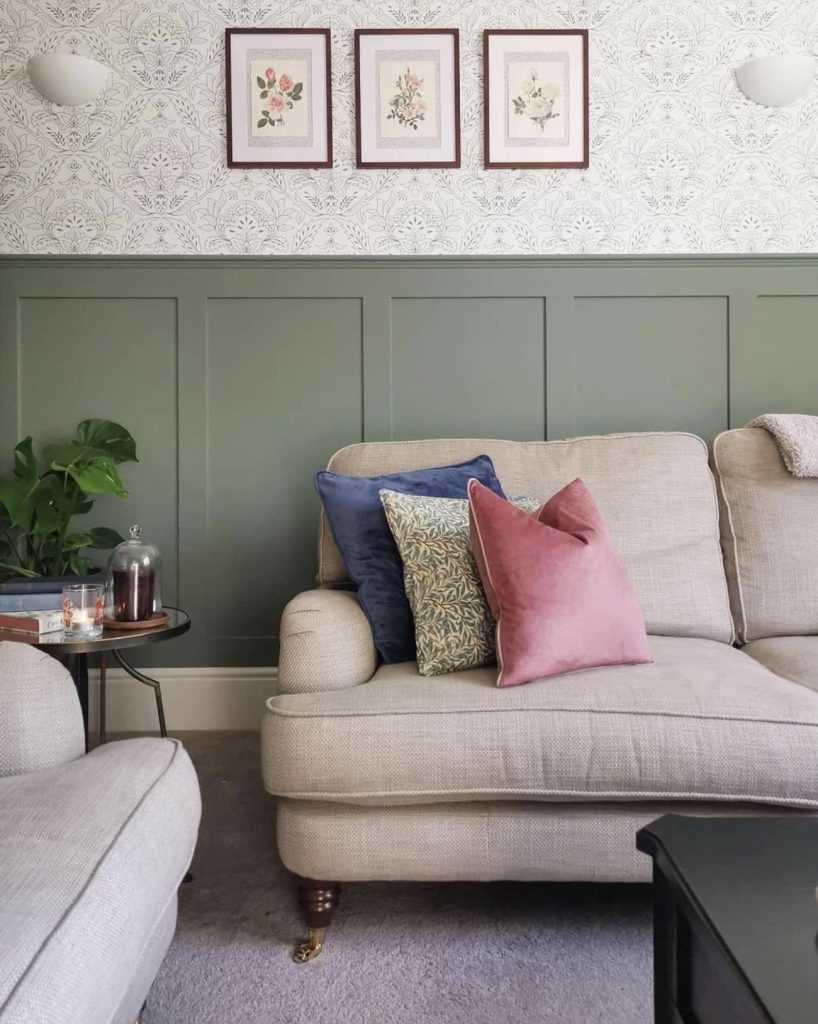
The trick is to keep the lower part of the wall simple. White beadboard, narrow vertical panels, or inexpensive decorative molding can give you the traditional wainscoting look.
Above it, choose wallpaper with small flowers, leafy branches, or a subtle vintage pattern.
Soft pink, sage green, beige, and dusty blue are beautiful colors to consider. They work well with neutral furniture and make the living room feel relaxed.
How to create this look on a budget
You don’t have to install expensive wood paneling. You can use thin MDF trim to create simple rectangular frames on the lower half of the wall.
Paint the trim and the wall inside the frames the same shade of white for a more finished appearance.
If your walls are already painted white, you may only need the trim and wallpaper.
Look for wallpaper remnants, discontinued rolls, or peel-and-stick options to save money.
For the upper wall, choose a small-scale floral print rather than oversized flowers. A delicate pattern is often easier to live with in a compact room.
How to decorate around it
Pair the walls with a cream loveseat, a light wood coffee table, and a small vase of fresh or faux flowers.
Add a soft throw blanket and a couple of cushions that pick up colors from the wallpaper.
Avoid filling every corner with accessories. The floral wall already adds plenty of detail.
This design is especially lovely if you enjoy cottage, vintage, farmhouse, or traditional home decor.
It gives a small living room a sweet, lived-in feeling without requiring a large decorating budget.
2. Board-and-Batten Wainscoting With Peel-and-Stick Wallpaper
Board-and-batten wainscoting is a good option if you want your living room to look a little more modern. Its straight vertical lines add structure to the wall, while wallpaper above the trim brings in color and personality.
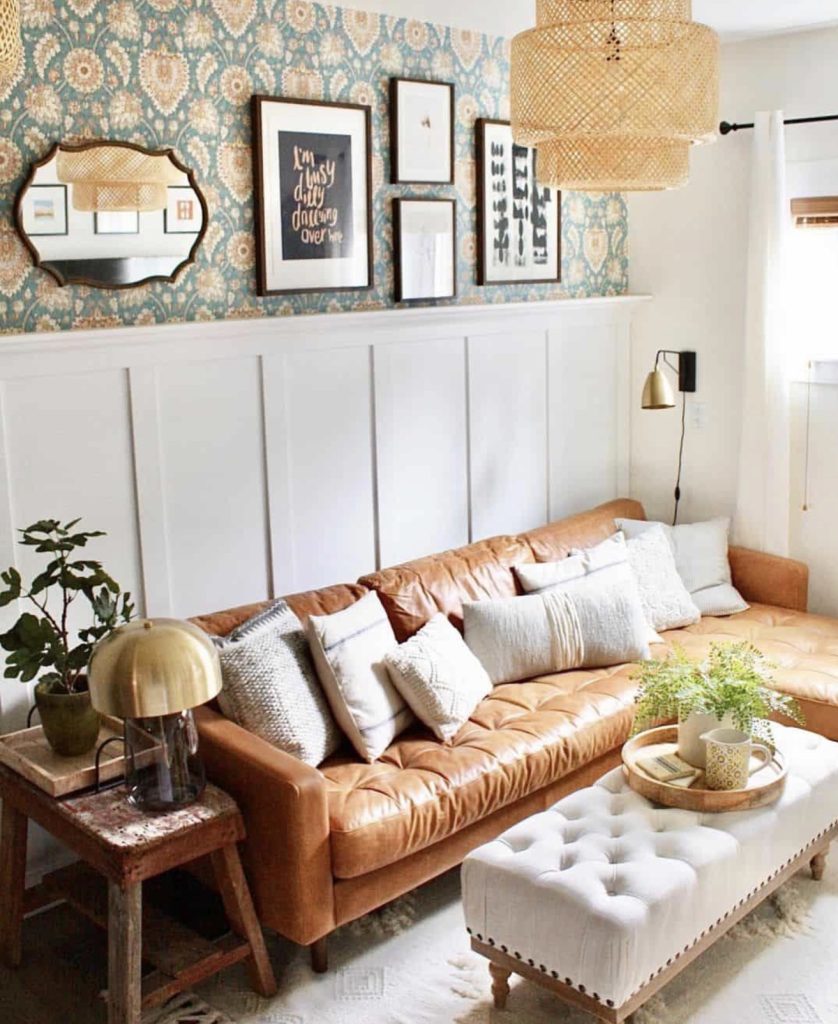
This combination works particularly well in small living rooms because the design looks intentional without needing lots of decorative objects.
For an affordable version, use narrow wood or MDF strips to create vertical sections on the lower wall. Paint everything in one color, such as warm white, light greige, or soft sage green.
Then apply peel-and-stick wallpaper above the wainscoting.
Which wallpaper should you choose?
A simple geometric pattern is a good choice. Think small diamonds, delicate arches, thin stripes, or understated abstract shapes. These patterns add interest without making the room feel too busy.
If you prefer a more natural look, try a subtle linen-effect wallpaper or a soft botanical print.
Before buying, measure the area you want to cover. Calculate the number of rolls based on the manufacturer’s stated coverage, allowing extra material for matching patterns and trimming.
Budget-friendly decorating tip
You can save money by creating the board-and-batten effect with trim instead of purchasing ready-made wall panels. If you don’t want to cut wood, look for pre-cut molding or lightweight decorative strips that are suitable for your wall surface.
For a rental, consider using removable wallpaper and a nonpermanent trim alternative approved for your walls. Always test adhesives in an inconspicuous spot first.
Keep the rest of the room simple with a neutral sofa, a small round coffee table, and one or two framed prints.
The result is a modern, tidy living room that feels thoughtfully decorated without an expensive renovation.
Check out these rustic wainscoting for small bathrooms
3. Sage Green Wainscoting With Botanical Wallpaper
Sage green is a beautiful color if you want your living room to feel calm, cozy, and connected to nature. It looks especially lovely with botanical wallpaper and simple white or cream furniture.
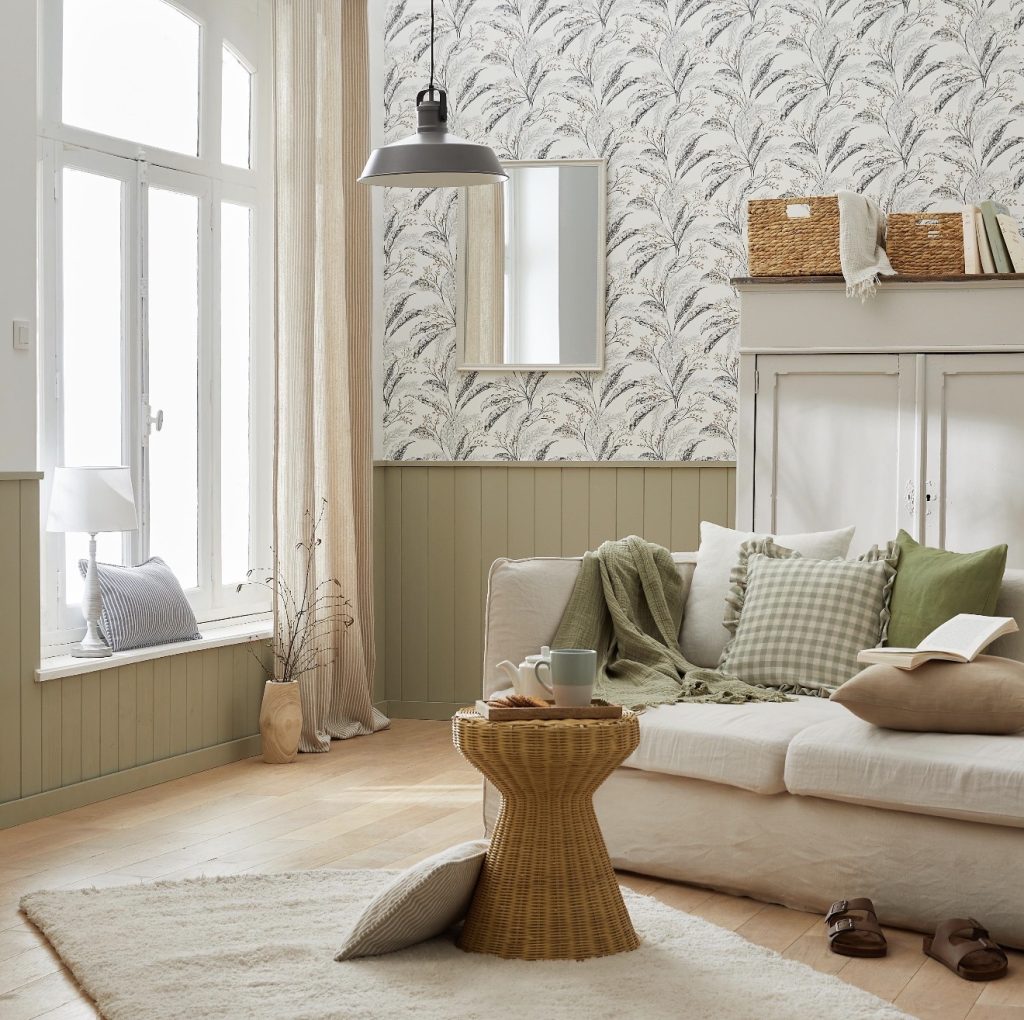
For this idea, paint the lower portion of your wall sage green. Add inexpensive rectangular molding or narrow vertical trim to create a wainscoting effect. Then use leafy wallpaper above the trim to bring the two sections together.
You can choose wallpaper with small green leaves on a cream background or a delicate botanical print with hints of brown and beige. Both options work well in small spaces.
How to get the look without overspending
Start with one wall, preferably the wall behind your sofa. You won’t need as much wallpaper as you would for the entire living room, and the finished wall can become the main feature of the space.
If you already have a suitable wall color, you might only need to buy a small amount of paint for the trim. You can also look for leftover paint from another project.
For the wainscoting, keep the molding simple. Straight strips arranged into rectangular frames are generally more affordable than elaborate raised panels.
When choosing wallpaper, pay attention to the pattern repeat. A smaller repeat can make it easier to use leftover pieces in another part of the room.
What furniture works best?
A cream sofa, light oak coffee table, and natural woven baskets look lovely with sage green walls. You could also add a beige rug and a few throw pillows in muted green.
If your room doesn’t get much natural light, choose a lighter sage rather than a deep forest green. This helps the space maintain an open, airy feeling.
You don’t need to buy new furniture to complete this look. A neutral couch you already own can look completely different against a fresh botanical wall.
This is an excellent option for women who love cottage-style interiors, farmhouse decor, and natural colors but want to keep their decorating costs under control.
4. Vertical Striped Wallpaper With Simple White Wainscoting
If your living room has low ceilings, vertical striped wallpaper is worth considering. The stripes draw the eye upward, which can make the wall feel taller.
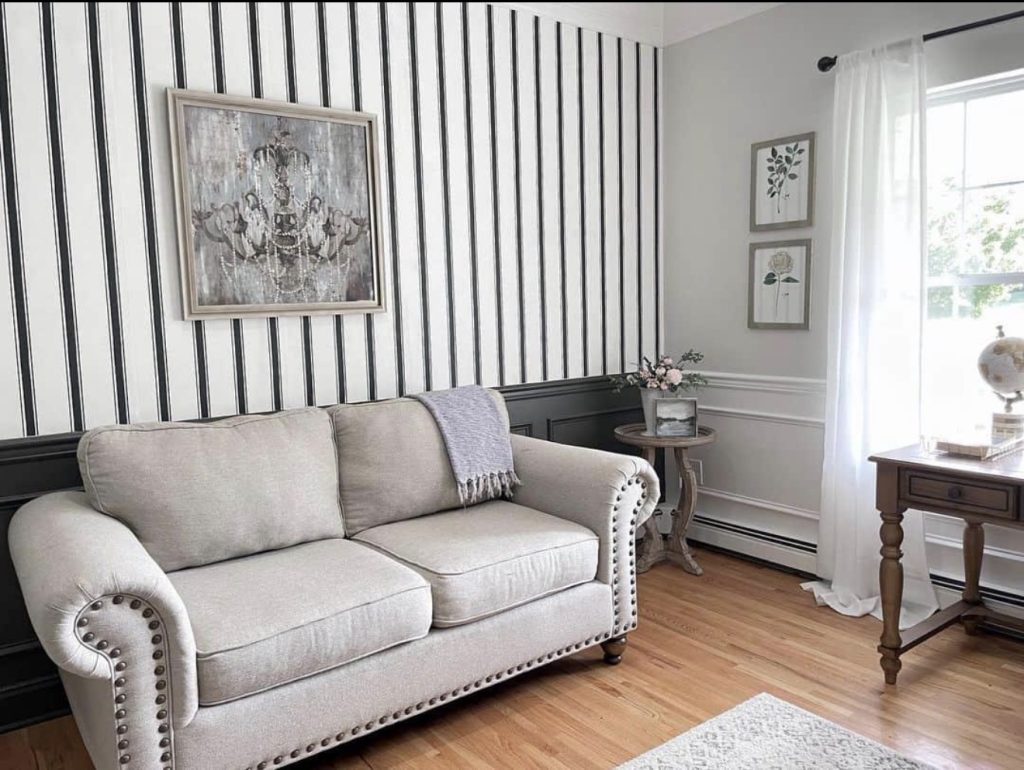
Combine the wallpaper with simple white wainscoting along the bottom. The white trim creates a clean dividing line, while the striped upper wall adds height and subtle interest.
This design is especially useful if you like traditional, coastal, or transitional interiors.
Choose stripes that suit a small room
You don’t have to use bold, high-contrast stripes. In fact, soft stripes are often easier to decorate around.
Try cream and beige, white and pale blue, or ivory and light gray. These combinations create a gentle pattern without making the room feel too busy.
If you want something a little more noticeable, consider muted navy and white stripes. Pair them with a light-colored sofa and warm wood furniture to balance the contrast.
Make it affordable
Instead of covering every wall, apply the wallpaper to the wall behind your sofa or on a single wall that needs more character.
Use inexpensive MDF molding or simple wood strips for the lower section. Paint the trim white to create a cohesive finish.
You can even create the striped effect with paint if you have a steady hand and don’t mind spending extra time measuring and taping. However, wallpaper may be the easier option if you want consistent stripes without painting each one.
Remember that striped wallpaper needs careful alignment. Mark a straight vertical guide before installation, and check the pattern as you work.
Finish the room with a few simple accessories
A compact sofa, a narrow console table, and a simple floor lamp are enough to complete this look. If you enjoy coastal decor, add a blue throw pillow or a small framed landscape print.
Avoid using too many competing patterns. Striped walls already provide a clear visual direction, so plain curtains and a solid-color rug will help the room feel balanced.
The beauty of this design is that it looks classic rather than trendy. You can change your cushions, artwork, and other accessories later without having to redo the walls.
Discover cozy DIY kitchen island wainscoting ideas you will like.
5. Dark Lower Wainscoting With Light Neutral Wallpaper
Who says a small living room must have completely white walls?
Dark wainscoting can give a compact space a cozy, sophisticated look. When you pair it with light neutral wallpaper above, you get a beautiful contrast that feels intentional rather than overwhelming.
Think deep navy, charcoal gray, muted forest green, or warm brown on the lower wall. For the upper section, choose cream, ivory, or light beige wallpaper with a subtle texture.
The combination can make an ordinary living room feel more polished without requiring expensive furniture or decorative accessories.
How to make the contrast work
The key is to balance the dark lower section with a lighter upper wall. This keeps the design from feeling too heavy.
For example, imagine navy blue wainscoting with cream linen-effect wallpaper above it. Add a beige sofa, a light wood coffee table, and a cream rug. The result feels warm and elegant without looking overly formal.
You could also try dark green wainscoting with a soft ivory wallpaper featuring a tiny botanical pattern.
If you have a particularly narrow room, consider using the dark treatment on just one wall instead of carrying it around the entire space.
Ways to save money
You can achieve this style with paint and inexpensive molding. You don’t need to purchase full wooden wall panels.
Paint the lower wall in your chosen dark color, then attach simple trim to create a paneled appearance. If you’re working with a tight budget, you can even skip elaborate rectangular frames and use a single horizontal rail with narrow vertical battens.
For the upper section, look for affordable textured wallpaper or a subtle pattern that doesn’t require complicated matching.
Before buying, compare the cost of a single accent wall with the cost of covering the whole room. A feature wall is often enough to create the effect you’re after.
Decorating the rest of the room
Keep your larger furniture pieces relatively light. Cream, tan, and soft gray upholstery all work well.
A brass floor lamp or a small gold-framed mirror can add warmth. However, you don’t need expensive metallic accessories. A thrifted mirror or an affordable lamp can achieve a similar effect.
This idea is perfect if you want a small living room that feels cozy and grown-up rather than plain. It also works well with modern farmhouse, traditional, and contemporary decor.
6. Picture-Frame Wainscoting With a Small-Scale Wallpaper Pattern
If you want your living room to look expensive without spending much, picture-frame wainscoting is a great option.
This design uses narrow strips of molding arranged into rectangular frames along the lower wall. Wallpaper above the molding adds color and texture, creating the appearance of a carefully designed interior.
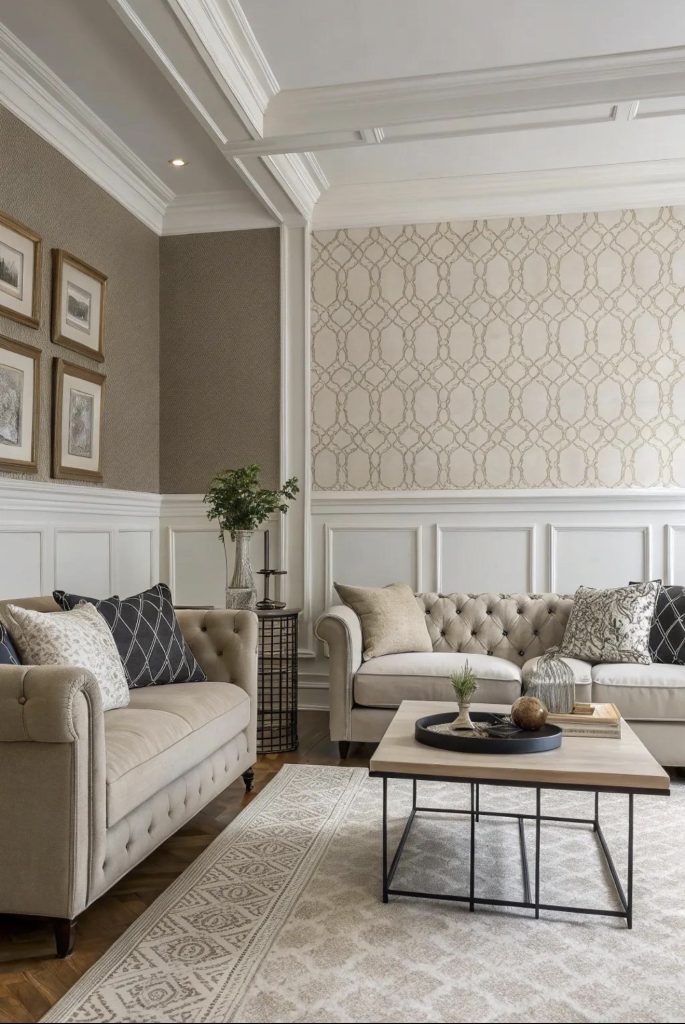
It works particularly well in small traditional living rooms, apartments, and older homes that need a little extra character.
Choose a wallpaper that complements the molding
For a classic look, try a small damask pattern, delicate floral print, or understated vintage design. Cream wallpaper with beige detailing is an easy choice because it works with many furniture colors.
If you prefer a more modern look, choose a tiny geometric print or a subtle textured wallpaper.
The goal is to let the wallpaper and molding complement each other instead of competing for attention.
Create the panels yourself
You can use affordable picture-frame molding to create the lower wall treatment. Measure the wall carefully and decide how many rectangular frames will fit comfortably.
For a small living room, fewer, wider rectangles can look cleaner than lots of tiny frames. Keep the spacing between the frames consistent, and use a level to help the lines look straight.
Paint the molding and the wall behind it the same color. White, warm cream, and light greige are all attractive choices.
If you’re decorating a rental, consider lightweight removable molding products, but check their compatibility with your wall finish before installing them.
Keep the project manageable
You don’t have to decorate every wall. A single wall behind the sofa can give you the look without requiring a large amount of material.
You can also use leftover wallpaper to decorate the back of a small bookshelf or a narrow wall section nearby. Just make sure the extra details don’t make the room feel cluttered.
Style it with affordable furniture
A small neutral sofa, a round coffee table, and a simple table lamp are all you need. Add one framed picture or a small mirror above the sofa if the wall has enough space.
For a cozy finishing touch, use a soft area rug and a pair of textured throw pillows.
This design is ideal if you love elegant interiors but don’t have the budget for custom wall paneling. With careful measuring and a little patience, you can achieve a similar decorative effect for much less.
Check out these above toilet wainscoting bathroom wall decor ideas on a budget.
Tips for Creating Wallpaper Wainscoting on a Tight Budget
Before you start your project, keep these practical tips in mind.
1. Decorate one wall first. You can create a beautiful focal point without wallpapering the entire living room. This also lets you test the design before spending more money.
2. Measure before buying. Measure the wall height and width, then calculate how much wallpaper and trim you’ll need. Include extra wallpaper for pattern matching and mistakes.
3. Check discount sections. Look for wallpaper remnants, clearance rolls, leftover molding, and discounted paint. Just make sure you can buy enough of the same wallpaper pattern and color batch for your project.
4. Prepare your walls properly. Wallpaper generally adheres best to clean, dry, smooth surfaces. Follow the manufacturer’s preparation instructions, and test peel-and-stick wallpaper in an inconspicuous area first. Some adhesives can damage paint when removed, so removable doesn’t always mean damage-free.
5. Keep the pattern simple. Small floral prints, subtle stripes, and gentle geometric patterns are easier to combine with everyday furniture than several bold patterns competing for attention.
6. Reuse what you already own. Before buying new furniture, try moving your sofa, changing your throw pillows, or repurposing an old mirror. A new wall treatment can make familiar pieces feel fresh again.
7. Check the total cost. Add up wallpaper, trim, paint, tools, and any supplies you need. A project that looks inexpensive at first can become costly if you overlook installation materials.
Frequently Asked Questions
Is wallpaper wainscoting a good idea for a small living room?
Yes. Wallpaper wainscoting adds color, texture, and architectural interest without taking up floor space. For a small living room, choose a light wallpaper, a simple trim design, or a single accent wall if you want to keep the room feeling open.
How can I make cheap wainscoting look expensive?
Use simple molding, keep the spacing even, and paint the trim and lower wall the same color. Choose wallpaper that complements the paint instead of competing with it. Careful measuring and clean edges can make an inexpensive DIY project look much more polished.
Can you put peel-and-stick wallpaper above wainscoting?
Yes, provided the wall surface is suitable for the product. Clean and dry the wall, check the manufacturer’s instructions, and test a small area before covering a large section. Smooth, properly prepared walls generally provide better results than heavily textured surfaces.
What is the best wallpaper pattern for a small living room?
Small-scale florals, subtle stripes, delicate botanical prints, and understated geometric designs are all good options. Vertical stripes can draw the eye upward, while light-colored patterns help maintain an airy look. Choose a design that works with your furniture and the amount of natural light in the room.
How high should wainscoting be in a small living room?
A common starting point is about one-third of the wall height, often around 32 to 36 inches in a room with standard-height ceilings. However, there is no single correct height.
You can go slightly higher if it suits your wall proportions, furniture, and wallpaper pattern. Mark the proposed height with painter’s tape before installing the trim so you can see how it looks.
Final Thoughts
You don’t need a big decorating budget to give your small living room a beautiful new look.
Wallpaper wainscoting lets you combine affordable materials with simple DIY techniques to create walls that feel warm, stylish, and full of character.
Whether you prefer delicate floral wallpaper, sage green panels, classic stripes, or dark lower wainscoting, the best choice is the one that fits your home and your budget.
Start with one wall, choose a pattern you genuinely love, and work with the furniture you already have.