

6 Primitive Americana Kitchen Decor Ideas Boomers Love
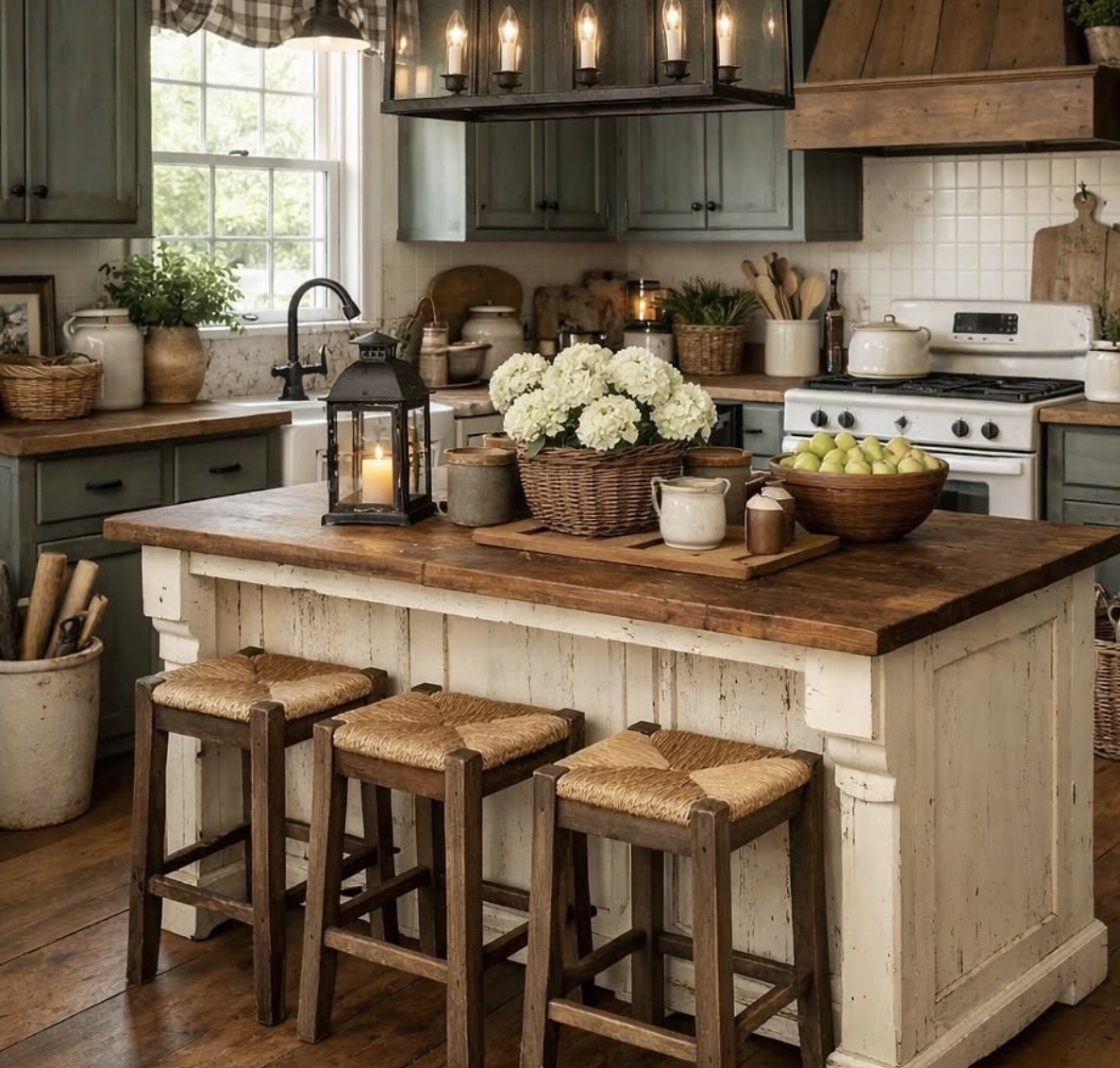
Primitive Americana kitchen decor has a special kind of charm. It brings together the warmth of an old-fashioned country kitchen, the history of early American homes, and the simple beauty of things that feel well-loved.
Think wooden cabinets, antique-looking pitchers, vintage farmhouse tables, classic red and blue accents, and shelves filled with everyday treasures.
Nothing needs to look too polished or perfectly matched. In fact, a little wear and character are part of what makes this style so appealing.
For many Baby Boomers, this decorating style brings back memories of family kitchens, Sunday dinners, homemade pies, and homes where people gathered around the table.
But you don’t have to live in an old farmhouse to enjoy it. Primitive Americana decor can look beautiful in a modern suburban home, a cozy cottage, or a small apartment kitchen.
The best part? You don’t need to spend a fortune on antiques or completely remodel your kitchen. A few thoughtful changes can give your space that welcoming, old-fashioned American character.
If you’re a woman in the United States who loves traditional country decorating, vintage finds, and a kitchen that feels warm rather than trendy, these 6 ideas are worth trying.
Let’s look at how to bring this timeless style into your home without making your kitchen feel cluttered or outdated.
1. Decorate With Rustic Wood and Antique-Looking Furniture
Wood is one of the easiest ways to bring primitive Americana style into your kitchen. It adds warmth, texture, and that lived-in feeling that makes an old-fashioned country kitchen so inviting.
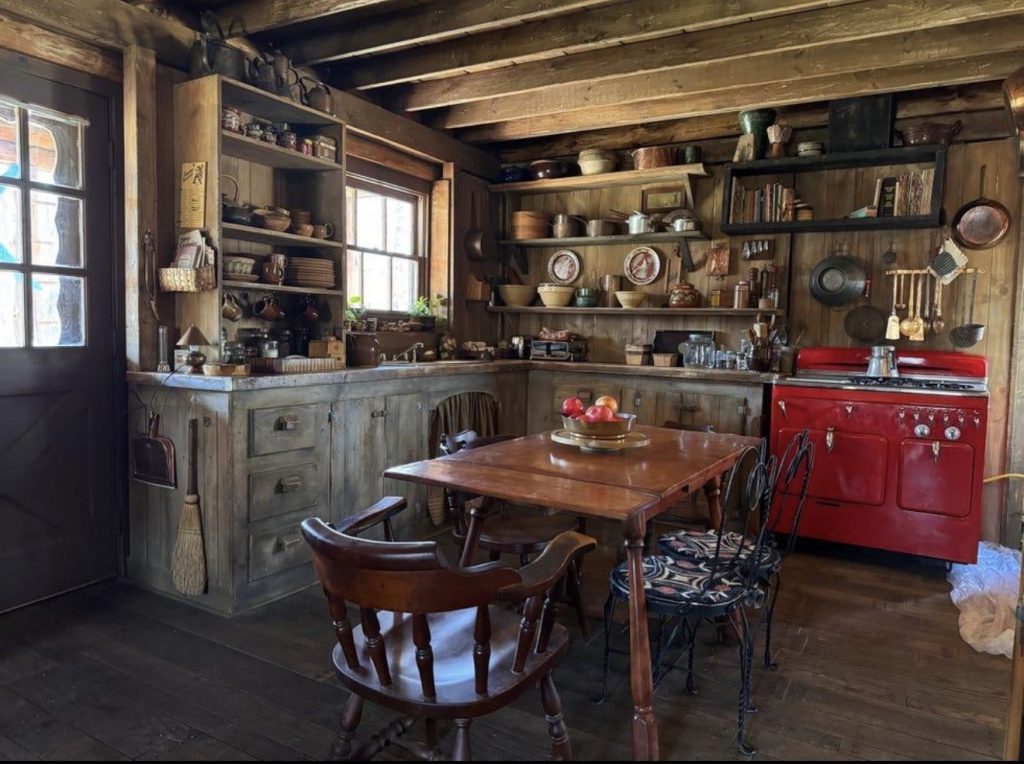
Instead of choosing furniture with a shiny, perfectly smooth finish, look for pieces with visible wood grain, simple shapes, and a slightly weathered appearance.
You don’t have to buy genuine antique furniture, either. Reproduction pieces and secondhand finds can create a similar look for much less money.
How to bring this look into your kitchen
Start with a rustic wooden table if you have enough room. A rectangular farmhouse table with sturdy legs is a wonderful centerpiece. Choose a natural pine, oak, or warm brown finish that feels comfortable and practical.
If your kitchen is too small for a large table, try a wooden island, a narrow worktable, or a small butcher-block cart. Even one substantial wooden piece can help establish the style.
You can also introduce rustic wood through:
- Open wooden shelves for plates, mugs, and pottery.
- Wooden cutting boards displayed against the backsplash.
- A vintage-style bread box on the counter.
- Simple stools with turned legs or a worn finish.
- A small wooden bench beside a breakfast table.
For cabinets, consider warm wood tones instead of glossy white or high-gloss finishes. If you already have painted cabinets, you don’t need to replace them. A natural wood countertop, wooden shelf, or antique-style cabinet hardware can bring in the same warmth.
Choose character over perfection
One of the defining features of primitive decorating is its appreciation for useful objects that show their age. A table with visible grain, an old-fashioned stool, or a wooden bowl with a distressed finish can look more authentic than a room filled with brand-new furniture.
However, avoid making every surface look heavily distressed. Too many artificial scratches and dark stains can make a kitchen feel like a stage set.
Keep the wood tones reasonably coordinated, and let a few pieces stand out.
Budget-friendly tip: Check local thrift stores, estate sales, flea markets, and online resale listings for wooden furniture. A simple secondhand table can become the heart of your kitchen with little more than cleaning and a suitable finish.
Learn how to remodel your kitchen without spending much money.
2. Use Classic Americana Colors Like Barn Red, Navy, and Cream
Color plays a big role in primitive Americana decorating. The look often draws from traditional American country homes, with colors inspired by old painted furniture, woven textiles, pottery, and simple everyday objects.
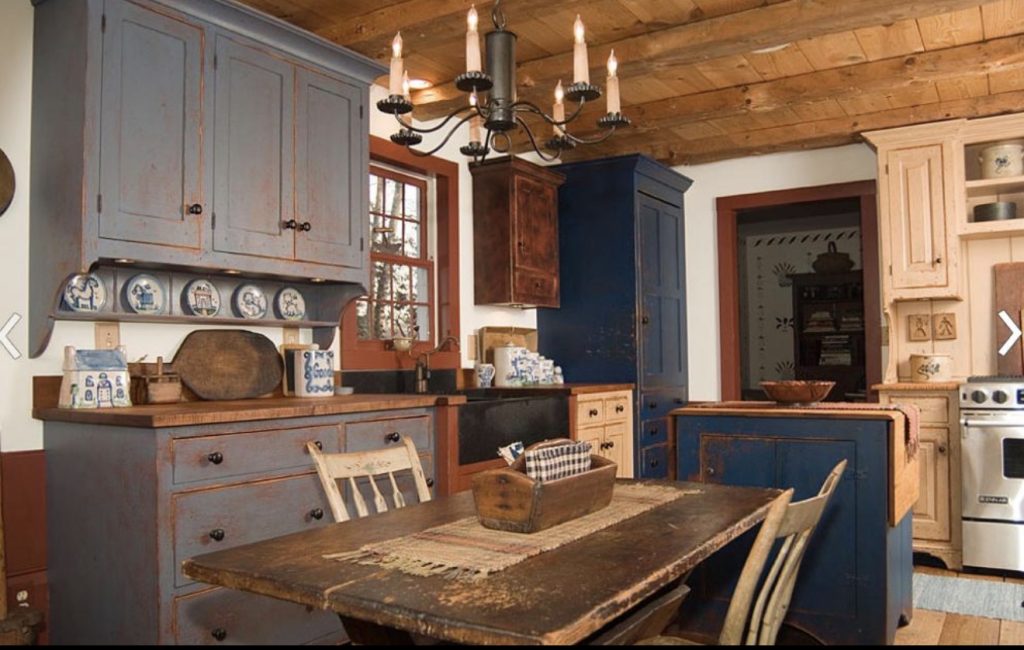
Barn red, faded navy, warm cream, muted mustard, and earthy brown are especially useful choices.
These shades create a cozy atmosphere without making the kitchen feel too bright or modern.
Start with a simple color palette
If you want a kitchen that looks traditional but still feels fresh, begin with three main colors.
- Warm cream: Use it for walls, cabinets, dishes, or larger surfaces.
- Barn red: Introduce it through small appliances, pottery, towels, or a vintage-style sign.
- Navy blue: Add it with textiles, ceramic pitchers, seat cushions, or painted furniture.
Wood tones can serve as the natural foundation that ties everything together.
You can also use muted sage green or mustard yellow if you prefer a softer country look. These colors work particularly well with cream walls and rustic wooden furniture.
Add color without repainting everything
You don’t have to paint your cabinets red or cover every wall with a bold shade.
Instead, introduce color in small, noticeable places. Hang a pair of navy blue curtains. Place a red ceramic pitcher beside the stove. Add cream-colored canisters to the counter, or use a small red rug near the sink.
A few coordinated accessories can make a surprising difference.
If your kitchen already has white cabinets, that’s fine. White and cream can provide a clean backdrop for primitive Americana accents.
For a more traditional appearance, choose slightly muted colors rather than very bright primary shades. A weathered red or faded blue often feels more natural than a glossy, saturated finish.
Be careful with patriotic decorations
Americana decorating can include stars, stripes, and flag-inspired patterns, but you don’t need to display an American flag on every wall.
One star-patterned textile, a red-and-blue checked runner, or a small vintage-style patriotic print is usually enough.
The idea is to create a warm, historically inspired country kitchen rather than a room that looks decorated for the Fourth of July all year.
Budget-friendly tip: Start with inexpensive kitchen towels, cloth napkins, or a secondhand tablecloth in your chosen colors. These items are easy to replace if you decide to change your palette later.
3. Display Vintage Crocks, Stoneware, and Old-Fashioned Kitchenware
If there’s one decorating detail that can make a primitive kitchen feel like it has a story to tell, it’s vintage-looking pottery.
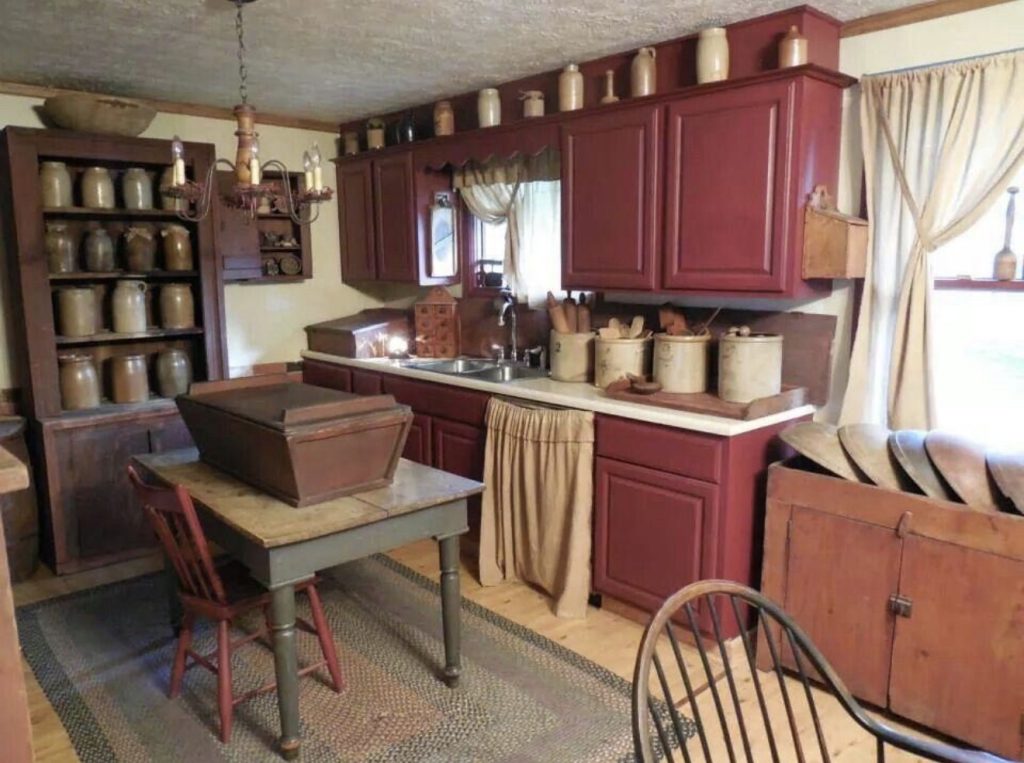
Stoneware crocks, ceramic pitchers, old-fashioned mixing bowls, and simple storage jars fit beautifully into this style. They look useful, even when you’re displaying them purely for decoration.
These pieces are especially lovely because they don’t need bright colors or elaborate designs to stand out. Their shapes, textures, and earthy finishes do most of the work.
Which pieces should you look for?
Start with a few classic items:
- Stoneware crocks: Display them on countertops, open shelves, or a wooden hutch.
- Ceramic pitchers: Use them to hold wooden spoons or display seasonal flowers.
- Redware pottery: Look for warm reddish-brown pieces that complement rustic wood.
- Vintage mixing bowls: Stack them on a shelf or display them in a glass-front cabinet.
- Cream-colored canisters: Use them to store dry ingredients while keeping the counter looking coordinated.
You can find these pieces at antique shops, estate sales, flea markets, and thrift stores. Many home decor stores also carry affordable reproductions that have the appearance of traditional pottery.
How to display pottery without creating clutter
The secret is to group your pieces rather than spread them across every available surface.
For example, place two stoneware crocks of different heights beside a wooden cutting board. Add a small ceramic pitcher, and you’ve created a simple display with varied shapes and textures.
Another option is to arrange a few pottery pieces on open shelving. Leave some empty space between them so each item has room to stand out.
If your kitchen has a traditional hutch, use the shelves to display cream-colored dishes, brown stoneware, and a few red or blue accents. The arrangement will feel more interesting if the pieces aren’t all identical.
You don’t need a large collection, either. Three or four carefully chosen items can have more impact than a crowded shelf filled with decorations.
Keep vintage charm practical
A primitive kitchen should still work for everyday cooking. Choose sturdy, food-safe containers for ingredients you use regularly.
If you purchase genuine antique pottery, check its condition and suitability for food use before storing anything edible in it. Some older glazes may contain lead, so decorative pieces of uncertain origin are best kept for display rather than food storage.
Budget-friendly tip: Begin with one stoneware crock or ceramic pitcher. You can build your collection gradually as you find pieces you love.
Check out these farmhouse kitchen decor ideas for small spaces.
4. Add Gingham Curtains, Homespun Fabrics, and Braided Rugs
Wood and pottery give a kitchen structure, but fabric is what makes it feel soft and welcoming.
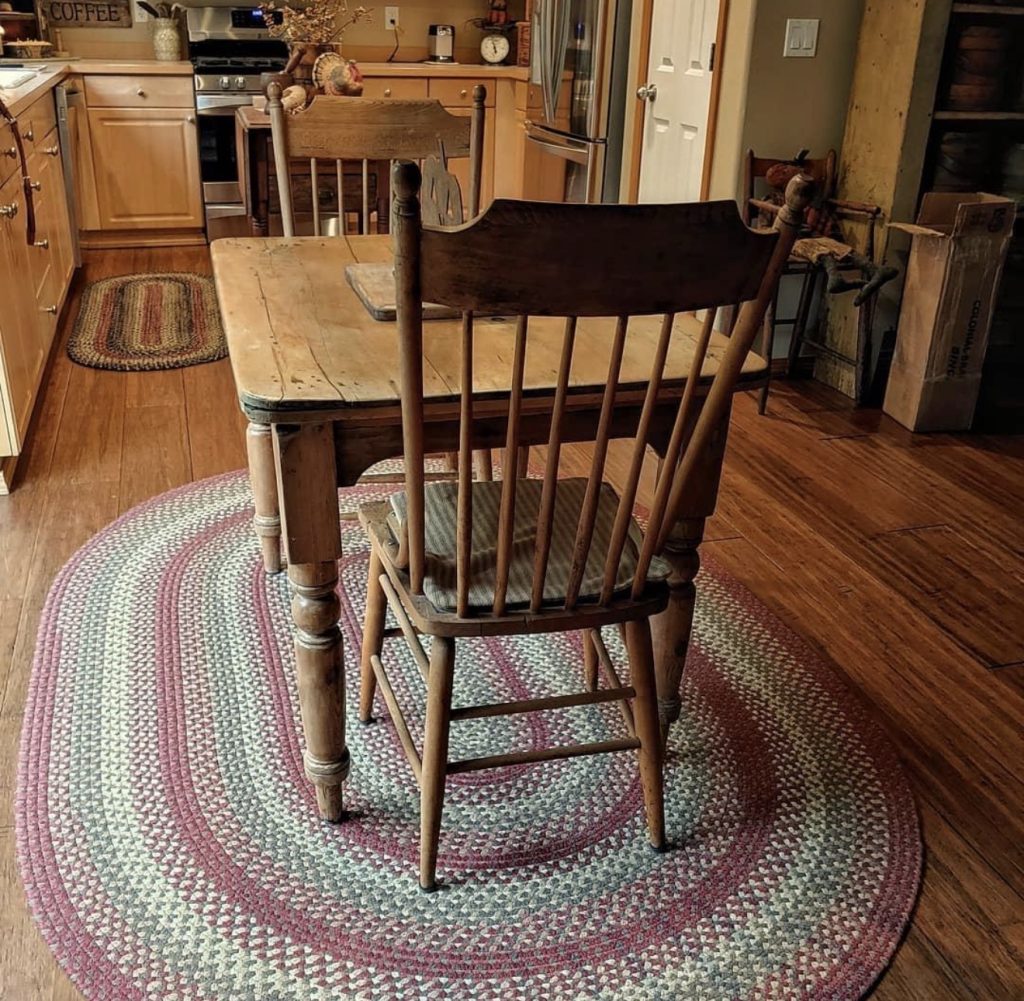
Primitive Americana decorating often uses simple, homespun-looking textiles. Think gingham curtains, ticking stripes, woven table runners, cotton dish towels, and braided rugs.
These details can make even a newer kitchen feel more relaxed and traditional.
Dress your kitchen windows in country style
Short cafe curtains are a classic choice for a primitive kitchen. They cover the lower portion of a window while allowing natural light to enter from above.
Choose red-and-cream gingham for a traditional country look, or try navy checks for a quieter Americana feel.
If you prefer something more understated, natural cotton curtains or simple striped panels can work just as well.
Avoid overly shiny fabrics and elaborate window treatments. Simple materials and easy patterns generally suit this style better.
Before buying curtains, measure your windows carefully. A small kitchen can feel crowded if the fabric is too heavy or covers too much glass.
Give your table a homespun finish
A woven runner or cotton tablecloth is another easy way to introduce primitive character.
Look for fabrics in muted red, navy, tan, cream, or brown. Small checks, narrow stripes, and subtle woven patterns are all good choices.
For an everyday table, a simple runner may be more practical than a full tablecloth. It lets the natural wood remain visible while adding a little color and texture.
You can also use cloth napkins in coordinating colors when you’re entertaining family or friends.
The goal is to make the table feel ready for a casual meal, a cup of coffee, or an afternoon spent chatting with someone you love.
Warm up the floor with a braided rug
A braided rug can be a beautiful addition beside a kitchen island, near the sink, or underneath a small breakfast table.
Choose an oval or rectangular design with earthy colors that complement your cabinets and flooring.
For a traditional Americana palette, try a rug that combines muted red, navy, tan, and cream. If your kitchen already has plenty of color, a brown-and-cream rug may be a better choice.
Make sure any kitchen rug has a suitable nonslip backing or rug pad. Avoid placing loose rugs where they can slide, bunch up, or create a tripping hazard. Washable options are especially useful in areas where spills are common.
Budget-friendly tip: You don’t need to replace all your textiles at once. Start with one pair of curtains or a small runner, then add other pieces when your budget allows.
A few well-chosen fabrics can soften hard surfaces and give your kitchen that familiar, old-fashioned country feeling.
5. Decorate With Primitive Folk Art, Wooden Stars, and Vintage Signs
Primitive Americana decor isn’t only about furniture and kitchenware. Wall decorations also help establish the style and give your kitchen a little personality.
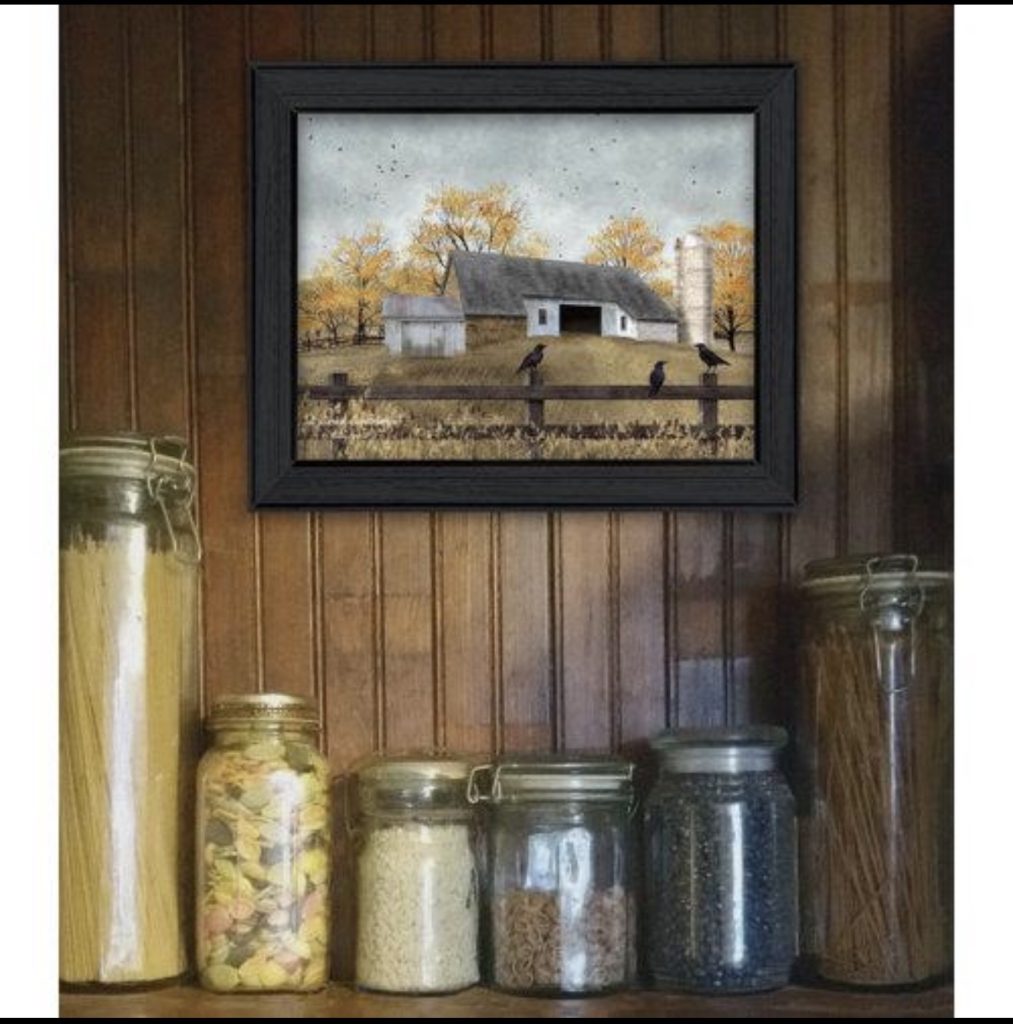
Traditional folk art, simple wooden stars, hand-painted signs, and old-fashioned country prints can bring the walls to life without requiring a major renovation.
The trick is to choose decorations that feel connected to the rest of the room.
Try these traditional wall decor ideas
Wooden barn stars: A small, weathered metal or wooden star can add a subtle Americana touch. Hang one above a breakfast nook or beside a rustic wooden shelf.
Primitive folk art: Look for handmade or folk-art-inspired designs featuring birds, sheep, farmhouses, trees, or simple country scenes. These motifs fit naturally into a traditional country kitchen.
Vintage-style signs: A wooden sign with a simple kitchen-related phrase can add personality. Choose one with a worn finish and muted lettering instead of a glossy, brightly colored design.
Framed botanical prints: Old-fashioned fruit, herb, or garden illustrations can bring a gentle country feel to a blank wall.
Vintage advertisements: Reproduction advertisements for flour, coffee, or traditional kitchen products can create a nostalgic look. Keep the colors muted so they don’t compete with your other decorations.
Create one attractive focal point
Instead of filling every wall, choose one area for your main display.
For example, hang a modest folk-art piece above a small wooden table. Place a ceramic pitcher and a folded cotton runner nearby to connect the wall decoration with the rest of the kitchen.
You could also create a small gallery wall with three or four framed prints in similar colors and simple frames.
Keep the arrangement balanced. A large sign can look awkward above a tiny table, while several small pieces may get lost on a very large wall.
If you rent your home or don’t want to make holes in the walls, consider leaning framed prints on a sturdy shelf instead.
Keep the Americana theme subtle
You can certainly include patriotic details, but a primitive kitchen doesn’t need flags, stars, and stripes everywhere.
Choose a few meaningful pieces and let them complement your wood furniture, pottery, and textiles.
Also, remember that authentic primitive folk art doesn’t have to be an antique. Modern handmade pieces and well-made reproductions can capture the same simple, traditional spirit.
Budget-friendly tip: Print a few suitable public-domain botanical illustrations or purchase inexpensive reproduction prints, then frame them in simple wooden frames.
The right wall decor gives your kitchen a finished look while allowing your personality to shine through.
6. Use Cast Iron, Woven Baskets, and Old-Fashioned Lighting
The final touch is all about the smaller details. Traditional metal finishes, woven baskets, and warm lighting help bring the entire kitchen together.
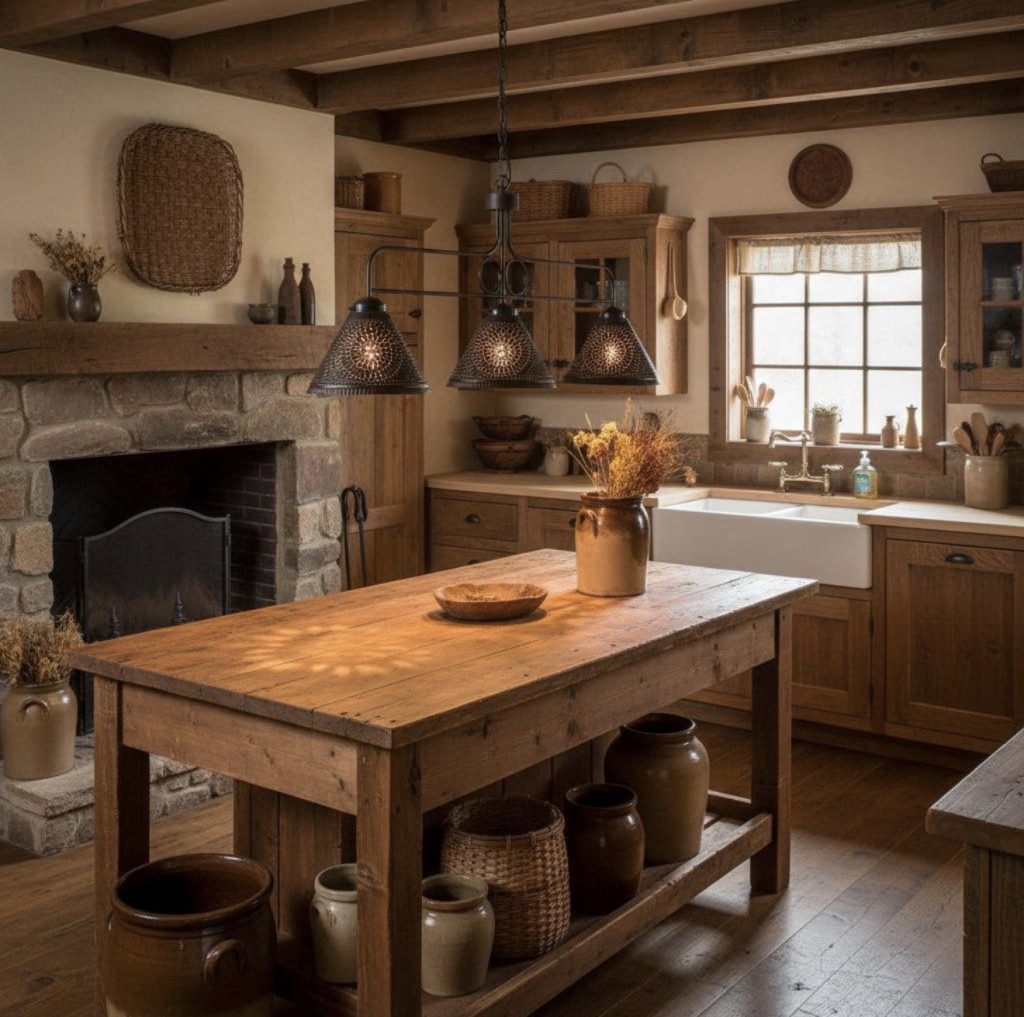
These are the kinds of details that make a room feel thoughtfully decorated without requiring expensive furniture or a complete makeover.
Introduce traditional metal accents
Black iron, aged brass, and dark bronze finishes work beautifully with primitive Americana decor.
You can introduce these finishes through cabinet pulls, drawer handles, curtain rods, wall hooks, and light fixtures.
For example, black iron-style handles can make plain wooden cabinets feel more traditional. A dark metal pot rack can add character above a kitchen island, provided it is securely installed and positioned safely away from cooking hazards.
If replacing your hardware isn’t an option, look for decorative pieces that bring in similar finishes.
A black metal utensil holder or an antique-style wall hook can provide just enough contrast against cream cabinets and warm wood.
Make woven baskets part of your decor
Woven baskets are attractive, but they’re also useful for keeping a kitchen organized.
Try placing a basket on the counter to hold clean kitchen towels. Use a larger one to store cookbooks or keep packaged snacks together in the pantry.
A small basket can also hold napkins on the dining table, while a sturdy basket on a shelf can hide everyday items that would otherwise create visual clutter.
Choose natural wicker, willow, or similar woven textures that complement your wooden furniture.
If you like a more rustic appearance, look for baskets in natural brown or darker weathered finishes.
Just remember that baskets near the stove should be kept away from heat and open flames.
Choose warm, traditional lighting
Lighting can completely change how a kitchen feels.
A black metal pendant over a kitchen island, a traditional brass-style fixture above a table, or a warm-glowing lamp in a safe countertop location can make the room feel cozy in the evening.
If your kitchen has a breakfast nook, a pendant light with a simple, old-fashioned silhouette can become an attractive focal point.
For a smaller kitchen, you might only need to replace one decorative fixture or update the bulbs in your existing lights.
Choose warm-white bulbs for a comfortable atmosphere, while keeping the task lighting over your counters bright enough for chopping, reading recipes, and preparing meals.
Always choose fixtures suitable for the location, and have electrical work handled by a qualified professional when necessary.
Finish with a few everyday treasures
Once you’ve added the larger elements, look at the smaller items you already own.
A wooden spoon crock, a woven bread basket, a simple ceramic pitcher, and a few well-loved cookbooks may be all you need.
You don’t have to purchase every accessory associated with primitive decorating. In fact, the kitchen will often look better if you leave some surfaces clear.
Budget-friendly tip: Begin with inexpensive woven baskets and a few dark metal accents. These small additions can make your existing kitchen feel more cohesive without the cost of replacing cabinets or appliances.
The best primitive kitchens feel comfortable and useful. They aren’t just pretty rooms to photograph. They’re places where people can cook, eat, talk, and enjoy spending time together.
How to Make Primitive Americana Decor Work in a Modern Kitchen
You might love the look of an old-fashioned country kitchen but worry that your existing space is too modern. Perhaps you have white cabinets, stainless steel appliances, laminate countertops, or a compact open-plan layout.
The good news is that you don’t need to change everything.
Start by choosing two or three elements from this list. Add a rustic wooden cutting board, a cream