

7 Low-Maintenance Warm Wooden Kitchen Cabinets That Look Timeless
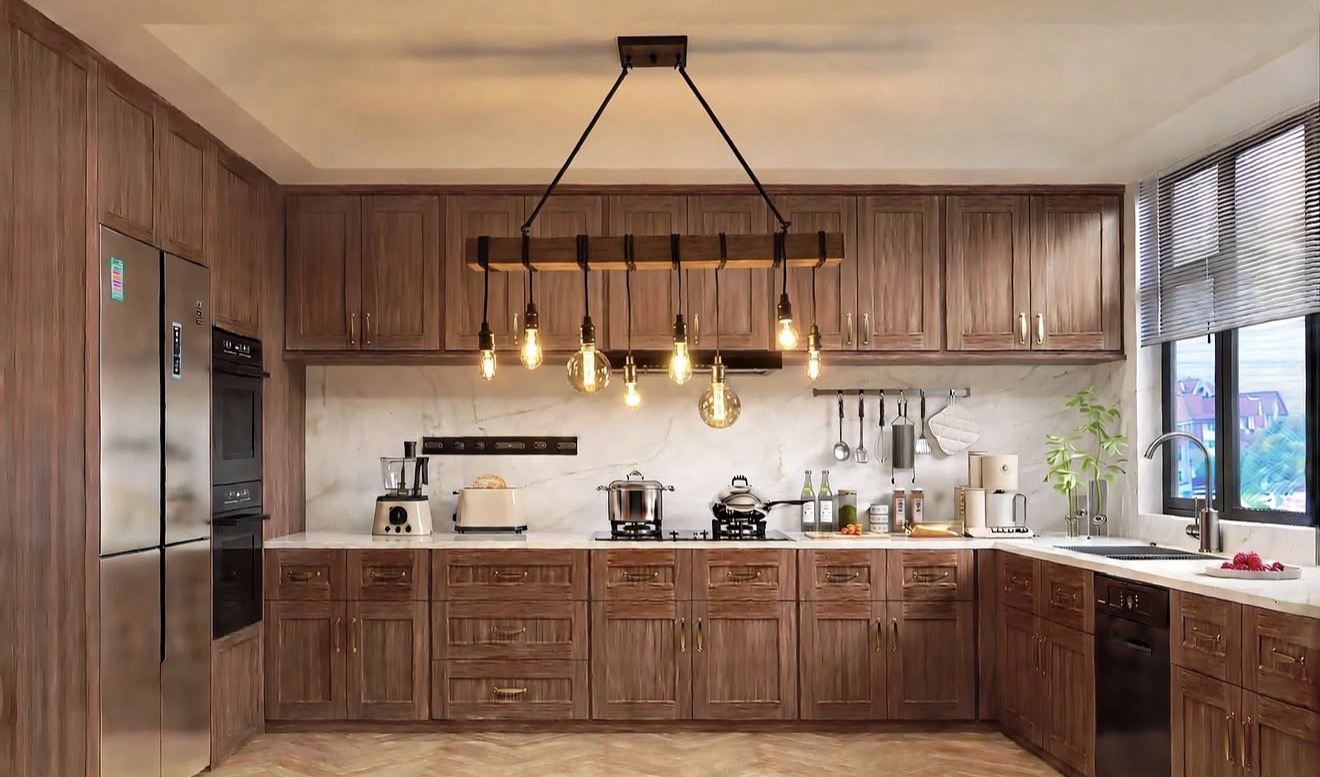
Warm wooden kitchen cabinets have a way of making a kitchen feel welcoming without trying too hard.
They bring natural beauty into the room, work with many decorating styles, and can make even a simple kitchen feel more inviting.
The best part? You don’t need to spend every weekend polishing your cabinets or worrying about every little mark.
With the right wood tone, cabinet finish, and door style, you can enjoy a beautiful kitchen that is relatively easy to maintain.
Whether you’re updating a small kitchen, refreshing an older home, or planning a complete renovation, warm wood is a choice worth considering.
It looks lovely in modern farmhouse kitchens, traditional homes, cozy cottage spaces, and contemporary interiors.
The trick is knowing which cabinet styles offer the right balance of beauty and practicality.
Some wood finishes hide everyday dust better than others. Certain cabinet doors are easier to wipe clean, while some wood tones pair beautifully with countertops and backsplashes that won’t look dated in a few years.
If you want a kitchen that feels warm, looks elegant, and doesn’t require constant upkeep, here are 7 timeless wooden cabinet ideas to inspire your next project.
1. Natural White Oak Cabinets With a Soft, Matte Finish
If you love a kitchen that feels bright, warm, and uncluttered, natural white oak cabinets are a wonderful place to start.
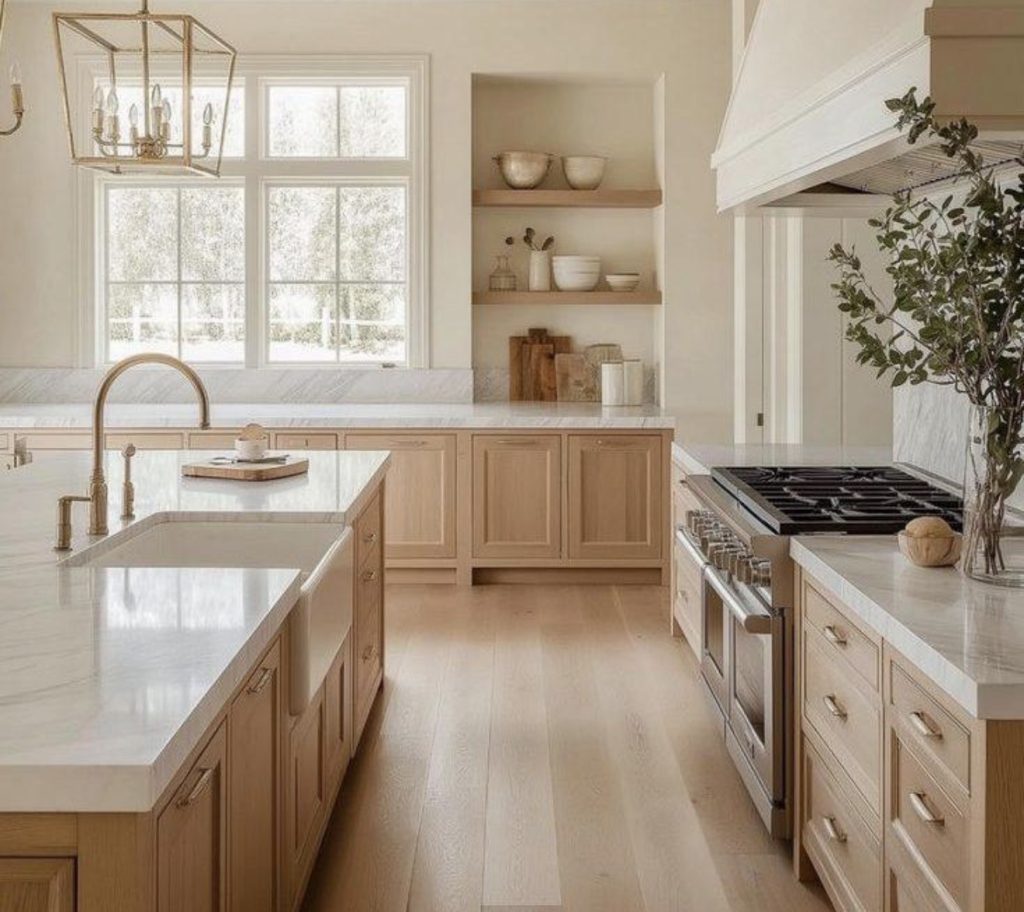
White oak has a beautiful grain pattern that gives cabinets character without making the room feel too busy. Its light tan and honey-beige tones work well with creamy walls, white quartz countertops, and simple backsplash tiles.
What makes this style so appealing is its flexibility. You can use it in a modern farmhouse kitchen, a Scandinavian-inspired space, or a traditional home that needs a fresh update.
For a timeless look, choose a natural or lightly stained finish that doesn’t turn too yellow or orange. A matte or low-sheen protective finish also gives the cabinets a softer appearance than a highly glossy surface.
Why they’re relatively low-maintenance
A medium-light wood tone with visible grain can help disguise some everyday dust and minor marks. Simple cabinet fronts also make cleaning easier because there are fewer grooves where crumbs and grease can collect.
For the easiest upkeep, consider flat-panel or simple Shaker doors. Both work beautifully with oak.
How to style them
- Pair them with creamy white or light beige countertops.
- Add brushed nickel, champagne bronze, or understated brass hardware.
- Choose a white or warm gray backsplash.
- Use black accents sparingly for contrast.
- Keep decorative accessories simple so the wood remains the main attraction.
One practical tip: ask for a cabinet sample before committing. White oak can look quite different under warm kitchen lighting compared with natural daylight.
This is a particularly good choice if you want cabinets that feel current today but won’t look out of place years from now.
Check out these trendy kitchen cabinet color ideas that complements all kitchen design.
2. Warm Walnut Cabinets for a Rich, Elegant Kitchen
Walnut cabinets are perfect if you want a kitchen that feels sophisticated without looking overly formal.
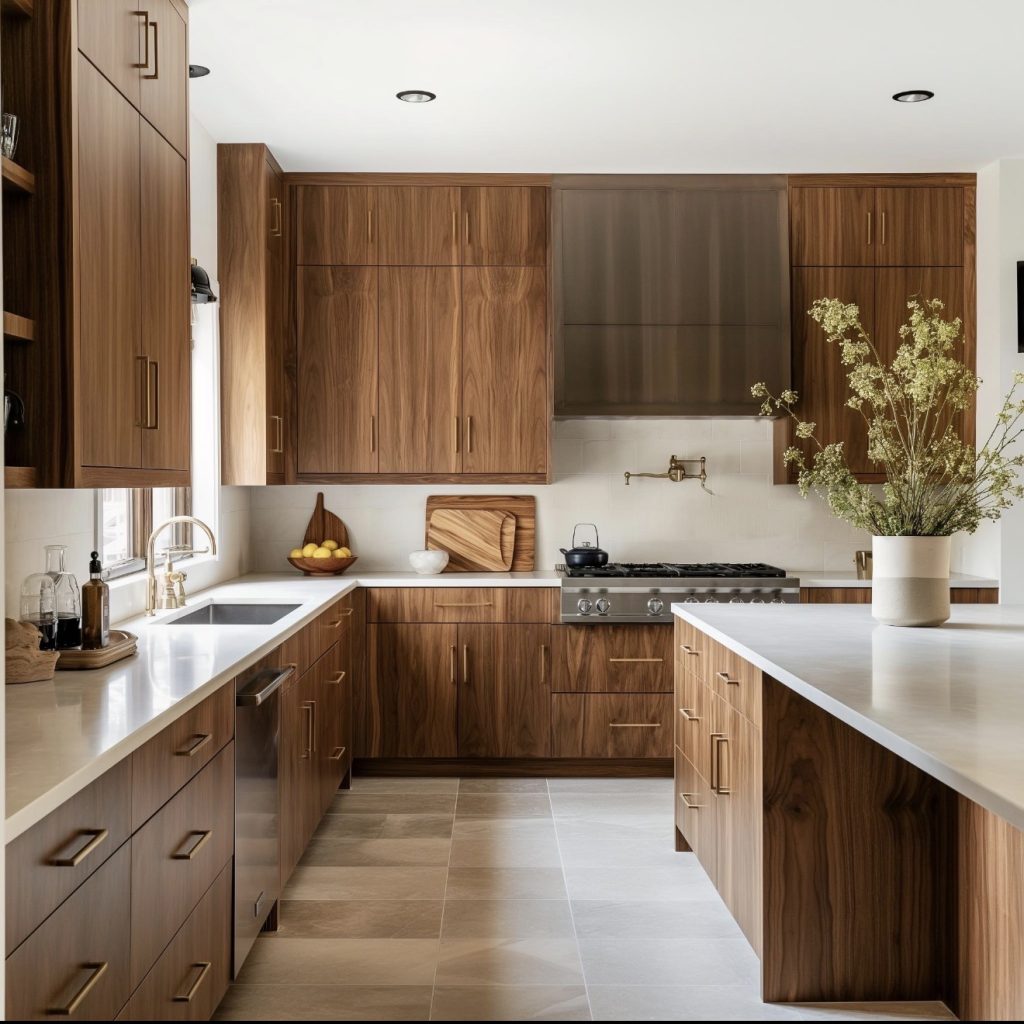
Their rich brown color adds depth and warmth. Depending on the wood and finish, walnut can have chocolate, caramel, or soft golden undertones. The natural grain makes each cabinet front visually interesting.
The secret to keeping walnut timeless is choosing a balanced brown rather than an extremely red or orange stain. Pair it with simple door profiles and countertops that brighten the room.
Walnut works especially well in contemporary kitchens, transitional interiors, and homes with a mix of traditional and modern furniture.
Why they’re relatively low-maintenance
A quality protective finish helps shield the wood surface from ordinary spills and everyday grime. Walnut’s natural color and grain can also make small imperfections less noticeable than they might be on a completely uniform surface.
However, very dark walnut can reveal light-colored dust, fingerprints, and water spots. If you prefer less visible daily mess, choose a medium walnut tone instead of an almost-black stain.
How to style them
- Pair walnut cabinets with warm white quartz countertops.
- Use a pale beige backsplash to balance the darker wood.
- Add simple brushed metal pulls.
- Install under-cabinet lighting to brighten the work surfaces.
- Consider walnut on the lower cabinets and lighter finishes above if the kitchen is small.
You don’t need walnut everywhere to enjoy its beauty. A walnut island paired with warm white perimeter cabinets can create a similar effect while keeping the kitchen feeling open.
If you want a warm, grown-up kitchen that feels inviting rather than trendy, walnut is an excellent option.
3. Natural White Oak Shaker Cabinets for a Classic Look
Shaker cabinets are a favorite for good reason. Their simple recessed panels give them enough detail to feel classic without making the kitchen look overly decorated.
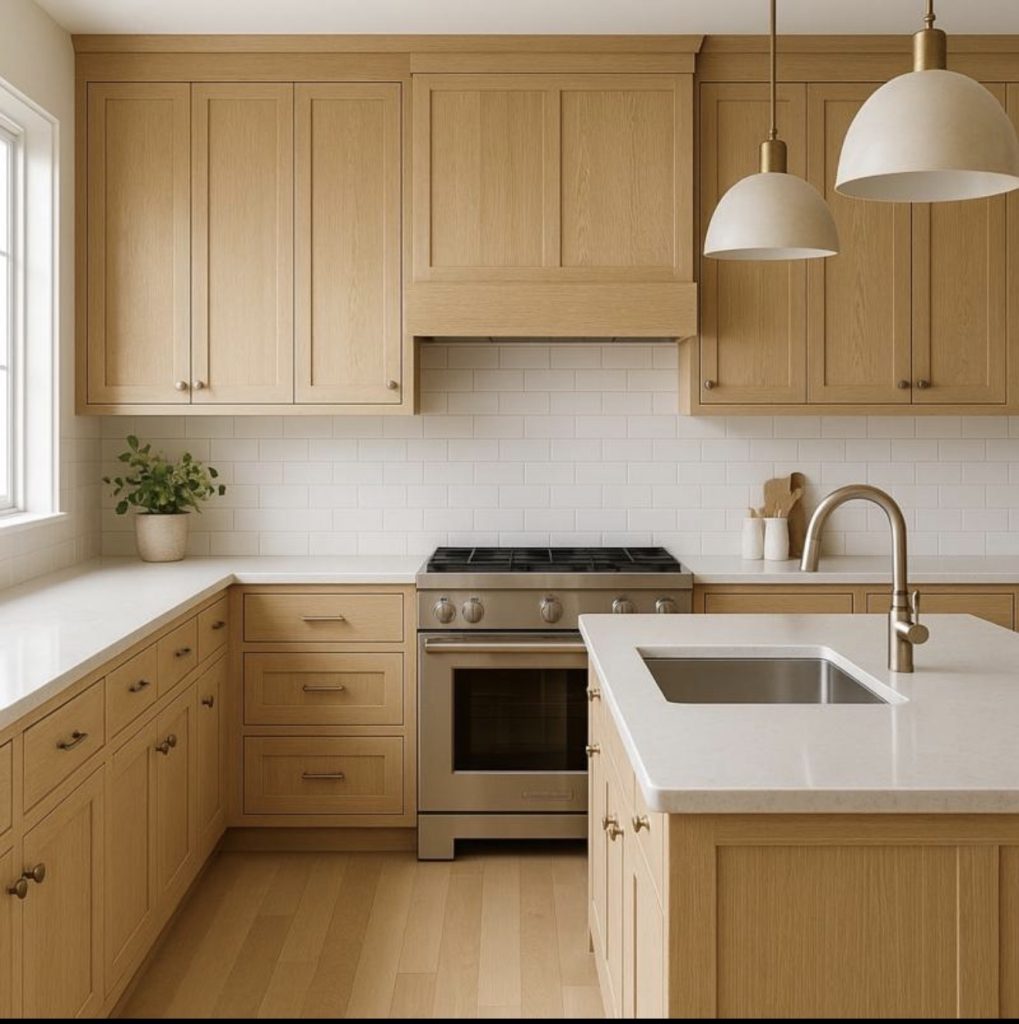
When you combine this familiar door style with warm natural oak, you get a kitchen that can work with many different decorating tastes.
Imagine light oak cabinets, a creamy subway tile backsplash, pale countertops, and a few wooden cutting boards displayed near the stove. The result feels relaxed and welcoming without looking unfinished.
These cabinets are particularly suitable for homeowners who enjoy traditional kitchens but want something cleaner and easier to update.
Why they’re relatively low-maintenance
Shaker doors have more edges than flat-panel cabinets, but their simple shape is still fairly easy to wipe down. You won’t have to work around elaborate carvings or deep decorative moldings.
A smooth, sealed finish makes everyday cleaning more straightforward. Oak’s visible grain also adds texture that can help disguise minor marks.
How to style them
- Choose a natural or lightly stained oak finish.
- Use simple knobs or pulls instead of oversized decorative hardware.
- Pair them with white, cream, or light taupe countertops.
- Add a classic subway tile or simple ceramic backsplash.
- Use woven baskets and linen textiles for a cozy finishing touch.
For a more contemporary look, choose Shaker doors with narrower frames. For a traditional home, a slightly wider frame may feel more appropriate.
The best part is that you can change your backsplash, hardware, wall color, and lighting later without needing to replace the cabinets.
That flexibility is what makes this combination so timeless.
Learn how to remodel your kitchen while on a tight budget.
4. Honey-Toned Maple Cabinets for a Soft, Warm Finish
Not every kitchen needs dramatic wood grain to feel beautiful. Sometimes, a softer and more consistent wood appearance is exactly what the room needs.
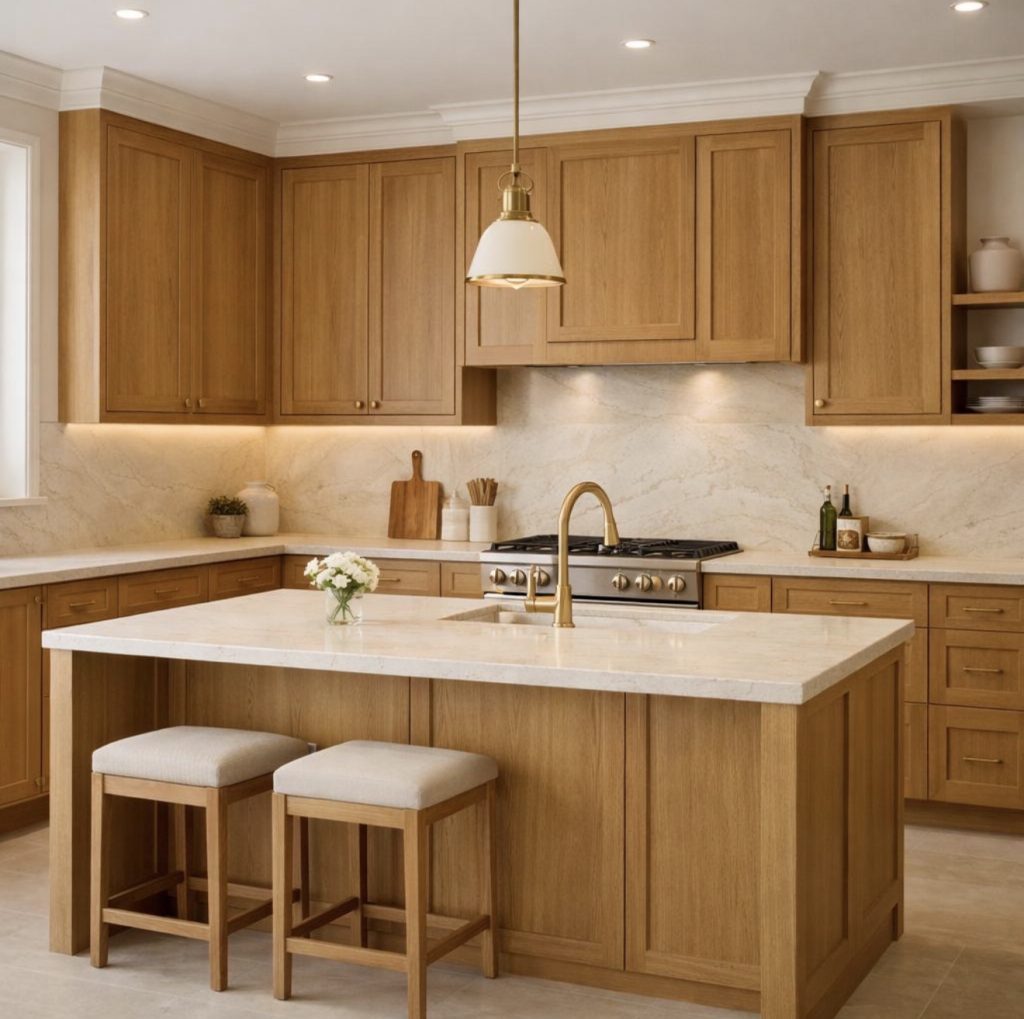
That’s where maple cabinets come in.
Maple typically has a finer, more subtle grain than oak. Its natural color ranges from creamy pale tones to light golden brown, depending on the wood and finish. A carefully chosen honey-toned stain can give it that cozy warmth many homeowners want without making the kitchen feel too dark.
This style looks lovely in traditional kitchens, cottage-inspired homes, and transitional spaces that combine classic details with modern conveniences.
If you have a smaller kitchen, maple can be especially appealing because lighter wood tones help the space feel open and airy.
Why they’re relatively low-maintenance
Maple’s relatively smooth grain is easy to wipe down. With a suitable factory-applied protective finish, the cabinet surfaces can handle normal kitchen cleaning without needing regular polishing.
Keep in mind that a very pale, uniform finish may show certain stains and dark marks. A soft medium-tone stain can offer a nice balance between brightness and practicality.
How to style them
- Pair honey-toned maple with cream or warm white countertops.
- Choose a simple ceramic backsplash in ivory or beige.
- Add brushed nickel or muted bronze cabinet hardware.
- Use warm white lighting to bring out the wood’s natural color.
- Incorporate a few natural textures, such as linen curtains or woven counter stools.
One thing to watch is the undertone. Maple can take on a yellow or orange appearance under certain finishes and lighting. Test a sample beside your countertop and flooring before ordering.
When you get the color right, maple offers a comfortable, classic look that doesn’t need much decoration to feel complete.
5. Medium Brown Oak Cabinets That Hide Everyday Wear
If you have a busy household, medium brown oak deserves a place on your shortlist.
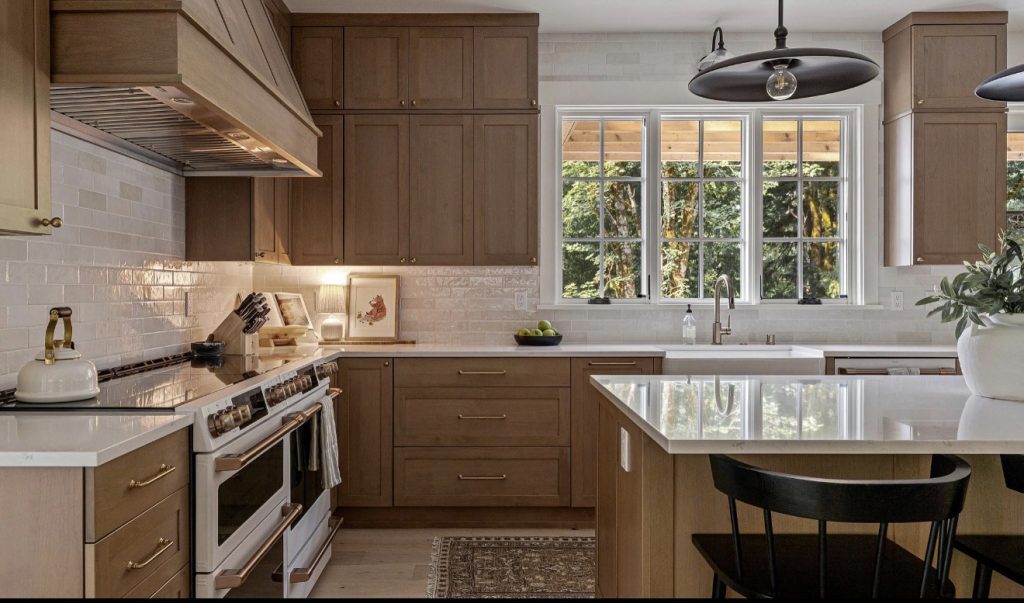
Think of a warm, natural brown that sits somewhere between pale oak and deep walnut. It has enough depth to feel cozy but isn’t so dark that every speck of dust stands out immediately.
This is one of those cabinet styles that can make a kitchen look established and welcoming. It works in traditional homes, Craftsman-style houses, transitional kitchens, and modern farmhouse interiors.
Medium brown oak is also a practical choice if you don’t want to worry about matching every accessory perfectly. Cream, beige, muted green, warm gray, and many natural stone finishes complement it beautifully.
Why they’re relatively low-maintenance
The combination of a medium stain and visible oak grain can help camouflage minor scratches, small marks, and everyday dust. That’s especially helpful in a kitchen where cabinet doors are opened constantly.
Choose a durable, sealed finish and a straightforward door design. These details usually matter more for maintenance than the wood color alone.
How to style them
- Pair the cabinets with creamy quartz countertops.
- Add a beige or ivory backsplash.
- Choose simple bronze or brushed nickel pulls.
- Use light-colored walls to balance the brown wood.
- Keep the flooring neutral if you want the cabinets to stand out.
Try not to match the cabinet stain exactly to the floor. Two similar but slightly different wood tones can sometimes look like an unsuccessful attempt at matching.
Instead, let one wood finish be lighter or darker than the other. You can also use a neutral tile floor to give the cabinets their own visual space.
If your priority is a kitchen that looks good between cleaning days, medium brown oak is a strong contender.
6. Warm Cherry Cabinets With a Natural Satin Finish
Cherry cabinets are a lovely option if you prefer a more traditional kitchen with a rich, natural character.
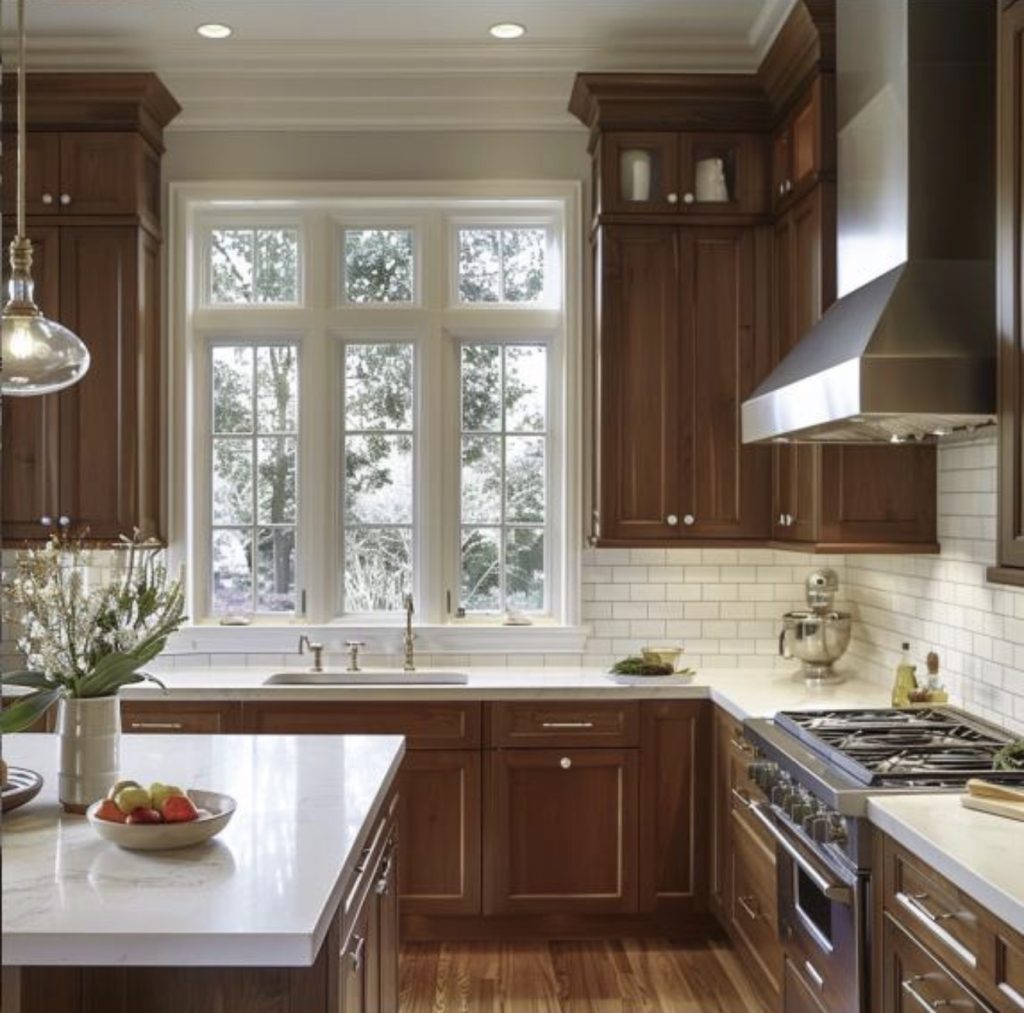
Cherry wood often starts with a warm reddish-brown appearance and develops a deeper, richer tone as it ages and is exposed to light. This changing color is part of its appeal, especially in homes where classic materials feel more appropriate than ultra-modern finishes.
However, cherry needs a thoughtful approach. Very red stains, ornate door profiles, and high-gloss finishes can make the kitchen feel tied to a particular decade.
For a more timeless result, choose a natural-looking cherry finish with restrained red undertones and simple cabinet fronts.
Why they’re relatively low-maintenance
Cherry’s smooth surface can be easy to wipe clean when properly sealed. A satin or low-sheen protective finish also provides a softer look than a mirror-like gloss.
The main consideration is color change. Natural cherry can darken over time, and areas exposed to sunlight may change differently from protected areas. This is normal, but it is worth discussing with your cabinet supplier.
How to style them
- Use warm white or creamy beige countertops.
- Choose simple Shaker or recessed-panel doors.
- Add understated brushed nickel or bronze hardware.
- Keep the backsplash light and uncomplicated.
- Use warm, balanced lighting rather than overly yellow bulbs.
Cherry cabinets are particularly attractive when paired with neutral walls and a simple stone-look countertop. These choices allow the wood to provide the richness without making the whole kitchen feel heavy.
If you love traditional interiors and want natural wood with character, cherry can be a lasting choice.
Check out these modern boho kitchen design ideas for small spaces.
7. Two-Tone Warm Wood Cabinets With Cream Upper Cabinets
Can’t decide between a warm wooden kitchen and a light, airy one? You don’t have to choose just one.
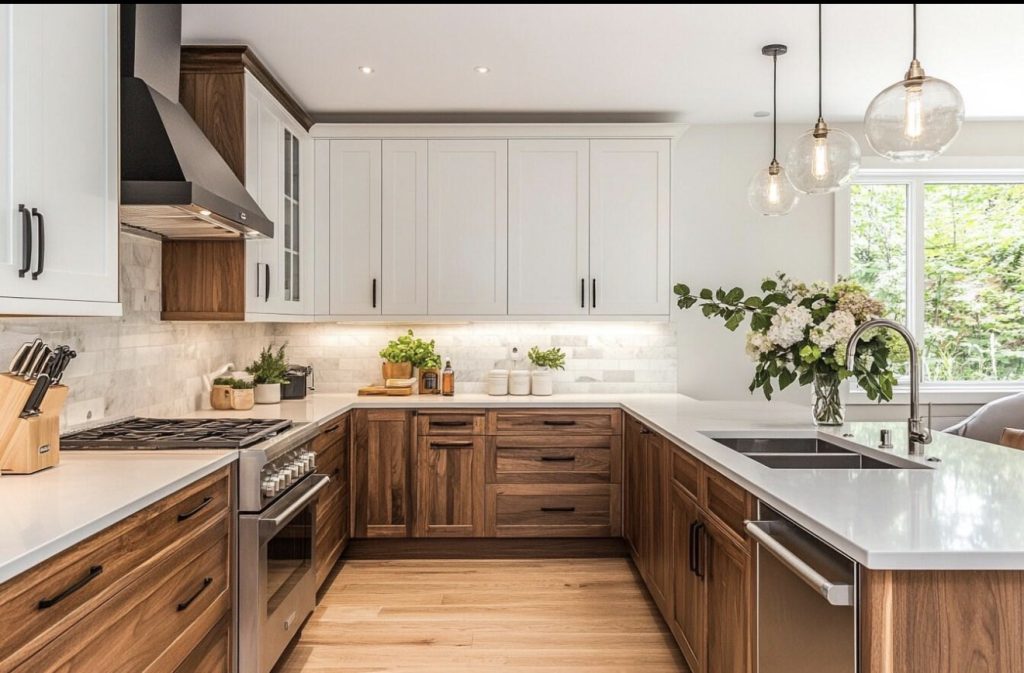
Two-tone cabinetry combines wood cabinets in one part of the kitchen with a different finish elsewhere. One of the most timeless combinations is warm oak or walnut on the lower cabinets with cream or soft white upper cabinets.
The wood brings warmth and natural texture. The lighter upper cabinets help keep the room from feeling too dark or crowded.
This approach works particularly well in smaller kitchens, open-plan homes