

7 Serene Bedroom Color Palettes That Promote Deep Relaxation
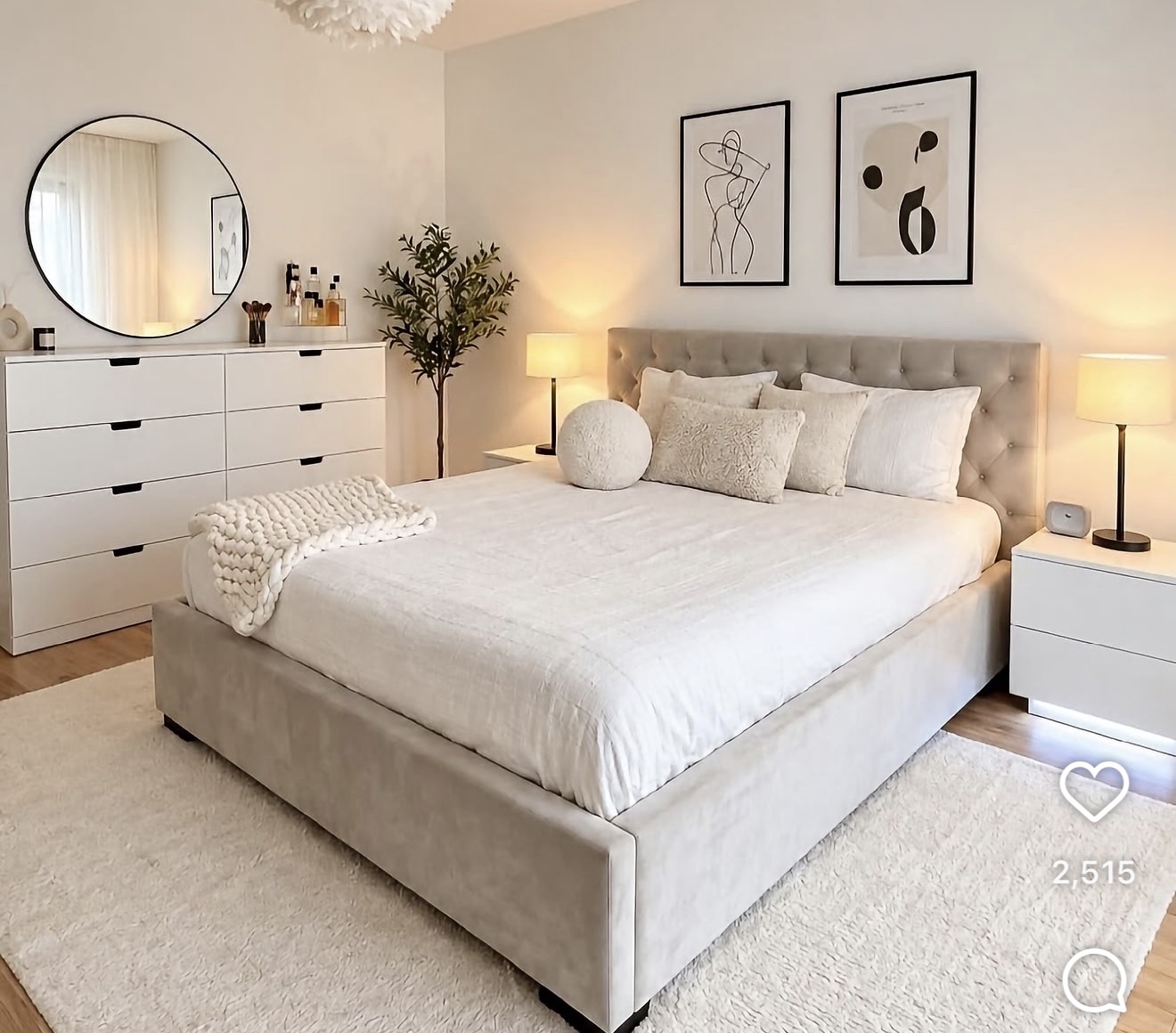
Your bedroom should feel like the one place in your home where you can finally slow down, take a deep breath, and let the stress of the day fade away.
It should feel comfortable, peaceful, and inviting from the moment you walk through the door.
But here’s something worth thinking about. Sometimes, a bedroom doesn’t feel relaxing because of its colors. Bright walls, harsh contrasts, and too many competing shades can make a space feel busy when you’re trying to create a calm retreat.
The fact is you don’t need to completely renovate your bedroom to make it feel more peaceful.
A fresh coat of paint, softer bedding, a few natural textures, and a carefully chosen color palette can make a noticeable difference in the overall atmosphere.
Whether you love modern neutral interiors, cozy farmhouse bedrooms, elegant coastal spaces, or soft, feminine decor, there’s a soothing color combination that can work beautifully in your home.
In this guide, we’ll explore 7 serene bedroom color palettes that promote a relaxing atmosphere. Each idea is easy to visualize, simple to recreate, and suitable for different decorating styles and budgets.
Let’s find the perfect colors for your personal sanctuary.
1. Soft Sage Green, Warm White, and Natural Wood
If you want your bedroom to feel like a peaceful retreat surrounded by nature, sage green is a beautiful place to start.
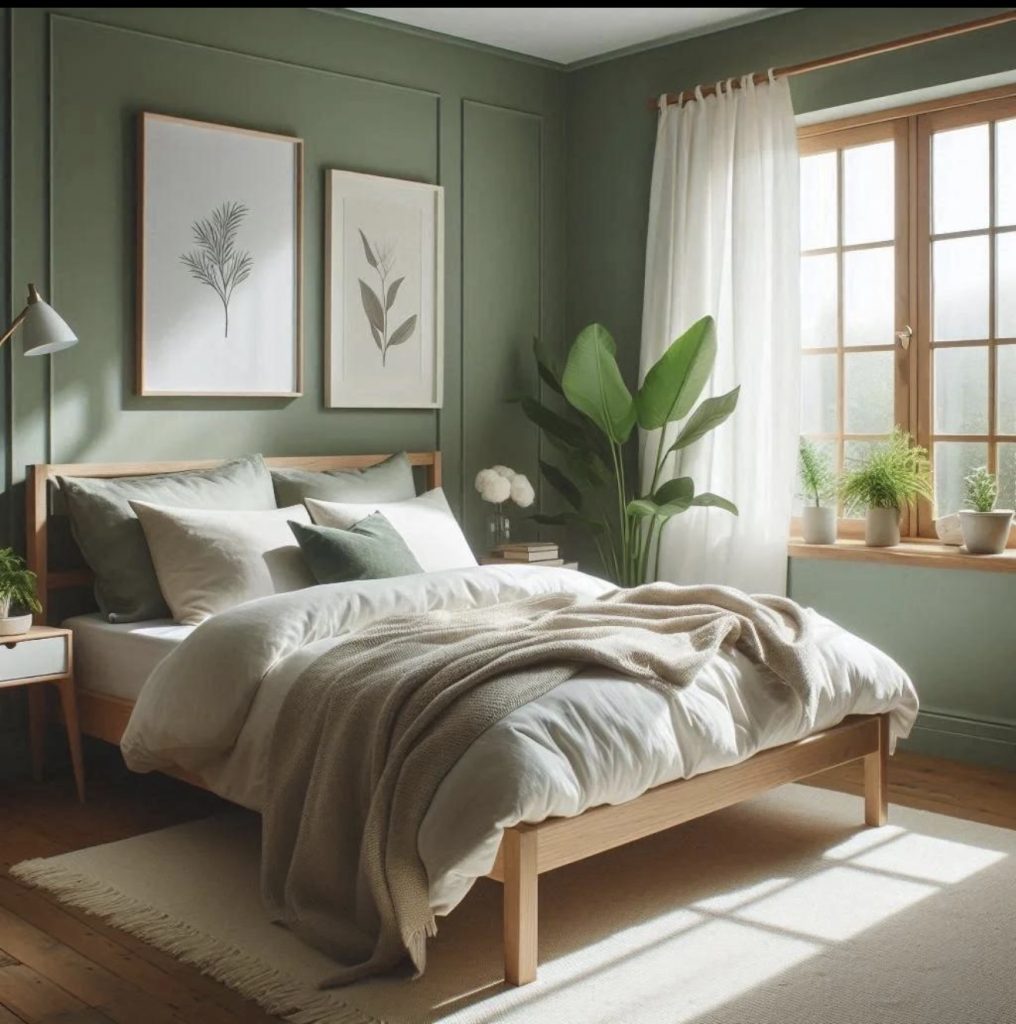
This muted green has a softness that makes it easy to live with. It brings a natural feel into the room without making the walls look too colorful or overwhelming. When you combine it with warm white and natural wood, the result is a bedroom that feels grounded, airy, and comfortable.
The best part? This palette works with several decorating styles, including modern farmhouse, organic modern, cottage, and Scandinavian interiors.
How to bring this palette into your bedroom
Paint the walls a soft sage green. Choose warm white bedding and add a cream throw blanket for extra texture. Light oak nightstands, a simple wooden bed frame, and woven baskets can help complete the look.
You can also introduce a few leafy plants or botanical prints if you enjoy nature-inspired decor.
Keep the patterns subtle. Think linen pillowcases, a textured cotton duvet, and a small area rug in oatmeal or ivory.
If your bedroom receives limited natural light, look for a lighter sage with a gentle gray undertone. Darker greens can still look lovely, but they may make a small room feel more enclosed.
Why this palette works: Green is often associated with nature, balance, and renewal. Sage, in particular, gives you that natural look without the intensity of brighter greens.
It’s an excellent choice if you want a bedroom that feels peaceful in the evening and fresh when you wake up.
Check out these modern small bedroom ideas suitable for adults
2. Dusty Blue, Cloud White, and Pale Gray
There’s something about soft blue that makes a bedroom feel quieter. It reminds you of a cloudy morning, a calm sky, or the gentle color of water.
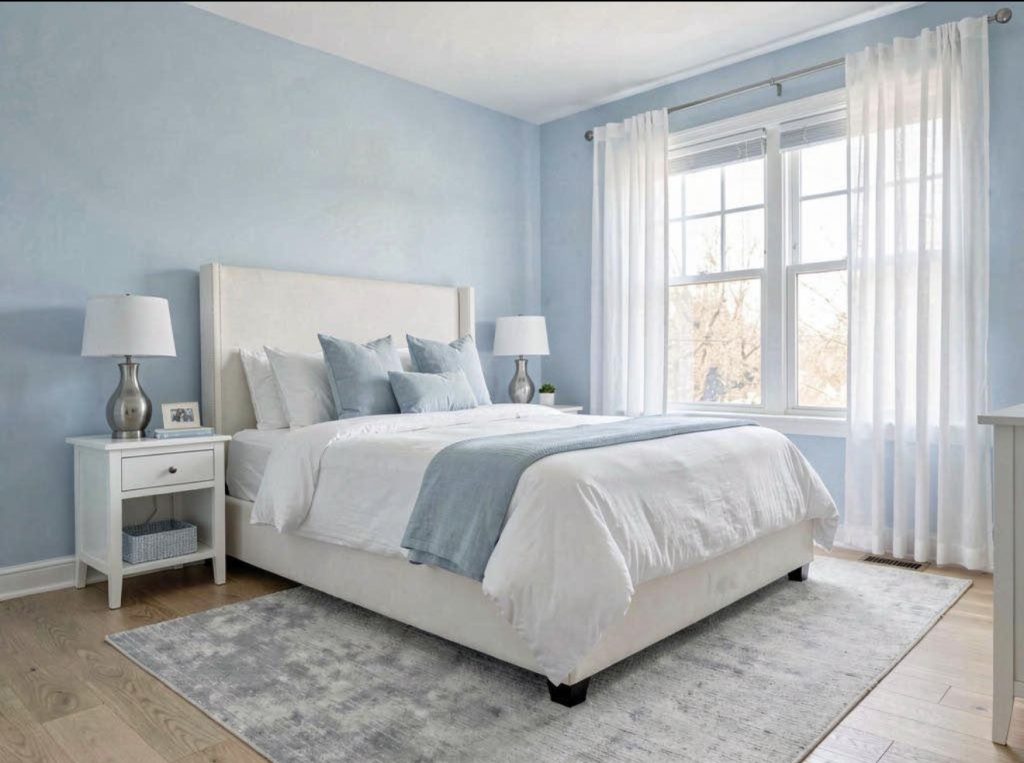
Unlike bright blue, dusty blue has a muted quality that feels understated rather than energetic. It is a lovely option for women who want a bedroom that feels clean, light, and elegant without looking plain.
The secret is choosing a blue that has a little gray mixed into it. This keeps the color soft and makes it easier to pair with other bedroom finishes.
How to bring this palette into your bedroom
Start with dusty blue walls or use the color behind your headboard as an accent. Add cloud-white bedding, pale gray curtains, and a soft gray area rug.
If your bedroom has white furniture, this palette can make it feel more inviting. For a warmer finish, introduce pale oak nightstands or a natural wood bench at the foot of the bed.
You can also use dusty blue in your bedding if you prefer white walls. Blue pillow shams, a quilted comforter, and a couple of simple landscape prints can create a similar effect.
Avoid adding too many different shades of blue. Two or three related tones are usually enough to create a coordinated look.
Why this palette works: Muted blue is commonly associated with calmness and open spaces. Its understated appearance makes it a popular choice for bedrooms designed around rest.
This combination is especially beautiful in coastal, transitional, and traditional bedrooms.
One practical tip: if your room faces north and receives cool daylight, test the blue before painting every wall. Some shades can look colder than expected.
3. Warm Beige, Cream, and Soft Taupe
Not every relaxing bedroom needs a noticeable color on the walls. Sometimes, the most peaceful spaces are built around a collection of warm neutrals.
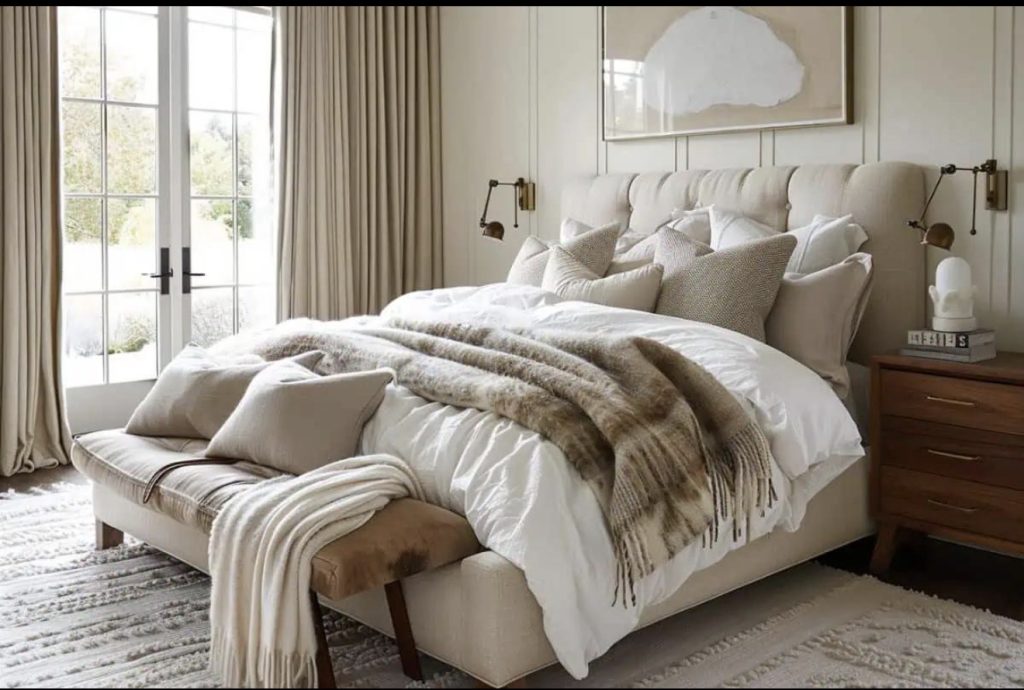
Beige, cream, and taupe are ideal if you love a timeless bedroom that feels comfortable rather than overly decorated. These colors work together without creating strong contrasts, allowing the textures and shapes in your room to stand out.
They are also practical choices if you enjoy changing your decor throughout the year. You can switch your throw pillows, bedding, or artwork without having to rethink the entire color scheme.
How to bring this palette into your bedroom
Choose a warm beige for the walls, creamy white for the bedding, and soft taupe for your curtains or accent pillows.
Layer different fabrics to keep the room from looking flat. A linen duvet, a chunky knit blanket, velvet accent pillows, and a woven area rug can add plenty of interest without introducing bold colors.
Light wood furniture works beautifully here, but walnut nightstands can make the space feel richer and more sophisticated.
For a feminine touch, add a vase of fresh flowers, a rounded bedside lamp, or framed artwork in soft brown and cream tones.
If you prefer a hotel-inspired bedroom, keep the bedding mostly cream and white, then introduce beige through the walls and upholstered furniture.
Why this palette works: Warm neutrals create a visually gentle background. They can make a room feel cozy and cohesive without demanding attention.
This palette is particularly suitable for transitional, minimalist, modern farmhouse, and quiet luxury interiors.
Just be careful with undertones. A beige with too much yellow can clash with a pinkish taupe, while a cool gray can make the whole room feel disconnected.
Check out these modern Japandi bedroom ideas for small spaces.
4. Pale Lavender, Soft White, and Pearl Gray
If you love soft, feminine interiors but want something different from the usual beige and white bedroom, consider pale lavender.
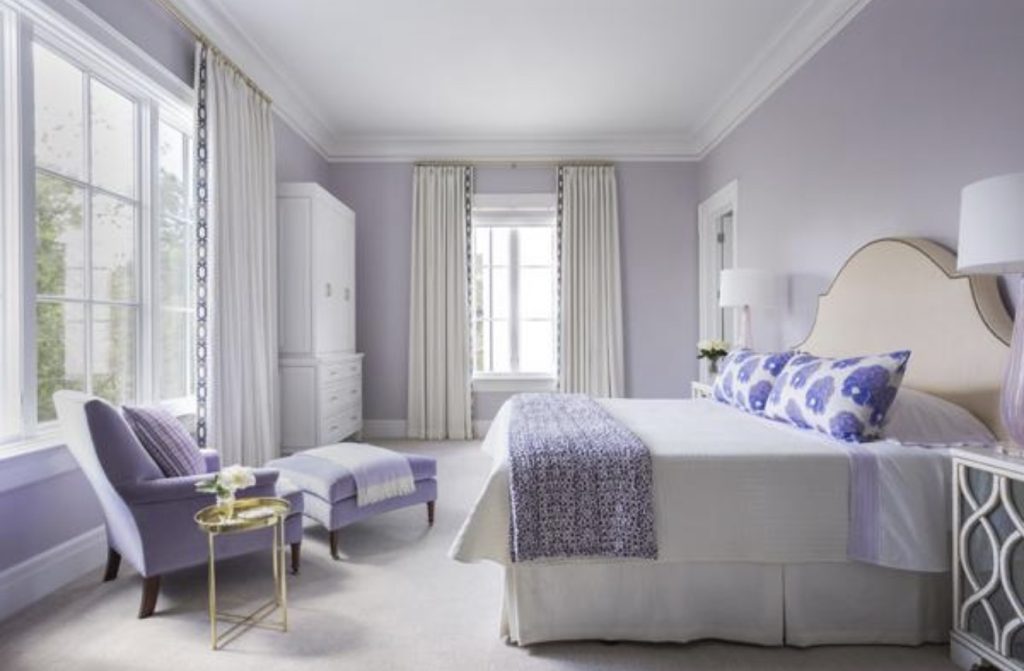
This delicate color can give your bedroom a dreamy appearance without making it feel overly sweet. The key is to choose a lavender with a gray undertone instead of a strong purple.
Paired with soft white and pearl gray, it creates a subtle color palette that feels graceful, light, and relaxing.
How to bring this palette into your bedroom
Paint the walls a pale lavender and use soft white for the ceiling, bedding, and larger furniture pieces.
Introduce pearl gray through the curtains, decorative pillows, or a plush area rug. If you want a more polished look, choose a white upholstered headboard and simple silver or brushed nickel accents.
You don’t have to paint the entire room lavender, either. White walls with lavender bedding and gray throw pillows can deliver the same gentle effect.
For a little warmth, add a light wood nightstand or a cream-colored lampshade. This helps prevent the cooler colors from feeling too chilly.
Keep floral patterns small and understated if you want a romantic look. A few delicate flowers or a simple abstract print will usually be enough.
Why this palette works: Pale lavender can feel soft, gentle, and slightly dreamy when used in moderation. Its gray undertones keep the room from looking too bright or sugary.
It works especially well in traditional bedrooms, cottage-inspired spaces, and feminine guest rooms.
If you are unsure about using purple on your walls, start with lavender bedding. It’s an easy way to experiment without committing to a full paint job.
5. Muted Blue-Green, Ivory, and Light Oak
Can’t decide between blue and green? You don’t have to.
A muted blue-green palette gives you a little of both. Depending on the shade and lighting, it can resemble sea glass, a quiet ocean inlet, or the soft green-blue color of a misty morning.
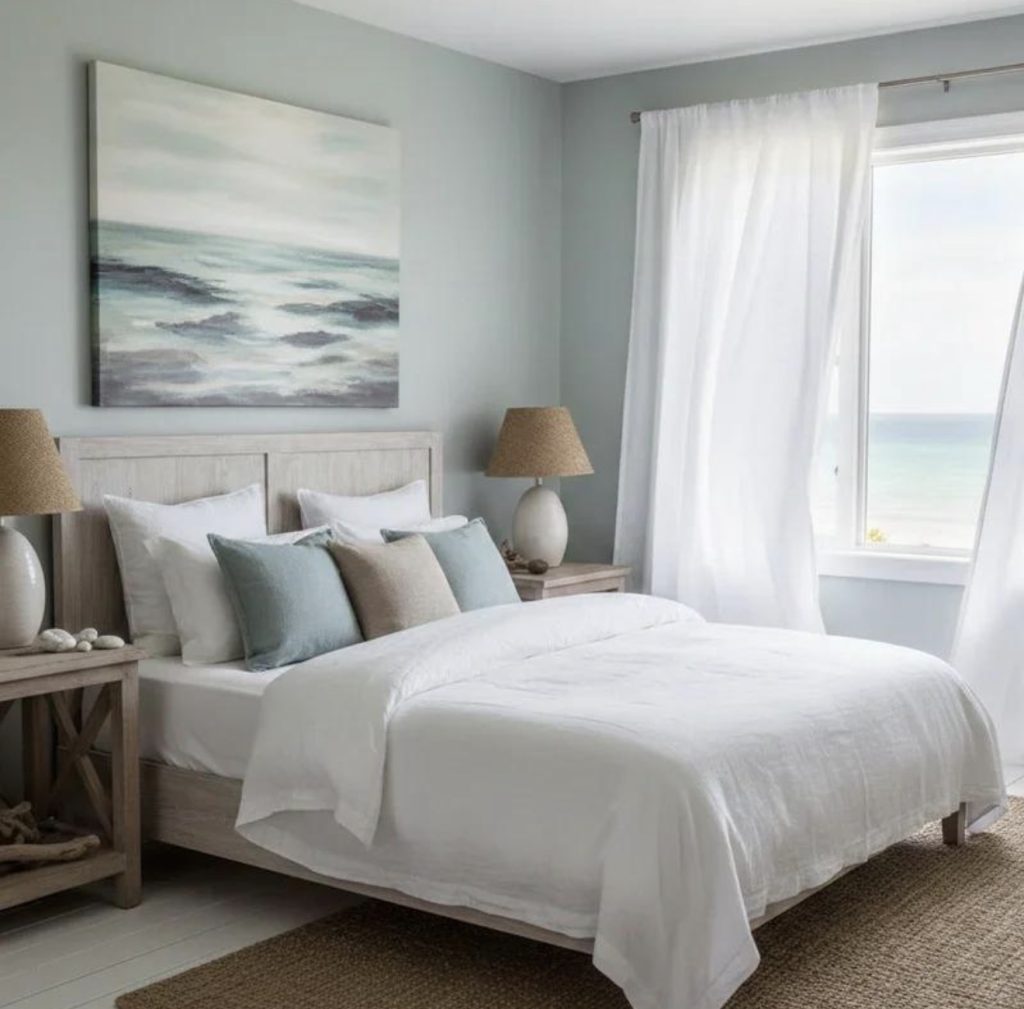
It’s a wonderful choice if you want your bedroom to feel fresh but still warm enough to be comfortable.
Unlike a bright turquoise, a subdued blue-green doesn’t need many decorative accents to look complete. The color itself provides enough interest.
How to bring this palette into your bedroom
Try a soft blue-green on the walls, ivory bedding, and light oak furniture. Choose natural fabrics such as cotton and linen to give the room a relaxed, lived-in appearance.
If you prefer a lighter look, keep the walls pale and introduce deeper blue-green shades through the throw pillows or a quilt at the foot of the bed.
Cream curtains can soften the windows, while a jute or wool rug adds texture beneath your feet.
For artwork, consider subtle landscape prints, abstract shapes, or simple botanical illustrations. Avoid filling every available wall with decor. Leaving some space empty helps maintain the quiet feeling.
This palette is especially lovely with woven pendant lights, natural wood frames, and understated brass hardware.
Why this palette works: Blue-green combines the visual freshness of blue with the natural character of green. Muted versions can make a bedroom feel connected to the outdoors without becoming too colorful.
It suits coastal, organic modern, contemporary, and Scandinavian-inspired bedrooms.
If your room gets strong afternoon sunlight, check how the shade changes throughout the day. Some blue-green paints can look noticeably greener or bluer under different lighting.
Learn how to choose curtain colors that complement your bedroom color scheme.
6. Dusty Rose, Warm Ivory, and Mushroom Taupe
Pink can be calming, too, especially when you move away from bright bubblegum shades and choose a muted dusty rose.
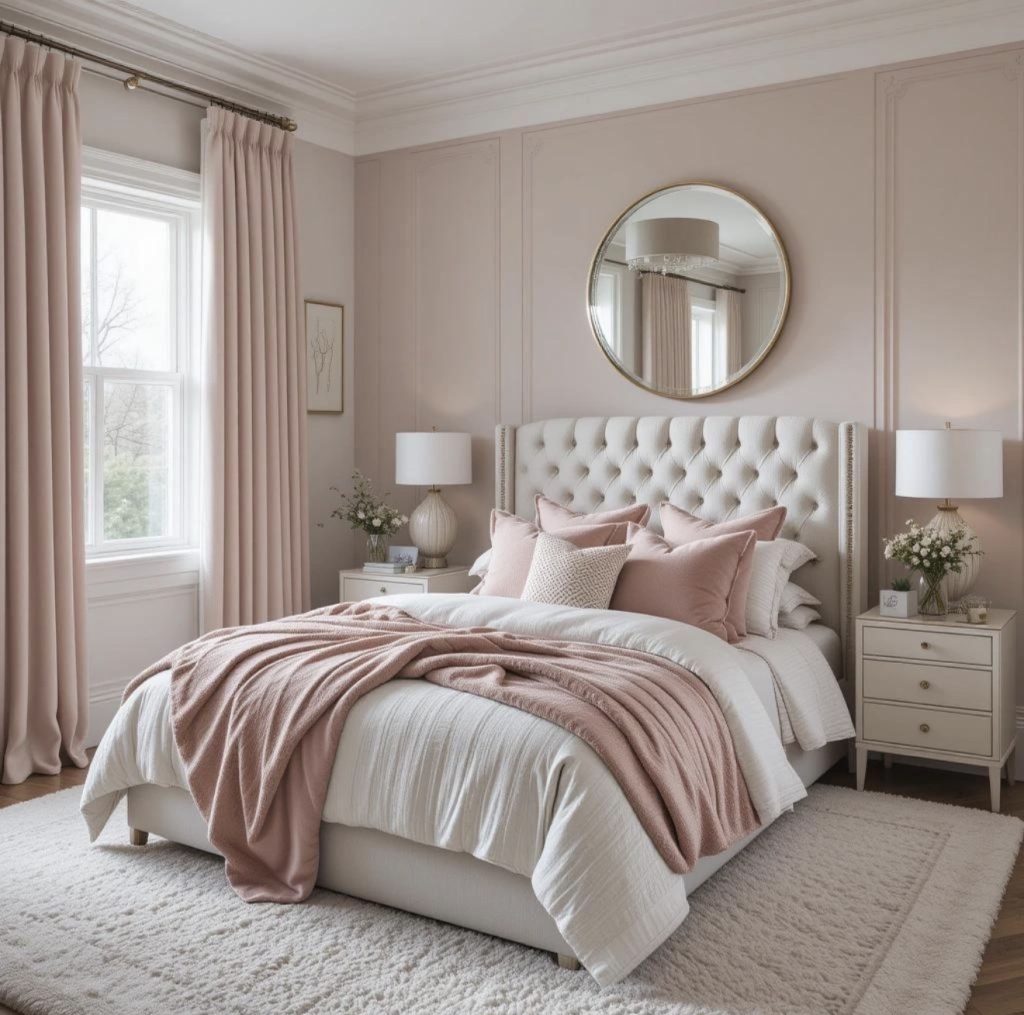
This color has a soft, earthy quality that makes a bedroom feel welcoming and personal. It can also add warmth to a room that feels too white or too gray.
The trick is to balance the pink with neutral shades. Warm ivory keeps the room light, while mushroom taupe adds depth and prevents the color scheme from looking too sweet.
How to bring this palette into your bedroom
Use dusty rose on the walls, or introduce it through your bedding if you prefer a more neutral background.
Pair it with an ivory duvet cover, mushroom taupe curtains, and a beige or cream area rug. Natural wood furniture can help ground the palette, while small brass details add a touch of elegance.
For a more sophisticated finish, choose dusty rose velvet pillows or a muted pink upholstered headboard rather than decorating with lots of bright pink accessories.
You can also mix in a little warm brown through picture frames, a wooden bench, or bedside tables.
Keep the rest of the room simple. Too many floral prints, ruffles, or decorative accessories can distract from the clean, serene feeling you’re trying to create.
Why this palette works: Dusty rose adds warmth without the sharpness of a vivid pink. Combined with soft neutrals, it can create a cozy and intimate bedroom atmosphere.
This palette is a lovely fit for romantic interiors, modern traditional bedrooms, and soft contemporary spaces.
It’s also a good alternative if you find gray and blue bedrooms too cool but don’t want to commit to a strong, warm color.
7. Smoky Blue, Warm Gray, and Cream
Who says a relaxing bedroom has to be light?
If you prefer a cozy, slightly dramatic space, smoky blue and warm gray might be the combination you’ve been looking for.
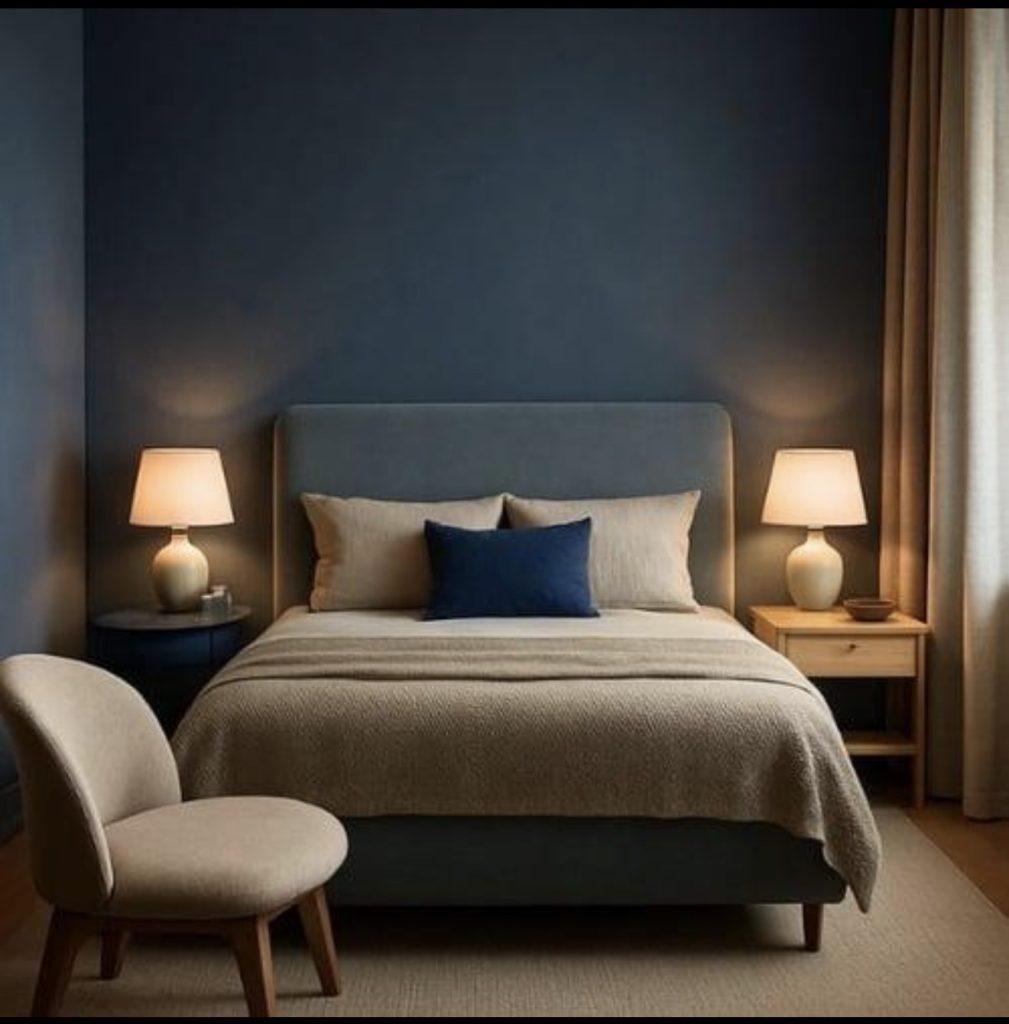
Smoky blue is deeper than powder blue, but it has enough muted gray in it to feel understated. It can make a bedroom feel intimate and comfortable, especially when paired with creamy bedding and warm lighting.
This palette is ideal if you enjoy a modern, sophisticated bedroom that feels like a quiet retreat at the end of a long day.
How to bring this palette into your bedroom
If your bedroom is small or doesn’t receive much daylight, consider painting only the wall behind the headboard smoky blue. Keep the other walls a soft warm white or light gray.
In a larger bedroom with good natural light, you can use the deeper shade on more walls if you want a cocoon-like effect.
Choose warm gray bedding, cream accent pillows, and a soft ivory throw. A gray upholstered headboard or natural wood bed frame will complement the palette beautifully.
Lighting matters here. Use bedside lamps with warm-white bulbs, and consider adding dimmable lighting so you can adjust the brightness in the evening.
Avoid pairing smoky blue with too many icy whites or blue-toned grays. Those combinations can make the room feel colder than intended.
Why this palette works: Muted, deeper colors can create a sense of enclosure and comfort. When balanced with cream, soft gray, and warm lighting, smoky blue can feel restful rather than gloomy.
It works well in modern, transitional, masculine-inspired, and contemporary bedrooms.
If you love the look of boutique hotel rooms but want something more personal, this palette is worth considering.
How to Choose the Best Relaxing Bedroom Color Palette for Your Home
You